
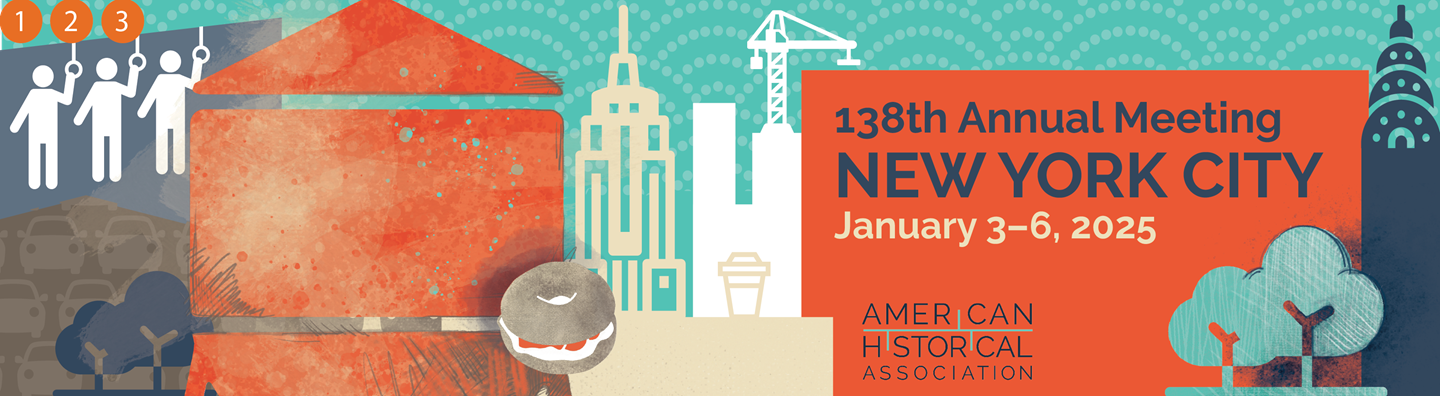
Why Attend?
Networking and Reconnecting
- Explore historical connections with scholars outside your field
- Catch up with that best friend from your grad school cohort
- Reconnect with scholars you met in the archives
- Meet face-to face with historians you engaged online
- Build relationships for future panels, edited volumes, and more
A Hub of Scholarship
- Attend sessions covering every subfield within the discipline
- Present your work and get feedback from diverse perspectives
- Pitch your latest project to editors from dozens of top presses
- Identify new trends in the discipline from both established and emerging historians
Resources for Educators
- Participate in teaching workshops for K-12 and undergraduate instruction
- Get new insights into historiographical questions to bring to your classroom
- Find course materials from textbooks to digital primary source collections
Career Development
- Join critical discussions about issues facing historians in all professions
- Learn about the full diversity of historians’ employment
- Plan what’s next for your career at every level
- Gain new skills to improve your research, teaching, and public engagement
Insights into Local History and Culture
- Explore the unique history of the host city and region
- Join a tour with local experts to top museums and historic sites
- Discover local cuisine with new and old friends
Code of Conduct
The AHA is committed to creating and maintaining a harassment-free environment for all participants in the Association's activities. All members and participants, including employees, contractors, vendors, volunteers and guests, are expected to engage in consensual and respectful behavior and to preserve AHA's standard of professionalism at all times. Please read the code of conduct that applies to all AHA-sponsored activities.
AHA Business Meeting
.jpg "gavel")
The AHA's business meeting is convened each year during the AHA's annual meeting and is open to members of the Association in good standing. At the business meeting, AHA members may consider resolutions and proposals, receive reports of officers and committees, and discuss affairs of the Association.
For more information about this year's business meeting, visit our Business Meeting page, which includes the meeting agenda and any resolutions.
Guidance for submitting business for consideration at the meeting can be found on the Business Meeting Procedures page.
What People Are Saying
Faculty-Student Group Rate

Help your own students attend the AHA annual meeting through the AHA’s deeply discounted faculty/student group rate. For an additional fee of only $15 for each K-12, undergraduate, and graduate student ($30 after December 15), AHA members can bring students to the annual meeting. After registering, return to historians.org/myaha and select Edit My Registration or Add Students. Select Register Additional Attendees and click the "New attendee is part of a student group" checkbox at the bottom of Step 1: Select an Attendee page. The AHA’s faculty/student group rate is a great way to mentor students, nourish their interest in history, and encourage their professional growth.
Important Dates & Deadlines
September 15
Preregistration opens. Everyone on the program must register for the meeting. Housing opens.
September 30
Deadline to submit member dues and address changes to receive the program in the mail.
October
Call for Proposals for the 2026 annual meeting published.
November
Program mailed to members. Grant application period closes. Deadline to submit proposals for late-breaking sessions.
Mid-December
Last day to make hotel reservations through the housing service. Subsequent reservations taken on a space-available basis at the convention rate.
December 15
Last day for preregistration pricing. Deadline to submit registration refund requests.
January 3, Friday
2025 in-person annual meeting opens at 11:00 a.m. Note: The meeting will take place from Friday to Monday in 2025.
Press Resources
The past year has highlighted the American public’s deep interest in history and how it can inform public conversations. Journalists and other media professionals will find ample source material among the hundreds of hundreds of sessions, in the exhibit hall, or even overheard in the hallways. We welcome your attendance and participation in the world's largest annual gathering of professional historians.