
Support Honest History in Texas Public Schools

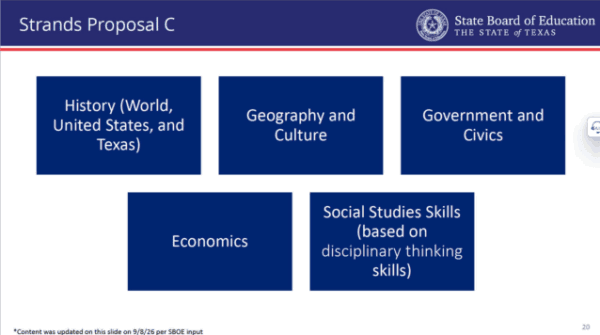
One June 26, the Texas State Board of Education (SBOE) voted to adopt new social studies standards for grades K-8. During it's August 31-September 4 meeting, the SBOE adopted social studies standards for the remaining high school courses. These decisions will have profound implications for the future of history and social studies instruction in Texas public schools. Texas Essential Knowledge and Skills (TEKS) standards for social studies establish academic benchmarks to evaluate student learning. Unfortunately, this TEKS revision process did not draw sufficiently on participation from teachers, curriculum specialists, subject matter experts, and the wider public.
The resulting social studies TEKS fall short of meeting the needs of all Texans, and are not consistently grounded in honest history. The adopted TEKS will likely present significant challenges to educators preparing students for success.
How You Can Help
Live Updates from the April 7 SBOE Meeting
On Tuesday, April 7, 2026, Whit Barringer, AHA program and data analyst, shared live updates regarding the Texas State Board of Education social studies TEKS revision on her Bluesky account, @drwhit.bsky.social.
Prepare Your Messaging
Important Information
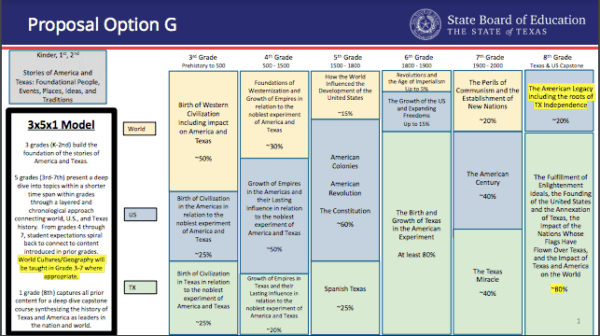
The American Historical Association has reviewed the draft 2026 Texas Essential Knowledge and Skills (TEKS) for Social Studies after First Reading, and registers serious concerns about the structure, content, and pedagogical approach of the standards as currently proposed.
In the professional judgement of our reviewers, the 2026 draft TEKS will not provide an effective foundation for K–12 history education in Texas public schools. As written, the standards introduce significant obstacles to student learning through omissions, distortions, and overemphasis on content coverage at the expense of historical thinking and disciplinary knowledge. Collectively, these shortcomings risk reducing students’ preparation for higher education, the workforce, informed civic participation, and success in an increasingly interconnected world.
The concerns outlined below are too extensive to summarize succinctly and cannot be addressed through haphazard or superficial amendments. Many of the changes by the SBOE during its June meeting exacerbated the problems of imbalance and narrowness with deletions, while offering no better engagement with core disciplinary concepts such as change over time or context.
Summary of Key Concerns
- An unbalanced and narrowly conceived approach to world history, in spite of an unambiguous, statutory requirement.
- Distorting the American founding to advance contemporary ideological commitments over evidence-based history.
- An overload of content that undermines historical thinking.
- Failure to support college and career readiness. The draft does not meet Texas’s own statutory requirements for college and workforce preparation.
- Uneven and incomplete attention to Texas history.
- The drastic increase in the amount of content covered at multiple grade levels makes the draft’s irresponsible errors, omissions, and distortions especially consequential, narrowing students’ opportunities to develop a fuller understanding of the past.
- Women’s history is consistently marginalized.
- Dozens of errors suggest that those directing this process have prioritized haste over accuracy.
- Black historical agency is diminished.
- No history of civic engagement. The draft fails to comply with the statutory requirement that TEKS develop students’ understanding of “the history, quality, traditions, and features of civic engagement in the United States.”
- An overly simplistic account of economic development.
- Oversimplified portrayals of religion in US history and in world history.
- Adherence to outdated and discredited interpretations at odds with scholarly consensus.
- Insufficient attention to global contexts and connections.
- The history of racism is absent.
- The draft overemphasizes continuity at the expense of historical change. The standards should be revised to highlight historical change and transformation rather than presenting continuity as the dominant pattern across disparate periods.
- The K-8 framework constrains depth and hinders historical thinking. The rapid (and often inconsistent) progression through historical periods leaves insufficient time for students to develop historical thinking skills, analyze evidence, or engage deeply with major themes and developments.
- SBOE and TEA have offered no evidence that these draft TEKS will improve student outcomes, and implementation will be costly for districts, schools, and taxpayers.
The State Board of Education has a responsibility to invest the time, expertise, and resources necessary to undertake meaningful revisions, even if doing so delays a vote on final adoption.
Read the AHA's full public comment here.
“You cannot censor your way to great schools.”
~Julia Brookins (AHA) before the Texas State Board of Education, 2022
TEKS Revision Process News & Important Dates
AHA History Education Initiatives
AHA State History Standards Support
As part of its mission to promote historical thinking in public life and professional integrity in history education, the AHA monitors and offers guidance on state-level academic frameworks.

Criteria for Standards in History/Social Studies/Social Sciences
The AHA's criteria outline foundational elements for history-rich education that can be adapted to account for local priorities.
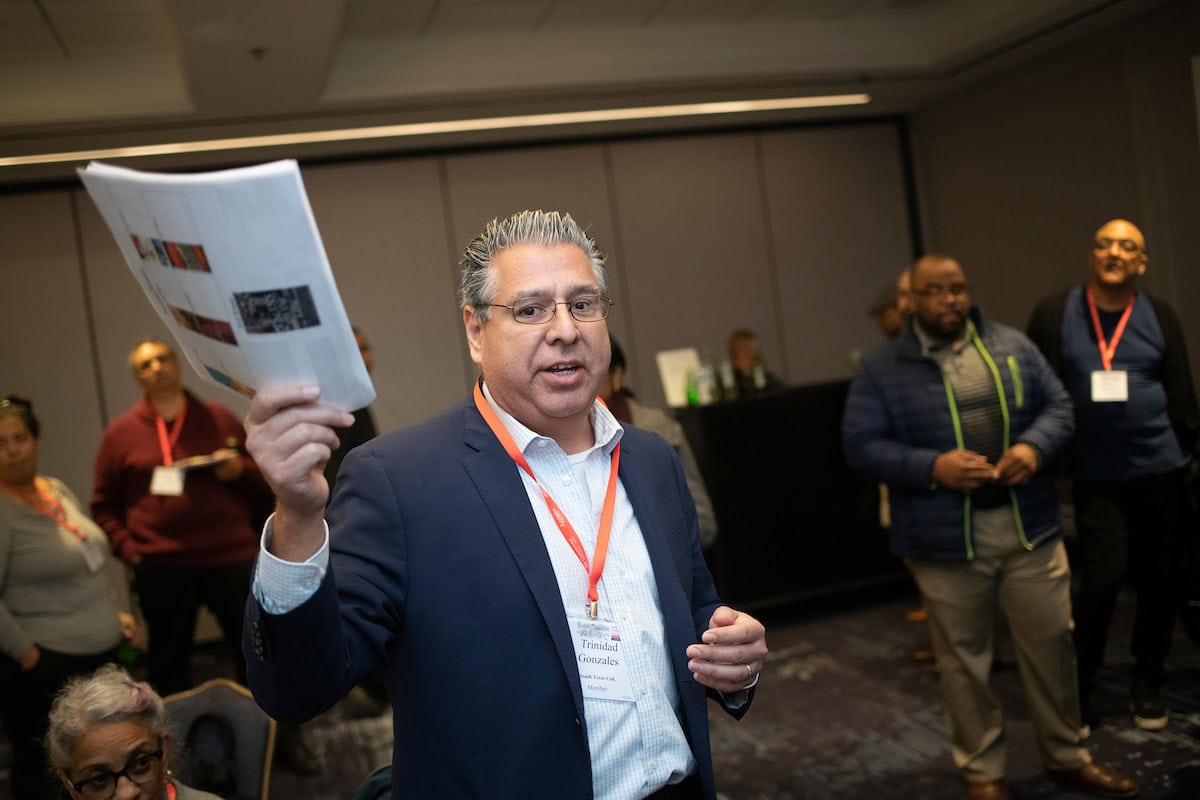
Teaching History with Integrity
The AHA leads or participates in several initiatives to provide resources and support for history educators facing intensifying controversies about the teaching of the American past.
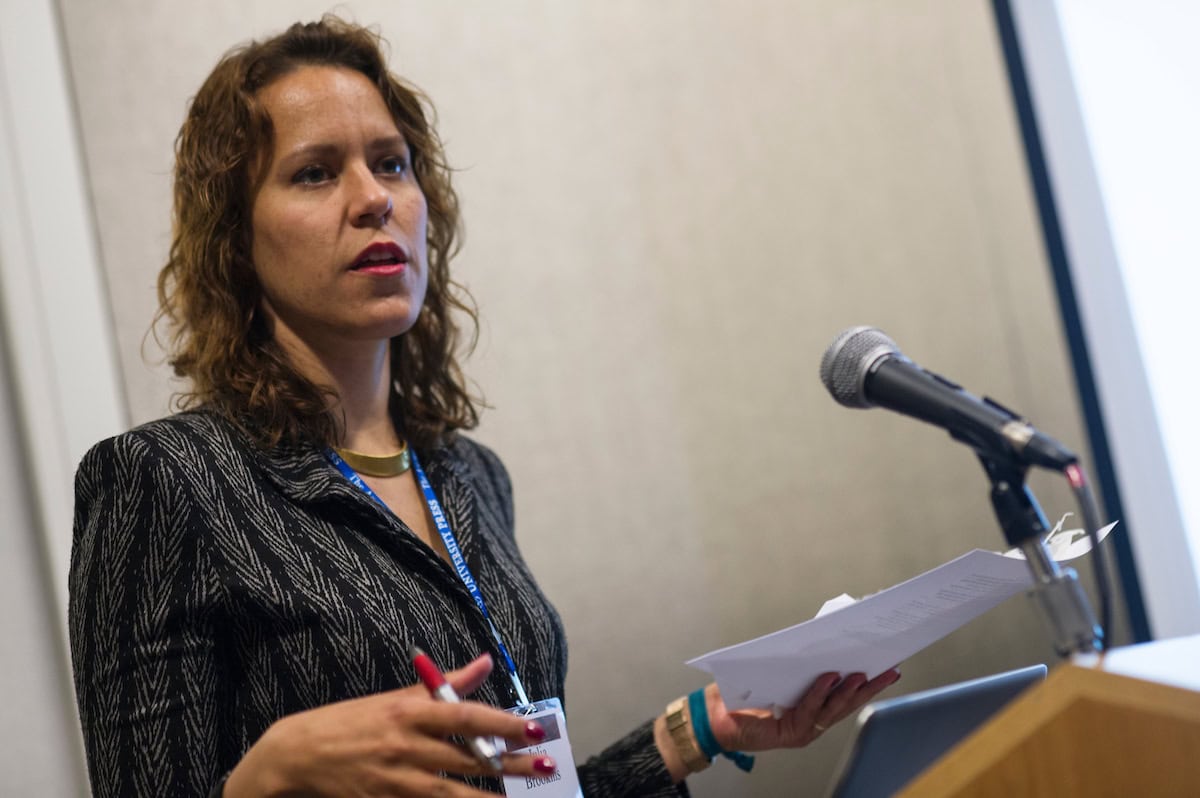
AHA Testimony Before Legislatures and Boards of Education
AHA staff have delivered public testimony highlighting the challenges educators face from legislation restricting the history education and issues related to teaching history with integrity.
American Lesson Plan: Teaching US History in Secondary Schools
The AHA’s 2024 report shares findings from the most comprehensive study of secondary US history education undertaken in the 21st century. The report provides empirical evidence and rigorous analysis to inform current debates over how history is taught in our schools.
AHA Advocacy in Texas


December 2, 2025
AHA Staff and Members Speak Out to Improve Texas State Standards

September 19, 2025
Update on TEKS Social Studies Sequence
For the Press
If you are a member of the media and would like to submit a request for a referral or interview, please email press@historians.org. Please provide any pertinent deadlines and we will do our best to accommodate your request. The AHA can find you a historian for any topic, and assists with dozens of inquiries each year.
Perspectives on History Education in Texas
Maintaining Standards
In the late summer of 2022, the Virginia Board of Education (VBOE) rejected its own procedures, established under state law,…

Support AHA Advocacy
The American Historical Association provides leadership for the discipline, defends academic freedom, and promotes the critical role of historical thinking in public life. We need your support for this and our ongoing advocacy efforts at the federal and state levels. Please join join or donate today.