
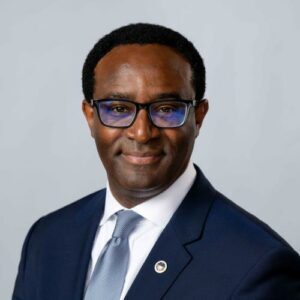
This presidential address was delivered at the 139th annual meeting of the American Historical Association, held in Chicago on January 9, 2026.
Reflections on Our Times: Higher Education in Focus
Tonight, as I begin my address, I am mindful of two things. First, I am one of the few presidents of the AHA to have simultaneously been a university president. Second, I believe I am the first to have been president of a historically Black college or university (HBCU). I think we can all acknowledge that recent times have been hard. Given what we’ve been enduring in higher education lately, I thought it appropriate tonight that I should lean on these roles, in addition to my experience as a historian, to reflect on our times to offer hope, as well as some possible paths we may take to improve the road ahead.
My talk has three parts. First, I will offer a proposal. Next, I will examine and reflect upon last year in higher education. I will end with nine recommendations for us to consider and adopt as historians, to begin the New Year.
Let me start with a modest proposal—no satire intended. Don’t look now, but I am inclined to believe that we live in an age that we might properly call the massification of higher education. This is an era in which a new and emerging skills economy will necessitate more higher-order thinking, as well as cognitive abilities that are best achieved by pursuit of a postsecondary degree. This is an age of more research, more investment, more students, more impact. But at the moment, I will confess, this is a fragile and delicate age, with many pitfalls that can both endanger and radically alter its course. I hope to talk about some of this tonight. But I also believe that we—being members of the academy, and particularly as historians—have a unique opportunity to shape this special era in profound and meaningful ways. In fact, my proposal tonight is that I dare call our need to rise to this occasion our collective obligation.
I’ll understand if you don’t agree, first, that we are in such an age at all. I get it. From the current policies, assaults, and challenges to our enterprise, you have good reason to be skeptical. Compound that with the fact that in September, seven out of ten Americans surveyed by the Pew Research Center reported they believe “the U.S. higher education system is headed in the wrong direction,” up from just over five out of ten in 2020.1 But let’s pull back for a minute. Let me make the case. Let’s look at the sector from a global perspective, take stock of the numbers, and examine some interesting international trend lines.
The Metrics and Implications of Massification
First, among the strongest indicators of education’s massification is research productivity. From 2012 to 2022, the number of research articles produced worldwide increased by nearly 60 percent, with output in emerging economies growing feverishly. Well over 3.3 million articles are produced annually—tilted of course toward the sciences.2 It is true that growth in scholarly monographs has been slower. But even there, greater discoverability and access, enabled by technology, has created a broader awareness and incorporation of scholarly findings across multiple academic fields.3
In this age of massification, higher-ed philanthropy has also leaped. Currently, university philanthropy is dominated by the United States, where nearly $60 billion is collected annually.4 But lately there has been notable swelling in Canada, Britain/Ireland, and Australia /New Zealand, where annual contributions now hover around $1 billion per region.5
We have also witnessed a surge in global research investment. Gross domestic expenditures on R&D have risen from roughly $1 trillion in 2000 to between $2.75 and $3.1 trillion in 2022–23. In other words, global R&D spending has nearly tripled in twenty years.6 Not all of these expenditures have been driven by higher education; in fact, industry-driven research from the business world has become increasingly prominent, greatly figuring into the emerging research landscape. I don’t see this necessarily as a confrontational challenge. Rather, it opens unique and urgent opportunities for cross-sectoral partnerships that may be able to deliver research at a scale that we’ve never before imagined, and that offer viable alternatives to enhancing current university financial models.
Probably one of the most crucial indicators of higher education’s massification is enrollment growth. In 2023, there were 264 million people studying in institutions of higher learning around the world—up from 100 million in 2000. Moreover, despite our own demographic cliff at home, those numbers are slated to grow substantially over the next decade, led in part by Asia, which possesses the world’s largest per capita youth population.7 To be sure, amid these international surges, access to education remains unequal. Africa, with the world’s largest percentage of youth (70 percent of the population is under the age of thirty), lags woefully behind other regions in college enrollments. But it is precisely places like Africa that present long-term, strategic future opportunities. Through investments to address educational disparities, such as the billions being spent by the Mastercard Foundation, aggressive pushes will help to gradually close existing gaps in educational access, increasing the surge of enrollments even more.8
While it is likely that the vastly expanding global reach of the college degree helps singularly define the age of massification, the United States has undoubtedly played a central role in facilitating this growth. UNESCO data shows that the number of students educated outside their home countries has tripled over the past two decades, rising from 2.1 million to 6.9 million. Until last year, the United States alone absorbed between 1.1 and 1.2 million of those enrollments. Although all parts of the United States hosted foreign students, the greatest clusters nucleated in New York, Massachusetts, and Texas.9
So what does massification mean, and what does it mean for my proposal? Well, as the world increasingly rushes into the corridors of higher education, as the advances of research multiply, and as added investments into universities are made, there are countless positive implications. Quite simply, we can be encouraged that despite what the world may look like today, if broader macro trends continue, our future will feature a vastly more knowledgeable world, armed with greater domains of expertise and critical thinking skills. There will be more informed citizens. The positive implications for the global workforce will be profound. Perhaps more importantly, in this moment, the seeds are being sown for an intellectual and knowledge revolution the likes of which we’ve not seen before, if only we can maintain and expand our course.
Hard Times: Massification and Its Discontents
As I said previously, there are concerns that the potentially favorable outcomes of massification are subject to peril. There are already clear signs of cracks in the system. Across the board, universities and their faculties over the past two years have reported growing concerns over a reduction in academic freedom. In 2025, thirty-four countries reported appreciable declines in their academic freedom indexes due to a global rise in antipluralist forces.10 Additionally, current times have been economically unsettling for much of the global higher education sector. A combination of factors, such as reduced government funding, increased educational costs and fees, demographic shifts, susceptibility to changing international enrollment patterns, shifting state policies, and overbuilt capacity, has led to higher-ed market volatility. Last year, nearly half of British universities were in deficit. Stagnant government funding in Japan prompted some institutions to seek alternative sources of capital. Dutch, French, and Canadian universities faced layoffs due to steep budget cuts, while strikes hit Argentina as university staff pressed for a living wage. Universities in Hong Kong had to dip into their reserves to remain solvent, while India’s excellence initiative for developing world-class universities was cut. Over half of South Korea’s universities proposed significant fee increases to cope with financial troubles, while institutions in Scotland and New Zealand struggled to maintain razor-thin margins. In Australia, universities received the least amount of government support (proportional to their income) than ever before. On the African continent, a lack of financial transparency at many institutions, alongside poor recordkeeping, hindered institutional credibility and harmed access to vital global funding. In Switzerland, some science initiatives were slated to be cut, while in the EU and Japan, new proposed research oversight measures have drawn concern.11 In short, given global experiences to date, we can expect that as massification takes shape, there will likely be more bumps in the road and more backtracking as we press to move forward.
Here in the United States, we happen to be living through the era of higher ed’s massification during a special period of our own—what some have termed the US academy’s Gilded Age.12 The American postsecondary educational system still shines as one of world’s crown jewels in terms of innovation, impact, and prestige. A great deal of the growth in the world’s research output and financial investment has undoubtedly come from America—but there are also deep concerns within our system that have been brewing for some time. After experiencing a jolt of expansion from the 1950s through the 1970s, American higher education has become more stratified, with a growing rift emerging between elite institutions and the rest of the academy. There has been increased polarization within the sector, labor inequities, public pressure, and marketization. Our operating models have been stressed for years, with few levers to pull for relief. As a former university president, provost, and dean, I can fully attest to the pain caused by these headaches. Virtually all US university leaders, at least since the early 2000s, have been addressing an acute set of nagging issues: navigating the impact of emergent technologies (most recently AI), wrestling with anti-intellectualism and the eclipsing of the humanities amid the rise of STEM, addressing internationalization, confronting leadership and governance challenges, growing the research enterprise, improving teaching and learning, fostering student success, and managing enrollment amid a demographic cliff.
This year alone, two-thirds of colleges and universities reported experiencing some form of financial stress, precipitating widespread hiring and budget freezes. Harvard, the most well-endowed university in the world, ran over a $113 million deficit in fiscal year 2025. During the past decade (2013–23), there has been a 1.5 percent drop in inflation-adjusted wages for faculty, and since 2020, there has been a 10 percent drop in tenure-track faculty salaries. During this same period, the number of contingent faculty appointments have grown. Amid budget freezes and cuts, undergraduate and graduate student aid has shrunk, concerns over faculty job security have risen, faculty research support has diminished, and effective curricular planning has been made more difficult by hiring challenges and staffing uncertainties. Moreover, threats to Medicaid might reduce the financial capacity of states to support universities, while circumscribing the funds of institutions with academic medical centers who rely on patients from the lower socioeconomic strata to fill their wards.13
Of course, we’ve grappled with and survived intense pressures before. The history of American higher education is one of continual change, adaptation, and transformation in the face of challenges—contrary to popular perceptions that we are a lumbering and inflexible sector.14 The Great Recession of 2008 and COVID-19 were recent times of stressful strain. However, in 2008, the shock of economic decline actually spurred an increase in college enrollments as the workforce retooled to prepare for future employment prospects. During COVID-19, colleges received significant assistance, as the government directed over $76 billion through its Higher Education Emergency Relief Fund (HEERF) to help institutions support their students, prevent mass layoffs, supply technology for online learning, and preserve enrollments.15
It is debatable whether our institutions have fully recovered from either COVID-19 or the Great Recession. After COVID-19, the removal of HEERF funds exposed deep budget vulnerabilities on many campuses. Equally, it can be argued that the financial crisis of 2008 exacerbated fragilities in our finances that we continue to address today. State funding did not completely recover, tuition dependency intensified, deferred maintenance increased, and structural deficits deepened. At the same time, as we wrestled to surmount these problems, public rancor grew over soaring tuition and admissions scandals, throwing the very value and integrity of postsecondary education into question. An atmosphere emerged that encouraged other critiques with roots in the 1980s culture wars—namely, that American higher education had become too ideologically rigid, culturally dangerous, and out of touch with the mainstream.16 Some of the more biting criticisms indicted the sector for enjoying too much largesse at the taxpayers’ expense, through inflated cost structures. Meanwhile, the rise of protests over George Floyd and Gaza further undermined our credibility, making it easier for some to claim that we were indoctrinating students and brewing anti-American radicalism on campus. A slow but steady public relations and political backlash formed, even amid some of the greatest scholarly accomplishments, research advances, and medical discoveries of our times.
What we face now is the outcome of these mounting pressures. The sheer multiplicity of forces that we confront at once meets the definition of a “polycrisis”—a term coined at the turn of the millennium to describe the confluence of numerous complex, existential challenges, borne both simultaneously and in succession. Amid a polycrisis, the collective impact of its forces is much greater than the sum of its parts.17
In the Eye of Polycrisis: Its Elements and Effects
I would argue that our polycrisis today has some distinct features. We are further navigating turbulent times in a unique political environment, where the pace of activity has been furiously quick and exhaustive, especially from the flurry of attempted legislative actions taken over the past year. There has been a deliberate, underlying method deployed to target the most vulnerable and susceptible areas in higher education: research funding and student aid. The pocketbook-driven, pain point–focused approach has not only commanded higher education’s full attention, but the strategy has swiftly sought to halt certain forms of university activities to effectuate immediate landscape changes, or broker landscape-changing deals. Furthermore, the Department of Government Efficiency’s focus on eliminating waste, paired with media-enhanced broadside attacks on wokeism, antisemitism, and illegal immigration, has provided an ideological framework within which to maneuver these activities.18
In the first seventy-five days of the 119th Congress, thirty education bills were introduced, touching everything from student visas, university endowments, and student loans to political activities on campus. Simultaneously, proposals were made to reduce staff and reorganize a host of major federal agencies, including the NIH and NSF, which immediately affected grant management and funding allocations. The proposed 50 percent cut to the staff of the Department of Education quickly impacted the disbursement of approximately $120 billion in student aid, the management of $1.7 trillion in student debt, and the ability to sustain the longitudinal data needed to preserve the nation’s student assistance architecture.19 Combined with a stream of executive orders, freezes, and revocations of university research grants; attempts to reclassify grant-making civil servants as political appointees; demands for certain institutions to place departments under receivership; and the October 2025 invitation for universities to engage in a “compact” with the administration to align admissions policies, hiring, and endowment use—all of this has signaled a new era in federally directed university oversight. There are concerns that the recent activities and approaches can undermine academic freedom and academic research integrity. Currently, the legality of the some of the government’s activities are being contested.20
Intensified federal scrutiny and supervision has been followed up with related oversight at the state level. This is particularly evidenced in the “divisive concepts” laws passed by states like Alabama, Texas, Florida, and Mississippi that examine and restrict the subjects that professors can teach.21 Some have wondered whether the pressure the sector is feeling is actually beginning to reveal the true nature of the academy, showing the extent to which the autonomy of universities has always been conditional, and subject to being shaped by external systems like politics and law. Alternately, is what we face today truly something new that requires a different set of actions than in the past for institutions to survive and thrive?22
However one responds to this question, a simple fact remains: Oversight and supervision is nothing new to our sector. All previous eras of American higher education’s history possessed regulatory oversight. But prior to now, there has tended to be consensus on a basic principle. As Adam Sitze recently observed, “Universities, like churches and courts, are [considered] counter-majoritarian institutions. They can continue to serve the common good only in so far as they remain protected from direct control by the state and political majorities.”23 Through previous legislative eras in America, this principle has been a through line; it has been a bedrock that has contributed to making our educational system an enviable asset in the world’s eyes. Today, elements of that principle are being both abandoned and threatened, thereby rupturing critical aspects of our current educational system.
The Rupture of Internationalization
The results are shaking the sector. Look at the unsettling impact on international student and faculty flows to the United States. For some time, internationalization has been a crucial strategy to help fund American colleges and universities, bringing in over $40 billion of revenue in 2023–24 alone. However, interest in studying in the United States has dropped precipitously, falling by nearly half in 2025.24
Internationalization has also traditionally been a major talent source and vehicle for universities, as well as a vital means of fueling the greater American workforce. Forty-three percent of full-time STEM doctoral students are on student visas, and most have remained after graduation, helping both academia and industry. But federally imposed travel bans, visa restrictions, visa fees, heightened entry screening, and rising concerns that the punitive measures being taken against immigrants lack due process—all of this has started thwarting foreign talent.25
Additionally, internationalization has been pivotal in helping make critical advances in research on questions that demand international perspective, and that solve issues that are global in nature. But select funding freezes, such as those for USAID projects, have disrupted some key international partnerships, especially in Africa and Asia.26
In a hypercompetitive landscape, the current US domestic political climate has further impacted how European universities are evaluating their relationships with the United States, prompting them to reexamine their ties with China. Moreover, new research collaborations and student mobility flows are forming.27 Japan and Russia have increased their engagements in Africa. Latin America, Africa, the Middle East, and Asia are strengthening student exchange connections with one another. England, Canada, Ireland, Brussels, and Germany are aggressively trying to lure American academic talent, some by enticing their philanthropists to create attractive incentives for US scholars.28 In the spring, shortly after the administration attempted to revoke Harvard’s authority to enroll foreign students, the Hong Kong University of Science and Technology extended an open invitation to matriculate all international students who had been accepted to Harvard.29 In China and India, two of the largest sources for international talent, both students and scholars are increasingly remaining home. Even mid-career foreign academics are starting to return to their countries. Steady improvements in the quality of Chinese and Indian institutions, combined with considerable growth in the number of faculty who hold international PhDs at these schools, have made the prospect of building careers at home more attractive. In fact, in the emerging areas of AI and quantum science, Chinese institutions are likely now taking the global lead, part of a broader tilt away from US academic preeminence. In March, American universities still led the world in thirty-two of fifty-five academic subject areas; however, it is clear that aggressive strategic investments and the vigorous cultivation of innovation have been reaping large dividends throughout the Middle East and Asia, particularly in China, Hong Kong, South Korea, and Singapore. The sheer number of publications in engineering, computer science, and mathematics produced by China (and Asia more generally) is surpassing that of the United States. Also impressive has been a greater rise of educational infrastructure in Africa, led by South Africa and Egypt. Moreover, France now leads the world in international academic collaborations.30
The Rupture of DEI
Recent debates and actions against diversity, equity, and inclusion (DEI) have equally ruptured the US academic enterprise.31 For centuries now, America has wrangled with race, the shadow of slavery, and the legacy of injustices that both have born.32 The Civil Rights Act of 1964 has long been considered the genesis of specific programs designed to encourage social change by attempting to address historic underrepresentations of populations based on race and gender.33 In January 2025, an executive order directed federal agencies to investigate colleges and universities with endowments exceeding $1 billion to dismantle DEI activities, claiming that such initiatives promote sexand race-based preferences. In February, a “Dear Colleague” letter (subsequently followed by an FAQ) clarified the administration’s position. While the teaching of Native American history has since been upheld, and support for HBCUs was vigorously maintained, the new DEI landscape has stripped funding from Hispanic-serving institutions and minority-serving institutions.34 Moreover, in the months following the executive order, a series of grants deemed ideologically dangerous were identified, followed by widespread research project suspensions for violations of Title VI transgressions promoting race-conscious programs.35
Such activities encouraged what some have labeled “anticipatory obedience,” as several institutions independently implemented proactive measures to get ahead of potentially harmful federal sanctions. Relatedly, surges in “institutional neutrality” saw several colleges and universities stay quiet on matters, lest their actions provoke unwanted institutional injury and ire.
However, at the same time, a series of legal challenges emerged, particularly with regard to how the new DEI decrees impinged on academic freedom and the mission of institutions to effectively serve the totality of their student bodies. Meanwhile, others questioned the ambiguities and contradictions inherent in the legislation, to the point that some accreditors have sought flexibility for universities as they attempt to abide by the emergent laws.36 There has been additional concern that, overall, the climate created by the anti-DEI movement is unraveling decades of civil rights progress, while actually jeopardizing the goal of race equity in America.37
The Rupture of Research
In the meantime, the costs to research are real. For years, DEI programs have provided a crucial bridge for underrepresented and economically disadvantaged students to develop research careers and enter into the ranks of the professoriate. With those initiatives eradicated—thereby delimiting the nation’s research advances because of new constraints on our pool of investigators—some wonder whether such progress can be sustained.38 Second, in the international arena, allies of the United States, including the EU, Australia, and Canada, have been pressured to eliminate DEI policies or face economic and diplomatic consequences—including on contracts and academic partnerships. Consequently, US-based anti-DEI activity is having a direct impact on some segments of the collaborative global research environment.39 Third, funding agencies for years have been probing for effective ways to measure the societal impact of their funding. The current political climate has made this task harder, placing political filters on determining what qualifies for societal impact. DEI has figured prominently into this process—being used to comb through, evaluate, and assess specific grants from agencies like the NIH, NSF, and NEH, effectively heightening faculty concerns over freedom of speech.
There has been far greater turbulence introduced to the research environment beyond DEI. Between January and the end of May 2025, the administration canceled over $10 billion in grants, citing waste, DEI, and ideological bias in awards bestowed by the NSF, NIH, and NASA, among others. Many grants were reinstated in June.40 Meanwhile, in May, the president submitted his congressional budget request, giving clear indicators of his funding priorities. Within his request, proposed cuts to research agencies ran deep, and at historic levels: NIH, 40 percent; NSF, 56.9 percent; NIST, 43 percent; NASA, 47 percent; and NEA, 100 percent. Although the proposals still needed to be further negotiated and reconciled with Congress, the administration made an emphatic statement regarding its intent to reverse the previous four years of stable or elevated funding to the government’s primary research engines.41
Also alarming were the proposed changes launched in February to curb the federal indirect cost recovery rate of the NIH, capping university reimbursements from federal grants to 15 percent.42 It was not long before the proposed F&A structure shifted to other agencies. While this effort has been hotly contested, with lawsuits and legal challenges from higher education associations and universities across the country, the bold move sparked efforts by teams of faculty and administrators to work on reforming the existing F&A model themselves.43 In hindsight, the volume, intensity, and choppiness of the various legislative fits, starts, and reversals endured over the last year have taken a toll. Even if certain measures were ultimately retracted, the research pauses and delays have indelibly hurt some long-term projects.44 One should also not forget the layered negative effect on America’s research enterprise that transpires when multiple legislative efforts begin taking hold at once. For instance, amid all else that is happening, the endowment tax (relatively underreported in the media) additionally burdens the research environment and academic ecosystem by withdrawing crucial institutional funds that could have been used gainfully for graduate programs, postdoctoral and bridge funding support, start-up packages, strategic faculty hires, or the creation of labs.45
Without a doubt, the potential long-term consequences of current research disruptions (especially if they continue) will further erode America’s already slipping lead in the international research arena—providing opportunities for competitors to rapidly gain ground. But perhaps more significantly, the tenor of the legislative tactics currently aimed at higher education have signaled a rupture to the framework under which research has been conducted in the United States since World War II. It was then that a sacrosanct union was forged between government and higher education. It was understood that expanded, wholesale government sponsorship of university-led research, alongside the provision of funding for students, would be traded to help build America’s workforce, economy, and defense industry. It was further understood that university research would lead to scientific discoveries that would propel society, bring technological innovation, and improve medical outcomes.46 The legislative crowbars taken to this pact over the past year have signaled that we need to reexamine its fundamental tenets, especially as we simultaneously navigate an era of global growth in the broader higher education sector.47
Where Do We Go From Here?
For us to successfully navigate these times and elevate higher education, I believe that we need to recalibrate our work, working relationships, and activities in more elemental ways than we have in the recent past. At the time of this speech’s writing (in the midst of a government shutdown and strong, unified opposition to the administration’s proposed “compact” with higher education), there has been a temporary lull in activity targeting higher education. However, there is no guarantee that this will continue, nor has the full toll of existing sector-wide pressures been felt.
In response to the overall onslaught of challenges during the past year, we have witnessed a range of reactions. David Asch from the University of Pennsylvania captured the conundrum well when he likened the situation to the classic prisoner’s dilemma. During this period, we have seen institutions acting alone to avoid becoming targets. While they have likely made rational choices in doing so, especially to protect the research environments of individual campuses, there is eventually a price to be paid for such activity, drawn in the form of collective harm. As institutions, we have to find ways to engage in more “strategic cooperation,” while at the same time effectively managing individual risk. Given the tightrope of such an act for postsecondary institutions, this is a moment for associations to shine—which they have, as they’ve lodged legal challenges to provide legal and rhetorical cover for universities whose range of actions have necessarily been constrained. For proof, just look at the actions taken by the ACE; AAU, APLU, and AAUP; and the AHA over the past year.48
These are all important steps in these times. But I think what’s needed goes deeper. For starters, we must remember that within our organizations, and within our colleges and universities, we have not lost certain things. For instance, we have not lost the intellectual power of the academy. We have not lost our missions, and we have not lost our two most precious resources: our students and our faculty. Because of this, we have not lost our fundamental ability to harness change.
We are in the business of continually training the next generation and continually expanding knowledge. The future, quite literally, depends on us. We have the opportunity to preview the future in our corridors, and we have the privilege of shaping the future in our classrooms. Quite frankly, as students enter our doors to prepare for their future lives and careers, they bring with them an insatiable optimism for change that can serve as a source of strength for us. Like the mythological hero Aeneas, son of Aphrodite, we must turn to our students to draw resolve for us to tackle the future. But in return, we must give each of them all that we know to help them engage in what Mahatma Gandhi reminds us is so fundamental about education—kelavani—the drawing out and development of our inner talents, so that as they unfold, we can maximize the development of body, mind, and spirit to the benefit of the world.49
In the academy, we have also not lost our ability to convene and offer reflective spaces capable of modeling civic dialogue and the best of civic behavior. We must use our power to convene, in order to impact internal and external audiences, and to inform and educate across the ideological spectrum. Our institutions must become what Matt vandenBerg, president of Ohio Wesleyan, has described as “laboratories of reconciliation”—deploying strategies of empathy and dialogue with partnerships even outside the academy to introduce the change we need to help depolarize the nation.50
Finally, I believe there has been an important element missing in the conversations we’ve been having about higher education’s polycrisis. Its existential nature has been so disorienting that it has been hard to for us to individually fathom constructive avenues that we can personally pursue to contribute to better outcomes. Compound that with the fact that we’ve all been moving through our own fog—our own disillusionment, soul-searching, and questioning of mission during this moment—serving only to further weaken our sector.51
With this in mind, we have an opportunity to fortify and elevate certain strengths of academe. I will conclude today by offering a 9-point agenda to help us, especially historians, move forward constructively in these times. For those here who are graduate students, and for those working outside colleges and universities, I believe aspects of what I offer may be equally useful, if not directly correlated to your experiences.
1. Determine When Resilience Requires Reinvention
First, in this moment, we must grapple with determining when resilience is called for, and when greater reinvention may be necessary. We must candidly ask ourselves: Has the terrain of higher education fundamentally changed, or is it in the process of changing? Would we even recognize such change? And if we are able to recover lost ground as we confront our times, will higher education actually ever go back to the way that it was? Should that even be a goal? Or should we be preparing for something new? And if we are indeed preparing for reinvention, what is within our power to achieve?52
While there is a great deal of debate on each of these questions, a good starting point is to ask ourselves and our institutions, What are our sacred cows, and is it time to reevaluate and assess their true value? We need to be honest in our assessments, to encourage truth telling at our institutions so that we can be forward-looking to imagine and create a better future. At the same time, for us to be in positions to be successful at either resilience or reinvention, we must remember the importance of agility. Being agile and flexible enables both our capacity for positive change and resistance to harmful change.53
Hard, necessary questions can emerge in processes of introspective self-reflection. Some faculty at UC Berkeley took a voluntary faculty-designed survey last year, answering the question, Are the “criticisms of higher education valid and should [they] be acted upon?”54 Some of the responses revealed a complicated set of feelings, questioning whether the campus was too ideologically rigid, whether there was sufficient intellectual diversity, and whether faculty were being unnecessarily performative. One cautionary lesson for all of us is that while the Berkeley process seems to offer a healthy example of campus introspection, we must nonetheless be vigilantly careful in how we frame, ask, harvest, and discuss such reflection questions, so as not to generate unintentional harm while we are trying to develop resilience, or engage in constructive reinvention.
Finally, we must not fall prey to nostalgia. Over the past few months, I have heard a great deal about proverbial better times in higher education—when shared governance was stronger, when the humanities were more revered, when the graduate student landscape was flusher. Nostalgia, of course, always reminds us of pleasant pasts, but we must not overlook real issues from previous times that need inspection and correction. Times of stronger shared governance were often times marred by stronger gender and racial biases, alongside stricter disciplinary and rank-infused hierarchies. While the humanities may have been more vigorous previously, closer inspection shows that even then, faculty mourned a forsaken past. Therefore, I am tempted to believe that there is truth to Geoffrey Galt Harpham’s observation that the humanities were “born in crisis,” we don’t do well without crisis, and for at least fifty years we’ve been in a perennial crisis. Indeed, our continual focus on our own quandary has obscured the humanities’ very raison d’être.55 I propose that if we are going to be able to refocus on higher education’s need to be both resilient and reinventive, we first need to avoid the seductive traps that nostalgia can bring to our ability to concentrate on a stronger future.
Before I proceed to the remaining eight points this evening, I want to take a few moments to reflect on certain models of resilience in the broader academy. Many of the pressures American colleges and universities are facing is novel for the United States. However, the global landscape of higher education is sprinkled with examples of institutions across Latin America, Africa, and Asia, where enormous structural, political, economic, and epistemic challenges have not inhibited progress. To the contrary, numerous institutions and higher education systems have found ways to expand and flourish in the face of challenges and constraints. Chile’s universities have survived dictatorship and neoliberal restructuring to become among Latin America’s top performers. In Singapore, a top world educational system emerged rapidly through intentional and careful state prioritization, amid a dominant-party democracy and soft-authoritarian political system. The Rwandan university system has shown substantial recovery and fortitude in the aftermath of the 1994 genocide. In Botswana, the transfer of mineral wealth into educational development strengthened its citizens’ skills base while helping the country stabilize. In South Africa, universities, which were largely under the authoritarian control of the apartheid state, eventually became effective vehicles to serve the greater public good after 1997.56 In the United States, one particularly effective example of resilience comes from HBCUs, where their mindset and worldview have helped these institutions overcome considerable barriers. They are a beacon of hope that we can turn to in thinking through our actions in current times.
HBCUs, with some exceptions, were born in the aftermath of the Civil War to help complete the promise of America and its democracy by uplifting ex-slaves.57 In truth, HBCUs have always educated individuals of multiple nationalities and all races; however, they have been absolutely crucial in elevating rates of Black literacy and reducing Black poverty. Over time, the forces of racism, prejudice, and the skewed practices of “separate but equal” produced conditions where HBCUs fell far behind their predominantly white counterparts. As recently as 1987–2020, in the area of state support, a $13 billion funding gap was identified between HBCU land grant universities and their peers.58 In the realm of philanthropy, over the course of the twentieth century, a substantial endowment growth gap materialized between predominantly white institutions and HBCUs that has been almost insurmountable.59 Nonetheless, out of the doors of HBCUs a strong Black middle class emerged.60
As you know, I have a personal connection to HBCUs through my previous job at Howard. When I reflect back and think about what leading an HBCU has taught me, the worldview it develops, and what the lessons for American higher education are, several themes emerge: maintaining resilience amid fragility; expecting excellence in every faculty member and student, and always striving toward that standard; holding our values dear at all costs and not losing sight of them; being full-throated partners of our surrounding communities; ensuring we’re prepared to be welcoming; and remembering that every single person in an institution matters, and each contributes to the overall mission. Universities need to constantly remind our constituencies of these points on a daily basis. It creates an internal resolve that empowers a campus and can help us achieve the goals of our endeavors.61 John Silvanus Wilson, the former president of Morehouse, warned that in higher education, it is too often the forces off campus that dictate the norms on campus.62 He argues that this is exactly an inversion of what should be transpiring. HBCUs—whether Morehouse, Spelman, or Hampton; Prairie View, FAMU, or Tougaloo; North Carolina A&T or Tennessee State—all preach that you cannot let others define you. That you have the supreme capacity to define yourself in your own terms, no matter the circumstances, no matter what people may throw at you, no matter the hate. Such fortitude is grounded in legacy and cultivated in institutions where the civil rights movement continues to live and breathe, and where its lessons are transmitted through the curriculum daily. Historian Jelani Favors describes this as the “second curriculum.”63 The product of these teachings is not a deepening sullenness, hate, or guilt. It is not the widening of a gulf between us but the creation of a mindset of tolerance, a fuller appreciation of the lessons of history, and a desire for greater mutual understanding across the spectrum of human difference. Students and faculty collectively are engaged in a conscious project that explicitly acknowledges that self-improvement and elevation enable you to help serve others, in pursuit of shaping a better world. As with any institution, HBCUs are not perfect places or utopias by any means. They are tempered in hard reality. But given their historical journey and outcomes, they offer lessons of hope and inspiration that we can draw from for our institutional journeys, by adopting some of their worldview and mindset.
2. Continue Your Research
Our questions, findings, and inquiry are the lifeblood of the academy. This is true across fields and subfields. Despite innumerable challenges to the integrity of our work, we must relentlessly pursue our historical inquiries and not panic. Time and time again, historical research at its best has provided the context for developing the frameworks that have improved social understanding and helped build a more tolerant, just, and empathetic society. As NYU historian Robert Cohen has signaled, we need to continue to cultivate our work to guard against bigotry and the impact of miseducation to help our world improve.64
3. Embrace the Arc of Time
It is imperative that we encourage patience in our institutions, colleagues, and leaders, and that we reassure our communities of the value of time. While some see time as a constraint, historians view time as an asset, and we uniquely may be able to help chart how to use it gainfully within our institutions. Mark L. Putnam, president of Central College in Iowa, has spoken about the need to “[embrace] the arc of time” so that we move not on reactive impulses but on reflection and reflective actions. Initiatives often fail when the time frame needed to enact them is unrealistic. There is considerable external pressure, even from boards, for universities to rush and act too quickly—this can undermine the work we are trying to accomplish.
We would do well to remind our communities that iterative and recursive actions work better for accomplishing our long-term goals.65 As historians, we can infuse this perspective into institutional discussions and meetings to encourage better organizational decision-making for our long-term benefit.66
As we embrace the arc of time, we need to also disentangle short-term, urgent issues from the long-term strategic matters that higher education must provide leadership on, such as the impact of AI, climate crisis, and the health of higher education. Part of our survival is predicated on addressing deeper, sector-wide needs and global concerns. While it behooves boards and university leaders to concentrate on financial survival and competition, we can also help keep our institutional compasses tilted toward higher aims.67
4. Broadly Encourage a Historian’s Mindset
Closely related to the previous point is finding ways to mobilize the historian’s tool kit for broader use throughout the higher education sector. I have long believed that among our special powers as historians is the ability to thrive in ambiguity, as well as to recognize patterns and successfully maneuver amid chaos. We are also superb at understanding the nature of change over time. I believe that our experiences in the archives, and our roles as interpreters, synthesizers, and bards of disparate events in time, prepare us and ultimately provide us with the ability to instill institutional calm. If one of the goals of higher education’s critics is not to actually bring clarity but to foment chaos and confusion, then historians are particularly suited for the task of navigating uncertain waters, while helping others to do so as well.
Lucian Bessmer, historian of science at Harvard, has noted that today’s challenges do not simply demand data-informed decision-making and metric-driven analysis. There are limits to these approaches that can eschew historical context and its benefits. Rather, as was effectively revealed a number of years ago in the book Thinking in Time, careful analysis of history, issues, individuals, and institutions can lead to far better decision-making. Such “historically informed decision-making” should become part of our everyday institutional arsenal. And we, as historians, can intentionally develop frameworks for infusing historically informed decision-making at our institutions that can benefit higher education and beyond.68
5. Become More Engaged Institutional Citizens
As you can tell from the previous points, I believe that we as historians generally need to be more active in the life of our institutions, especially now. We cannot afford to be distant, cloistered, or removed. We must be more engaged institutional citizens. We must find ways to bring harmony in our units, but also connect with individuals in other units to build greater institutional camaraderie. This responsibility takes several forms. Let me be concrete.
Now is the time to familiarize yourself with university budgets—their intricacies, trade-offs, and opportunities. The more armed you are with this knowledge, the better you can strategize about initiatives with colleagues and engage meaningfully with your university and its shared governance structures.69 Shared governance without deeper institutional knowledge can unintentionally facilitate shared ignorance, which only corrodes and hurts an institution.
Now is also the time to expand your knowledge of administration. As a dean, I once believed that good administration at a college or university is much like a computer’s operating system. I believed that administration was built to lurk in the background, almost imperceptible and invisible, yet constantly whirring and working feverishly to enable the faculty to do their best work at the highest levels. Given higher education at this moment, I no longer believe this to be true. Instead, more intentional, active, constructive, and visible partnerships are needed across administration and the faculty. Universities are blessed with having a surplus of intelligence that can be directed at innumerable sets of issues. We must activate ourselves and rewire the circuitry of what it means to be a university colleague. To achieve the best results, we need to be broadly familiarized with the administrative apparatus of the university, and to understand the functions of each arm in addressing the pressures we face.
To the extent that both a university’s budget and administrative functions are opaque, we can start by asking our department chairs to make special requests to have their dean or provost visit and share a 101-style session on the university’s administrative landscape and challenges. In such requests, institutions like the AHA, AAU, and ACE can be useful, providing cover letters to summon the administration. A key to success in hosting such meetings is intentional and open listening. Now more than ever, we need internal alliances, collaboration, fewer silos, and inner fortitude. Trust has collapsed. We must actively work to rebuild it.70
6. Focus Our Priorities
Now is the time to focus our own priorities, concentrate on what really matters, and help our institutions do the same. We are tired and fatigued by the swirl of recent activity. We must strive to not overextend ourselves in an era of limited resources—let’s prioritize fewer tasks, let’s focus on what’s most essential. We are in a period of systemic overload, and we must come to terms with that reality and find methods to slow down.71
7. Build Alliances
We need new alliances to help us make the case for higher education. Much of what I’ve discussed up to this point involves the necessary internal work of fortifying ourselves and forging greater institutional unity. On the whole, I think we need greater internal interdependence as universities, and to recognize that our very independence as scholars, departments, and units depends on robust interdependence.
As we look outward, we need to think imaginatively about building cross-sectoral alliances. Simply put, there is room for more alliances among universities; between universities and industry; and among universities and school systems, nonprofits, and professional organizations. There are potential new international collaborations. We must explore all of these.
Speaking specifically of international alliances, these may be needed as perhaps never before. The value of such partnerships extends beyond enhancing our reputations—but may prove vital for building pedagogical, research, and intellectual connections. For years, American universities have served as critical deliberative spaces for foreign institutions to convene, partner, develop ideas, forge community, and conduct research that may not have been permissible in their home countries. Now, international alliances may return the favor, offering related opportunities for us. Of special, strategic interest are potential alliances that we may form with the rising regions of the Global South, whose combined economies currently exceed those of the Global North.
Broadly speaking, alliances can also serve a means to help turn the tide of anti-intellectualism. To assist in this process, we can build robust support systems beyond the academy by actively recruiting audiences that fall within our sphere of influence—notably, parents and alumni. There are seventy-two million Americans who hold a bachelor’s degree. It is likely that up to one and a half million hold a history degree. We need to harness the power of our alumni in order to engage them as advocates. They can help disseminate our messages, validate our mission, curb disillusionment, and remind the public of our essential worth.72
But in building alliances with the broader public, we need to meet people where they are. Little is gained from imposing academic ideals. Alana Piper, vice-chancellor at the University of Technology in Sydney, recently stated there exists a rampant “complexity fatigue” experienced by the public when it comes to trying to understand the work, research, and mission of universities. We need to sharpen our messaging to home in on the clearest values that we all commonly share to rebuild the public faith in our enterprise.73
8. Reclaim Knowledge
In this moment, we have a profound obligation to our students. We must not surrender being the center of the knowledge enterprise. As reading culture has declined, and as reliance on AI has started to rise, we must claim our space and empower our students. Joel Modiri from the University of Pretoria reminds us that fearlessly nurturing complex language and historical consciousness helps establish the intellectual foundations for justice and democracy.74 Amna Khalid and Jeffrey Aaron Snyder from Carleton College further signal that now is the time to intensify how we teach about material conditions and class differentiation, while resisting ideological echo chambers and providing students with the tools needed to interact across the ideological spectrum.75 There are countless opportunities for us to pattern curricula to these ends, not just in history, but to encourage this work across the arts and sciences. We have an opportunity to engage our colleagues, and even to do so in league with faculty at other colleges, universities, and educational institutions.
9. Engineer a Character Revolution to Build Better Democratic Citizens
What is the responsibility of our students to society? What is our responsibility, as members of a university community, to one another? How do we develop our internal selves and talents, as well as those of our students, to ultimately emerge as individuals who can contribute positively to the collective good? How do we translate our talents and abilities into a fruitful civic life? How do we develop civic knowledge and civic skills that are extensions of our character? I believe that these are among the core questions that we must relentlessly pursue to help engineer a character revolution to strengthen our constitutional democracy.
In 1947, in his essay “The Purpose of Education,” Martin Luther King Jr. reminded us that “intelligence plus character—that is the goal of true education.”76 I think he was right. This “character optimization” principle was also cogently embraced and articulated by W. E. B. Du Bois in his aspirations for the impact of HBCUs to prepare generations of moral and intellectual leaders. I believe his vision is transferable well beyond HBCU walls.77 What teaching character looks like will necessarily vary widely. And the opportunities to connect character development with strengthening civic capacity and ability will equally vary.78 But beginning with working groups of faculty, campuses can begin to explore this journey in ways sensitive to the individual strengths of specific campuses, the values of the faculty and their institutions, and the range of complexities inherent in their student bodies. I believe that it may very well be a journey worth taking.
A couple of months ago, I was reintroduced to a term I’d long forgotten that I think encapsulates both the gravity and the underlying levity of our moment. In a 1994 episode of The Simpsons, Lisa, the middle child and oldest daughter of the Simpson family, was talking with her dad. Homer was at one of his usual favorite spots—sitting, completely relaxed, eyes half closed, beer gut on full display—on the sofa with his wife, Marge, and baby, Maggie. Lisa looked up at Homer and said, “Look on the bright side, Dad. Did you know that the Chinese use the same word for crisis as they do for opportunity?” There was a pause. Homer thought for a second. Then, as if struck by lightning, his eyes bulged and he replied, “Yes—crisitunity! You’re right!”
Well, that’s not quite right, and the philosophy behind the etymology is more complex, but the idea still captures our moment. Let’s leave tonight with hope. Let’s leave knowing that the challenges we face are real. But let’s leave armed with the knowledge that change is ours for the making in these times, and that as colleagues, and as historians, we are poised to make a greater difference for a better future ahead.
In fact, turning back now to my original proposal, I believe it is our obligation to do so.
Notes
The author would like to thank the Afro-Latin American Research Institute and the Hutchins Center at Harvard University, the National Humanities Center, and the Baker-Nord Institute at Case Western Reserve for generously providing the time, space, and support to prepare these remarks. Also, the author thanks Paul Tiyambe Zeleza, Yolanda Fortenberry, Allyson Vinson, Ben Vinson IV, Brandon Vinson, Lillie Vinson, and Mark Bradley, who generously commented on earlier drafts of this speech.
- Kim Parker, “Growing Share of Americans Say the U.S. Higher Education System Is Headed in the Wrong Direction,” Pew Research Center, October 15, 2025. [↩]
- Publications Output: U.S. Trends and International Comparisons (National Science Foundation, National Science Board, December 2023). For a broader view, see Mike Thelwall and Pardeep Sud, “Scopus 1900–2020: Growth in Articles, Abstracts, Countries, Fields, and Journals,” Quantitative Science Studies 3, no. 1 (2022): 37–50. [↩]
- Millions of books are published every year, but scholarly monographs constitute tens of thousands of new titles. [↩]
- All references to monetary amounts in this speech are in US dollars. [↩]
- Jessica Blake, “Another Bountiful Year of Big (and Small) Donations,” Insider Higher Ed, February 21, 2024; Divya Krishnaswamy and Fiona South, CASE Insights on Philanthropy (Australia and New Zealand): 2024 Key Findings (Council for Advancement and Support of Education, October 2025); Deborah Trumble and Zulay Attanasio, CASE Insights on Philanthropy (Canada): 2023 Key Findings (Council for Advancement and Support of Education, March 2024); Fiona South, CASE Insights on Philanthropy (United Kingdom and Ireland): 2023–24 Key Findings (Council for Advancement and Support of Education, June 2025). [↩]
- Discovery: R&D Activity and Research Publications (National Science Foundation, National Science Board, July 2025). See also Davide Bonaglia, Lorena Rivera León, and Sacha Wunsch-Vincent, “Against All Odds, Global R&D Has Grown Close to USD 3 Trillion in 2023,” World Intellectual Property Organization, December 18, 2024. [↩]
- Despite anticipated growth over the next decade, there are long-term concerns about the demographic situation in China. In 2023, only nine million babies were born, the lowest in twenty years. This will begin to impact the international student market around 2040. See Tash Mosheim, “Collapse in Chinese Student Numbers ‘Highly Likely’ by 2040,” Times Higher Education, September 29, 2025. [↩]
- Paul Tiyambe Zeleza, Mastercard Foundation Narrative History Report (forthcoming, 2026). [↩]
- Ashley Mowreader, “International Students by the Numbers,” Inside Higher Ed, June 11, 2025; Yojana Sharma, “Students Emerge as Bargaining Chip in China-US Trade Talks,” University World News, June 12, 2025. In 2024–25, the number of international students in the United States rose slightly, to just under 1.2 million. See Open Doors, “2025 Fast Facts.” Note that international students contribute approximately $43.8 billion to the US economy and support four hundred thousand jobs through their tuition and living expenses; $14 billion of the contributions of international students to the US economy come from China. Also, the high number of international students found in Texas were heavily enrolled in the state’s community college system. [↩]
- Helen Packer, “Academic Freedom Index: ‘Serious Concern’ for US Universities,” Times Higher Education, March 13, 2025. Note that the United States was prominent among regions concerned about declines in academic freedom. In fact, a survey conducted at the end of 2024 by the Foundation for Individual Rights and Expression cited that 87 percent of faculty reported challenges in discussing hot-button topics, and that over a quarter felt the need to hide political beliefs to preserve their jobs. See Kathryn Palmer, “FIRE Survey: Most Faculty Fear Discussing Controversial Topics,” Inside Higher Ed, December 12, 2024, and Patrick Jack, “More US Academics Self-Censoring to Avoid Controversy,” Times Higher Education, December 12, 2024. These trends were global over the period, as data from other countries saw over 77 percent of university staff concerned about declines in academic freedom. See Jack Grove, “‘Fear and Intimidation’ Hurt Campus Free Speech—Survey,” Times Higher Education, December 5, 2024. In the spring of 2025, cuts to US research funding intensified self-censorship trends, stalling projects in Canada, Australia, South Africa, and Colombia, among others. See Nathan M. Greenfield, “Scientists Self-Censor as Trump Axes Research Funds,” University World News, March 27, 2025. [↩]
- Patrick Jack, “‘Perfect Storm’ of Challenges Ahead, Warns Longest-Serving V-C,” Times Higher Education, February 20, 2025; Helen Packer, “University Finances ‘Worse Than Predicted’ as Nearly Half in Red,” Times Higher Education, May 8, 2025; Helen Packer, “Japan’s Universities Lean on Venture Capital as Funding Stagnates,” Times Higher Education, February 25, 2025; Emily Dixon, “Layoffs Begin at Dutch Universities as Deep Budget Cuts Bite,” Times Higher Education, February 24, 2025; Patrick Jack, “Top Canadian Universities Face ‘Serious Financial Challenges,’” Times Higher Education, February 24, 2025; Emily Dixon, “Budget Cuts ‘Unprecedented Setback for Swiss Science,’” Times Higher Education, February 12, 2025; Emily Dixon, “French Scholars Decry ‘Appalling’ Cuts to ‘Starving’ Universities,” Times Higher Education, February 2, 2025; Tom Williams, “MEPs to Probe University Finances Ahead of Spending Review,” Times Higher Education, March 14, 2025; Emily Dixon, “‘Irreversible Damage’ Feared After Further Dutch Budget Cuts,” Times Higher Education, September 18, 2025; Petter Myklebust, “Universities Plan Strike Action over Austerity Cuts,” University World News, March 6, 2025; Tom Williams, “Argentine Scholars Renew Strikes as Wages Dip Below Poverty Line,” Times Higher Education, March 22, 2025; Helen Packer, “Hong Kong Universities to Dip into Reserves as Budget Cuts Loom,” Times Higher Education, February 12, 2025; Yuzhuo Cai, “Funding Cuts: A Test for Hong Kong’s Academic Community,” University World News, March 3, 2025; Clemence Manyukwe, “African HE Needs New and Sustainable Funding Models,” University World News, February 3, 2025; Afeez Bolaji, “Universities ‘Grossly’ Deficient in Financial Record-Keeping,” University World News, March 12, 2025; Suvendrini Kakuchi, “Opposition Builds Against National Science Council Reforms,” University World News, March 17, 2025; Nic Mitchell, “MEPs and European Council Oppose Research Super Fund Plan,” University World News, March 14, 2025; Tom Williams, “Scottish Finances Drop 92 Per Cent with Nine Institutions in Red,” Times Higher Education, May 21, 2025; John Ross, “Levy Better than Alternatives, Australian Advocates Warn UK,” Times Higher Education, May 16, 2025; John Ross, “Australian Federal Funding ‘Well Under Half ’ of University Income,” Times Higher Education, September 1, 2025. [↩]
- Christopher Newfield, The Great Mistake: How We Wrecked Public Universities and How We Can Fix Them (Johns Hopkins University Press, 2016). [↩]
- Robert Kelchen, “How Dire Is Higher Ed’s Budget Crunch?,” Chronicle of Higher Education, February 28, 2025; Josh Moody, “Federal Funding Uncertainty Prompts Hiring Freezes,” Inside Higher Ed, February 19, 2025; Katherine Knott, “More Colleges Freeze Hiring amid Federal Funding Uncertainty,” Inside Higher Ed, March 14, 2025; Adrienne Lu, “The Faculty Salary Squeeze,” Chronicle of Higher Education, May 14, 2025; David Jesse, “‘It’s a Black Hole’: Facing the Prospect of Trump’s Cuts, Colleges Budget with Trepidation,” Chronicle of Higher Education, March 20, 2025; F. King Alexander and Stephen Katsinas, “Public Higher Ed Ain’t Seen Nothing Yet,” Inside Higher Ed, February 25, 2025; John R. Thelin and Neal H. Hutchens, “The Big Chill,” Inside Higher Ed, February 7, 2025; Susan H. Greenberg, “Harvard Runs Deficit, Even as Endowment Grows Sharply,” Inside Higher Ed, October 20, 2025; Arjun Appadurai and Sheldon Pollock, “Research Is the U. Of Chicago’s Lifeblood. Its Board Is Killing It,” Chronicle of Higher Education, October 27, 2025; John R. Thelin and Neal H. Hutchens, “The Rapid Rise—and Precarious Future—of the Medical University,” Chronicle of Higher Education, August 6, 2025; Paul Tiyambe Zeleza and Ben Vinson III, AI and Higher Education: Opportunities, Challenges and Trends, (CODESIRA, 2025). [↩]
- John R. Thelin drives home the point of higher education’s malleability in the face of social, economic, and political change—although he does observe the more gradual pace of change. See John R. Thelin, A History of American Higher Education, 3rd ed. (Johns Hopkins University Press, 2019). [↩]
- HEERF Annual Report (US Department of Education, 2021–23). [↩]
- Daniel A. Collier and Michael Kofoed, “It’s Not 2008 Anymore,” Inside Higher Ed, June 4, 2025; David R. Harris, “Actions Now, Consequences Later,” Inside Higher Ed, May 29, 2025. [↩]
- Matthew Cantor, “What Is This Era of Calamity We’re In? Some Say ‘Polycrisis’ Captures It,” Guardian, March 6, 2025. Note that the term “polycrisis” was coined by Edgar Morin and Anne Brigitte Kern in their book Homeland Earth: A Manifesto for the New Millennium (Hampton Press, 1999). [↩]
- The architecture of the assault on higher education has been well outlined in Emma Green, “Inside the Trump Administration’s Assault on Higher Education: How Conservatives Learned to Stop Worrying and Love Federal Power,” New Yorker, October 13, 2025. It should also be noted that some of the activities of the administration reflect a commitment to strengthening presidential power and are reflective of a constitutional legal theory known as “unitary executive theory,” wherein more expanded unilateral presidential actions are deemed permissible. Significant advances in executive power were achieved under George Bush, and new grounds are being tested in the Trump administration. For background, see Mark J. Rozell and Mitchel A. Sollenberger, “The Unitary Executive Theory and the Bush Legacy,” in Taking Measure: The Presidency of George W. Bush, ed. Donald R. Kelly and Todd G. Shields (Texas A&M University Press, 2013). [↩]
- “U.S. Department of Education Initiates Reduction in Force,” US Department of Education, March 11, 2025. Note that the Department of Education has overseen civil rights and K–12 funding. Therefore, the disruption of longitudinal data could equally impact K–12 student support and civil rights enforcement. Alcino Donadel, “Data: A Look into the Department of Education’s Spending,” University Business, March 24, 2025; Liam Knox and Jessica Blake, “Assessing the Damage After the Education Department’s Mass Layoffs,” Inside Higher Ed, March 13, 2025; Katherine Mangan, “‘Breathtakingly Irresponsible’: Former Workers Decry Decimation of Education Dept.’s Data Warehouse,” Chronicle of Higher Education, March 24, 2025; Katherine Knott, “Trump’s Plan to Move Student Loans to SBA Raises Concerns,” Inside Higher Ed, March 21, 2025. [↩]
- Jessica Blake, “Congress Eyes More Control over Colleges,” Inside Higher Ed, March 21, 2025; Katherine Knott, “‘Proactive Punishment’: Trump Admin Pauses $175M to Penn,” Inside Higher Ed, March 19, 2025; Nell Gluckman, “The Trump Administration Told Columbia to Put a Department in ‘Academic Receivership.’ What Is That?,” Chronicle of Higher Education, March 14, 2025; Claire Murphy and Brock Read, “The White House Sent Its Compact to 9 Universities. Here’s What Their Administrators and Faculty Are Saying,” Chronicle of Higher Education, October 9, 2025; Bianca Quilantan, “‘One-Sided Deal’: College Presidents See Trump Offer Rife with Peril,” Politico, October 11, 2025; Liam Knox, “In Trump’s War with Colleges, No School Gets to Be Switzerland,” Bloomberg, November 14, 2025, https://www.bloomberg. com/news/articles/2025-11-14/trump-college-compact-forces-us-universities-to-pick-a-side-for-funding; Kathryn Palmer, “Trump Wants Grant Makers to Become Political Appointees,” Inside Higher Ed, June 5, 2025; Liam Knox, “Fulbright Board Resigns over Political Interference,” Inside Higher Ed, June 11, 2025. Note that there is also concern that accreditation bodies may also be utilized to play a role in coordinated, politically motivated university oversight extending beyond their role as entities of quality assurance. See Greg D. Pillar and Laurie Shanderson, “Accreditation Is Trump’s ‘Secret Weapon,’” Chronicle of Higher Education, March 21, 2025; Eric Kelderman, “6 State University Systems Are Partnering to Create a New Accreditor. Most Details Are TBD,” Chronicle of Higher Education, June 26, 2025. [↩]
- Katherine Mangan, “‘A Banner Year for Censorship’: More States Are Restricting Classroom Discussions on Race and Gender,” Chronicle of Higher Education, June 20, 2025. See also moves by states to intensify control over labor flows to universities through management of visa policies. Ryan Quinn, “DeSantis to Florida Universities: ‘Pull the Plug’ on H-1B Visa Workers,” Inside Higher Ed, October 29, 2025. [↩]
- My insights are drawn from Julio Labraña and Paulina Latorre, “It’s Time to Understand the Limits of Internationalisation,” University World News, May 28, 2025. It should be noted that there is an interesting literature as well about how universities respond in crisis. Crises can create a logic that ultimately drives and steers universities (along with their agendas) into the direction of solving for the crisis, rather than for their own goals and missions. Higher education’s behavior and responses to national agendas during World War II and the Cold War offer some examples of this tendency. Hence, the “crisis university” presents another example of how the behavior of universities, in response to external stimuli, tempers their true autonomy. See James Yoonil Auh, “Universities Are at Risk of Becoming Factories of Consent,” University World News, September 17, 2025. [↩]
- Adam Sitze, “Hate the Compact? Start Building a Better Case for Academic Freedom,” Times Higher Education, October 16, 2025. Sitze astutely notes that the countermajoritarian nature of universities is an inheritance from the earlier, strong corporate medieval university. That trait crossed the Atlantic and became implanted into the heart of the American university and its relationship with our society. [↩]
- In the spring of 2025, international student interest in attending universities in the United States plunged by 42 percent. It is likely that we will begin to see the direct impact of the declining interest in 2026 enrollments, especially at the graduate level. See Karin Fischer, “Trump Policies Could Send International Talent Elsewhere, Hobbling U.S. Science,” Chronicle of Higher Education, March 24, 2025. [↩]
- Patrick Jack, “Overseas Students ‘Vulnerable for Years’ If Social Media Vetted,” Times Higher Education, May 30, 2025; Nathan M. Greenfield, “Trump’s Ongoing Attacks on HE ‘Reverberate Across Borders,’” University World News, May 29, 2025. Note also that in June 2025, alongside increased visa restrictions on Chinese students, the US announced travel bans restricting entry of students from nineteen countries— specifically from Africa, the Middle East, and Latin America. See Wagdy Sawahel, “Trump’s Travel Ban Affects Students from 19 Countries,” University World News, June 10, 2025. [↩]
- In Australia, researchers involved in US-funded projects received a 36-point questionnaire designed to discern links to China, DEI, and other politically sensitive issues. Brendan Walker-Munro, “Trump’s AntiDEI Survey: Time to Rethink Our Research System,” University World News, March 17, 2025. [↩]
- It is important to note that, internationally, countries have their own reputations, priorities, cost structures, and restrictions. Hence, as international students begin applying increasingly to countries outside the United States, the internal situation, educational opportunities, priorities, and political scene in specific countries helps direct and temper the student flow to each international site. Some examples include Tash Mosheim, “Asian International Students Shift to Tech and Health Courses,” Times Higher Education, July 31, 2025; John Ross, “Australian Foreign Student Numbers ‘Likely to Fall Short of Cap,’” Times Higher Education, July 31, 2025; Ashley Mowreader, “Cost Remains Primary Barrier to Study Abroad,” Inside Higher Ed, July 29, 2025; and Tash Mosheim, “New Zealand Relaxes Work Rules in New Push for Overseas Students,” Times Higher Education, July 14, 2025. [↩]
- Jack Grove, “Nobelists Back Call for UK to Recruit US Scientists Fleeing Trump,” Times Higher Education, March 31, 2025; Emily Dixon, “Recruiting US Scholars Can Protect ‘Threatened Research’ —Rector,” Times Higher Education, March 27, 2025; Karin Fischer, “Trump Policies Could Send International Talent Elsewhere, Hobbling U.S. Science,” Chronicle of Higher Education, March 24, 2025; John Walshe, “Government Launches Bid to Lure US Researchers to Ireland,” University World News, May 19, 2025; Patrick Jack, “Canadian Graduate Programmes Reopened to Attract Rising US Talent,” Times Higher Education, May 11, 2025; Emily Dixon, “Is Europe Really a Safe Haven for US Academics Fleeing Trump?,” Times Higher Education, June 23, 2025; Yojana Sharma, “Malaysia to Stop Sending Its Scholarship Students to the US,” University World News, June 4, 2025; Nathan M. Greenfield, “International Interest in US Masters Degrees Falls by 61%,” University World News, October 6, 2025; Qiang Zha, “China’s HE Internationalisation Takes a Geopolitical Turn,” University World News, October 29, 2025; Nathan Greenfield, “Student Interest in ‘Big 4’ Anglophone Nations Falls —Study,” University World News, October 28, 2025; Hans de Wit, “Student Mobility Outlook: Expect More South-South Focus,” University World News, November 5, 2025; Matina Stevis-Gridneff, “‘Come North!’ Canada Makes Play for H-1B Visa Holders With New Talent Drive,” New York Times, December 9, 2025. [↩]
- Helen Packer, “Hong Kong University Opens Doors to Harvard’s Foreign Students,” Times Higher Education, May 23, 2025. [↩]
- In September 2025, the administration imposed a $100,000 fee for H-1B visas that many fear will inhibit recruitment of global talent at universities. Stanford and the University of Michigan are among the nation’s leaders in recruiting H-1B employees. Ellie Davis, “What Trump’s $100,000 Fee for Skilled-Worker Visas Could Mean for Higher Ed,” Chronicle of Higher Education, September 22, 2025. Yojana Sharma, “Global Talent Chains in ‘Tectonic’ Shift Towards Asia,” University World News, July 1, 2025; “US Still Tops Subject Rankings but Faces New Challengers,” University World News, March 21, 2025. Note that while the United States leads in the “big four” rankings systems—Shanghai, U.S. News Best Global Universities, QS, and Times Higher Education—among the less prestigious rankings schema, China and Asia broadly are quickly coming to dominate. These systems rely principally on publications and bibliometric data, not the reputational component, and mark a shift eastward in research that has been brewing for decades. See Richard Holmes, “The Decline of the Great American Research University,” Chronicle of Higher Education, November 10, 2025. These trends, seen from the perspective of countries in the Global South, may signal the beginning of a much-needed decolonial rupture, or a dehegemonization of institutions from the epistemological institutional power of Western and US-centered educational models, providing an opportunity for African philosophies of knowledge and other regional Indigenous knowledge forms to take stronger hold in the future. See Mark Paterson and Thierry M. Luescher, “‘Universities Should Prepare for a Decolonial Rupture,’” University World News, May 1, 2025, and Damtew Teferra, “‘Shift the Discourse from Decolonisation to Dehegemonisation,’” University World News, May 1, 2025. [↩]
- Part of the reason is that DEI has provided an opening to tackle other areas of university affairs. It should be noted as well that the activity among twelve states in dismantling DEI at universities through legislative activity in 2025 constitutes the fastest anti-DEI activity in US history. However, it is important to also note that the conversation on DEI has global dimensions—diversity initiatives are seen as fortifying meritocracy by many internationally, but this is constantly weighed against concerns over ethnic politics and international privilege. From a student perspective, around the world, students are concerned about “student diversity” and the implications for themselves and the student experience. See Jasper Smith, “Anti-DEI Laws Have Passed at a Furious Pace This Year. Here’s What They Do,” Chronicle of Higher Education, September 17, 2025; Kalinga Seneviratne, “Race Bias Row Erupts as Universities Reject Chinese Students,” University World News, September 18, 2025; Tom Williams, “Public Still Supports EDI Work in UK Universities, Finds Poll,” Times Higher Education, September 25, 2025; and Nathan Greenfield, “Diversity Is a Rising Concern for World’s Students —Report,” University World News, September 10, 2025. [↩]
- While the literature on this topic is vast, I continue to find useful the framework outlined by John L. Jackson Jr. regarding the need to differentiate and address various forms of racism in American society—de cardio racism (of the heart), de facto racism (practical), and de jure racism (legal). Based on his ethnographic work in Harlem, Jackson further notes that in America we wrestle with a situation he discusses as “racial sincerity,” essentially how (and the degree to which) we express racial identity “sincerely” although it may contradict what may be rational, in our best interests, or our politics. Racial sincerity can be juxtaposed with racial “authenticity” and ultimately may be a better means for us to understand, evaluate, and measure the work of racial identity. For more, see John L. Jackson Jr., Real Black: Adventures in Racial Sincerity (University of Chicago Press, 2005). Also, for excellent, journalistic analysis of events over the past decade and their relation to the deep currents of American racial history, see Jelani Cobb, Three Or More Is a Riot: Notes on How We Got Here (One World, 2025). [↩]
- From the 1970s and into the 2000s, scores of programs were launched, and in the view of many, the Black Lives Matter movement in the wake of the death of George Floyd represents a pinnacle moment for DEI. There was much wider adoption of programs at that point; however, backlash intensified shortly thereafter. [↩]
- “U.S. Department of Education Ends Funding to Racially Discriminatory Discretionary Grant Programs at Minority-Serving Institutions,” US Department of Education, September 10, 2025; Sara Weissman, “Education Dept. Says Native History Doesn’t Count as DEI,” Inside Higher Ed, June 2, 2025; “White House Initiative to Promote Excellence and Innovation at Historically Black Colleges and Universities” [Exec. Order No. 14283], White House, April 23, 2025. [↩]
- Sarah Brown, “Trump Singled Out These 130 Colleges as Possible Targets for Investigation. Is Yours on the List?” Chronicle of Higher Education, January 24, 2025; Kathryn Palmer, “The NSF’s Higher Ed Research ‘Hit List,’” Inside Higher Ed, February 26, 2025; Liam Knox, “Education Department Investigates Dozens of Colleges for Discrimination,” Inside Higher Ed, March 15, 2025; Sara Weissman, “What Does the Education Department’s DEI Guidance Really Mean?” Inside Higher Ed, March 4, 2025. [↩]
- Ryan Quinn, “AAUP Opposes ‘Anticipatory Obedience’ to Trump, GOP,” Inside Higher Ed, January 24, 2025; Josh Moody, “As Colleges Face Funding Threat, Accreditors Offer Flexibility,” Inside Higher Ed, February 28, 2025; John K. Wilson, “The St. Valentine’s Day Massacre,” Inside Higher Ed, February 27, 2025; Brian Rosenberg, “Universities Need to Defend Themselves, Not Remain Neutral,” Chronicle of Higher Education, February 25, 2025; Jackie Pedota, “University Leaders Must Actively Defend Faculty’s Freedoms,” University World News, February 19, 2025; Brian Soucek, “Now Is Not the Time to Be Neutral,” Chronicle of Higher Education, February 18, 2025; Alice Ragland, “How to Recognize and Resist Racial Gaslighting in Higher Ed,” Inside Higher Ed, May 1, 2025; “Lawsuit by College Professors and Students Challenges Alabama’s Anti-DEI Law,” Associated Press, January 14, 2025; “Florida Professors Challenge DEI Restrictions in Higher Education,” WUFT, January 17, 2025. [↩]
- There is concern that the climate is becoming fertile for promoting contentious and previously denounced pseudoscientific ideas, like “race realism,” which attributes racial disparities to supposed innate differences among races. Equally concerning is the potential that greater racial hierarchy may emerge in America, rather than more egalitarian outcomes. For some discussion of this, see Richard Amesbury, “What Is Replacing DEI? Racism,” Chronicle of Higher Education, June 5, 2025. [↩]
- Joseph L. Graves Jr., Stacy C. Farina, Parvin Shahrestani, Vaughn S. Cooper, and Gilda A. Barabino, “Banning DEI Is Catastrophic for U.S. Science,” Inside Higher Ed, March 26, 2025; Brendan O’Malley, “Outgoing President Warns of Drop in ‘Black, Brown Students,’” University World News, June 27, 2025. [↩]
- Jo Ritzen, “US Assault on Democratic Values: A United Front Is Needed,” University World News, May 19, 2025. [↩]
- Jack Grove, “Can Anything Save US Science?” Times Higher Education, June 12, 2025. [↩]
- “The President’s FY 2026 Discretionary Budget Request,” White House; Kritika Agarwal, “White House Proposes Steep Cuts to Science and Education Funding,” American Association of Universities, June 6, 2025. [↩]
- The new cap started with the NIH before spreading to other agencies. “Supplemental Guidance to the 2024 NIH Grants Policy Statement: Indirect Cost Rates,” NOT-OD-25-068, National Institutes of Health, February 7, 2025. [↩]
- A good tracker of several lawsuits is “Higher Education Association Lawsuits Challenge Cuts to F&A Reimbursement,” American Council on Education. For the effort to reform the F&A model, see “National Organizations Announce Joint Effort to Develop a New Indirect Costs Funding Model,” Association of American Universities, April 8, 2025, and Megan Zahneis, “Higher-Ed Associations Pitch an Alternative to Trump’s Cap on Research Funding,” Chronicle of Higher Education, July 11, 2025. [↩]
- Even for reinstated grants, new restrictions, grant language, and research expectations are impacting the current research environment. Stephanie M. Lee, “Their NIH Grants Are Back. But Nothing Is Back to Normal,” Chronicle of Higher Education, July 30, 2025. [↩]
- The endowment tax is starting to have a real impact on a number of elite research institutions, who will have to pay anywhere between $10 million and more than $200 million to the government. For some analysis, see Mark Schneider and Christopher Robinson, “How Much Will Universities Pay in Endowment Tax?” American Enterprise Institute, July 14, 2025. [↩]
- Vannevar Bush is often credited as the architect of this social contract through his 1945 report to the Roosevelt/Truman administration. It has recently been republished: Vannevar Bush, Science, the Endless Frontier (Princeton University Press, 2021). [↩]
- Those commenting about the social contract’s rupture are numerous. Three examples include Mary Sue Coleman, “‘What’s Going to Happen to Science?,’” Inside Higher Ed, February 10, 2025; Jack Grove, “Nobelist: US Science Took Support ‘For Granted’ Before Trump Cuts,” Times Higher Education, June 30, 2025; and Karin Fischer, “The Wrecking of American Research,” Chronicle of Higher Education, July 7, 2025. [↩]
- David Asch, “Colleges Face a Prisoner’s Dilemma,” Chronicle of Higher Education, March 31, 2025; Megan Zahneis, “This Time, Higher Ed’s Resistance to Trump Is Being Led by Its Associations,” Chronicle of Higher Education, March 26, 2025; Quinta Jurecic, “The Third Red Scare,” Atlantic, November 10, 2025. [↩]
- Mahatma Gandhi, “What Is Education?,” Navajivan, February 28, 1926, reprinted in Mahatma Gandhi, The Essential Writings, ed. Judith M. Brown (Oxford University Press, 2008). [↩]
- Patrick Jack, “US Universities ‘Must Be Proactive’ to Heal Fractured Nation,” Times Higher Education, November 28, 2024. [↩]
- Cynthia Stark, “How I Lost Faith in My University’s Mission,” Inside Higher Ed, May 19, 2025. Budget cuts, the political environment, and the impact on higher education have reduced trust, decreased morale, and contributed to greater burnout and mental health strain. Some fear that unless steps are taken, the combined consequences of the environment will irreparably fracture universities from within, as well as from without. John Ross, “Split Views About Universities ‘Risk Tearing Them Apart,’” Times Higher Education, September 3, 2025. [↩]
- Nathan Decety, “US Universities Need to Face the Fact That the World Has Changed Forever,” Times Higher Education, May 5, 2025. There has been a great deal of debate over whether higher education needs to reform itself or not. A good example are the debates at the 2025 Heterodox Academy conference. See Ryan Quinn, “Scholars Continue Lambasting Higher Ed While Trump Upends It,” Inside Higher Ed, June 26, 2025. [↩]
- Tom Williams, “Transform by Addressing ‘Sacred Cows,’ UK Universities Told,” Times Higher Education, March 25, 2025; Yojana Sharma, “Universities Urged to Be Agile in Age of Massive Disruption,” University World News, May 14, 2025; Yolanda Watson Spiva, “Higher Education Doesn’t Need Resilience, It Needs Reinvention,” University Business, February 11, 2025; Patrick Jack, “Autonomy Surrendered in Enshittification of Academia,” Times Higher Education, February 12, 2025. [↩]
- Emma Pettit, “At UC Berkeley, the Faculty Asks Itself, Do Our Critics Have a Point?,” Chronicle of Higher Education, May 21, 2025. For the survey, see also https://bearometer.berkeley.edu/2025/04/17/bearometer-7-external-criticisms/. [↩]
- Geoffrey Galt Harpham, The Humanities and the Dream of America (University of Chicago Press, 2011). [↩]
- For examples, see Pundy Pillay, ed., Higher Education Financing in East and Southern Africa (Centre for Higher Education Transformation, 2010); Paul Tiyambe Zeleza, Africa’s Resurgence: Domestic, Global and Diaspora Transformations (Tsehai Publishers, 2014), 305–14; Paul Tiyambe Zeleza, Re-Envisioning the African and American Academies (CODESRIA, 2024); Sioux McKenna, “The Triumph over Apartheid Offers Hope to US Universities,” University World News, November 5, 2025; Arnoud De Meyer and Jovina Ang, Building Excellence in Higher Education: Singapore’s Experience (Routledge, 2021); Laurence Wolff and Douglas Albrecht, eds., Higher Education Reform in Chile, Brazil, and Venezuela (CRESALC/ UNESCO, 1997); and María Verónica Santelices, Catherine Horn, and Ximena Catalán, The Quest for Equity in Chile’s Higher Education: Decades of Continued Efforts (Lexington Books, 2019). [↩]
- There were several HBCUs founded earlier—the first HBCU was Cheney, founded in Pennsylvania in 1837. The first degree-granting HBCU was Lincoln University, founded in Pennsylvania in 1854. [↩]
- Katherine Knott, “States Underfunded Historically Black Land Grants by $13 Billion over 3 Decades,” Inside Higher Ed, September 20, 2023. [↩]
- See particularly the discussion in chapters 5, 7–9, of John Silvanus Wilson Jr., Hope and Healing: Black Colleges and the Future of American Democracy (Harvard Education Press, 2023). [↩]
- While representing just 3 percent of America’s colleges and universities, HBCUs educate 20 percent of Black students. Approximately 80 percent of Black judges, 50 percent of Black doctors, 50 percent of Black lawyers, and 25 percent of all STEM graduates earned a degree at some point of their careers from an HBCU. Considering the wealth data of families sending students to HBCUs, it is clear that these institutions are among the top in the country that promote social mobility by closing wealth gaps. Despite nearly a quarter of HBCU students coming from the lowest income quintile, nearly 15 percent of HBCU students proceed to make earnings in the highest quintile. See Miriam Hammond, LaToya Owens, and Brian Gulko, HBCUs Transforming Generations: Social Mobility Outcomes for HBCU Alumni (United Negro College Fund, 2021), and James V. Koch and Omari H. Swinton, Vital and Valuable: The Relevance of HBCUs to American Life and Education (Columbia University Press, 2022). [↩]
- Although not drawn from the examples of an HBCU, this premise is brilliantly articulated in Freeman A. Hrabowski III, The Empowered University: Shared Leadership, Culture Change, and Academic Success (Johns Hopkins University Press, 2019). [↩]
- An interview with John Silvanus Wilson can be found in Sara Weissman, “How HBCUs Can Help Repair American Democracy,” Inside Higher Ed, September 18, 2023. [↩]
- Jelani M. Favors, Shelter in a Time of Storm: How Black Colleges Fostered Generations of Leadership and Activism (University of North Carolina Press, 2019). [↩]
- Robert Cohen was interviewed by Johanna Alonso, “A Historical View of Trump’s Anti-DEI Crusade,” Inside Higher Ed, March 25, 2025. [↩]
- Mark L. Putnam, Leading Across the Arc of Time: Commitment and Change in Higher Education (Johns Hopkins University Press, 2025). For a briefer, reflective essay, see Mark L. Putnam, “Embracing the Arc of Time,” Inside Higher Ed, May 22, 2025. [↩]
- An example of a more patient approach during these times can be found at Dartmouth. See Megan Zahneis, “‘Let’s Not Overreact’: How One College’s Head of Research Is Navigating Uncertainty Under Trump,” Chronicle of Higher Education, March 3, 2025. [↩]
- Helen Packer, “Governing Bodies ‘Too Focused on Competition, Not Sector Health,’” Times Higher Education, May 28, 2025. [↩]
- Lucian Bessmer, “A Call for Historically Informed Decisions,” Inside Higher Ed, June 27, 2025; Richard E. Neustadt and Ernest R. May, Thinking in Time: The Uses of History for Decision-Makers (Free Press, 1986). On navigating chaos, see Emily Dixon, “Trump Following Orbán’s Playbook, Says President of Ousted CEU,” Times Higher Education, June 12, 2025. [↩]
- Easton White, “College Budgets: A Guide for Faculty,” Inside Higher Ed, March 27, 2025. [↩]
- Lee Gardner, “The Campus Cold War: Faculty vs. Administrators,” Chronicle of Higher Education, March 7, 2025. [↩]
- Mark McCormack, “We Are Not Okay,” EDUCAUSE Review, May 20, 2025; Sara Custer, “How Budget Cuts and a Loss of Trust Threaten Higher Ed’s Workforce,” Inside Higher Ed, June 23, 2025. [↩]
- Lisa Akchin, “Mobilize the Alumni,” Inside Higher Ed, May 2, 2025. Note that statistics on the number of history bachelor’s degrees derive from conversations with Robert B. Townsend at the American Academy of Arts and Sciences. From 1964 to 2024, the nation’s colleges awarded 1,674,186 bachelor’s degrees in history. The figure of 1.5 million is an estimate based on the impact of natural attrition. For additional context, see Norman Bradburn, Robert B. Townsend, Carolyn Fuqua, Maysan Haydar, and Sara Mohr, The Academic Humanities Today: Findings from the 2024 Department Survey (American Academy of Arts and Sciences, 2025). [↩]
- John Ross, “Trump Election Victory Shows Need ‘To Meet People Where They Are,’” Times Higher Education, November 7, 2024. Note that perhaps we need to reinforce principles such as those recently aired in the Netherlands that “you cannot strengthen a country’s future by weakening its universities—research is the future.” Overall, Americans today would tend to agree with this statement. A recent AP National Opinion Research Center poll revealed that less than a third of Americans supported funding freezes and removing tax-exempt status for universities, while 62 percent of Americans favored continued research funding. Outside of the hot-button issues of affordability and ideological bias, evidence is showing that the American public’s perceptions of higher education are primed for change. See Emily Dixon, “‘You Cannot Strengthen a Country’s Future by Weakening Its Universities,’” Times Higher Education, May 22, 2025; Johanna Alonso, “Survey: Americans Disapprove of Higher Ed Attacks,” Inside Higher Ed, May 12, 2025; and Michael Ignatieff, “How a University Fights an Authoritarian Regime,” Chronicle of Higher Education, March 14, 2025. [↩]
- Joel Modiri, “The Three Deaths of Steve Biko: Towards a Jurisprudence of the Irreparable,” 7th Stellenbosch University Annual Africa Day Lecture, May 21, 2025. See also Desmond Thompson, “‘The University Is Giving Up on Its Knowledge Enterprise,’” University World News, May 29, 2025. Further insights on the study of power and justice can be found in Scott Spillman, “How the Study of Slavery Has Shaped the Academy,” Chronicle of Higher Education, March 4, 2025. [↩]
- Amna Khalid and Jeffrey Aaron Snyder, “Stop Treating Students like Babies,” Chronicle of Higher Education, November 8, 2024. [↩]
- Martin Luther King Jr., “The Purpose of Education,” Maroon Tiger (January–February 1947): 10. [↩]
- Wilson, Hope and Healing, especially chapter 4. [↩]
- Some starting points for engaging in this work can be found in Preparing Students for Civic Life: A Guide for Higher Education Leaders (American Academy of Arts and Sciences, 2025) and The Jubilee Centre Framework for Character Education in Schools, 3rd ed. (Jubilee Centre for Character & Virtues, 2022). [↩]