About This Module
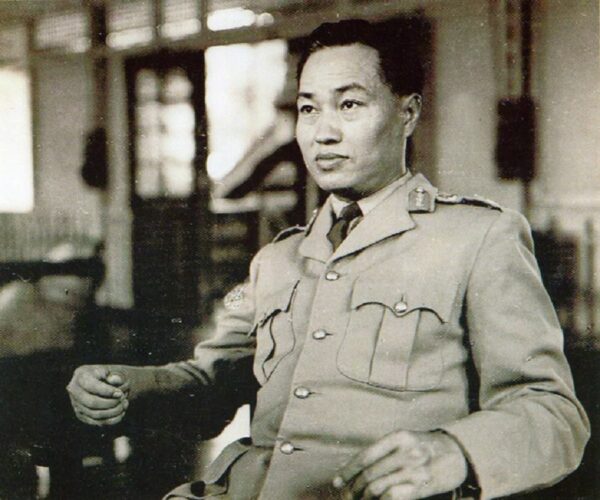
General Ne Win
This module offers a chance to explore how and why authoritarian governments use citizenship as a tool to target, exclude, and persecute its own population.
The setting is Burma (now Myanmar) in the early 1980s and passage of a new exclusionary citizenship law. The source is a speech by Ne Win, the authoritarian ruler of Burma from 1962 to 1988, in which he explains his rationale for the new law. Professor Siew Han Yeo probes the ways in which the racialized definitions of citizenship in the new law rendered hundreds of thousands of minority peoples born or long settled in Burma as stateless almost overnight. The teaching plan enables teachers to use Ne Win’s speech to tease out how a language of “threat” served as justification for racialized forms of exclusion and to see how ethnic, religious, linguistic, and/or cultural diversity has been mobilized or weaponized in Burma and other authoritarian governments to discriminate, expel, or empower certain people and groups. Professor Yeo brings the module forward to 2012 and the genocide against the Rohingya in northwest Myanmar to help students explore the use of discriminatory citizenship laws by authoritarian regimes to legitimize and enact mass violence, persecution, and conflict against its own people. As part of Authoritarianism 101, this module enables teachers to explore the theme of authoritarian practice by examining the tools of authoritarian power around citizenship, rights, national identity and mass violence.
Access Full Module
Contributor
Siew Han Yeo
Siew Han Yeo is a postdoctoral fellow in the Department of Southeast Asian Studies at National University Singapore. She is a historian of colonial Burma. Her research focuses on the history and socio-legal construction of race, belonging, and identity, especially of the overseas Chinese in colonial Burma.
Have you used this module with your students?
We want to hear from you! Give us your feedback here.