About This Module
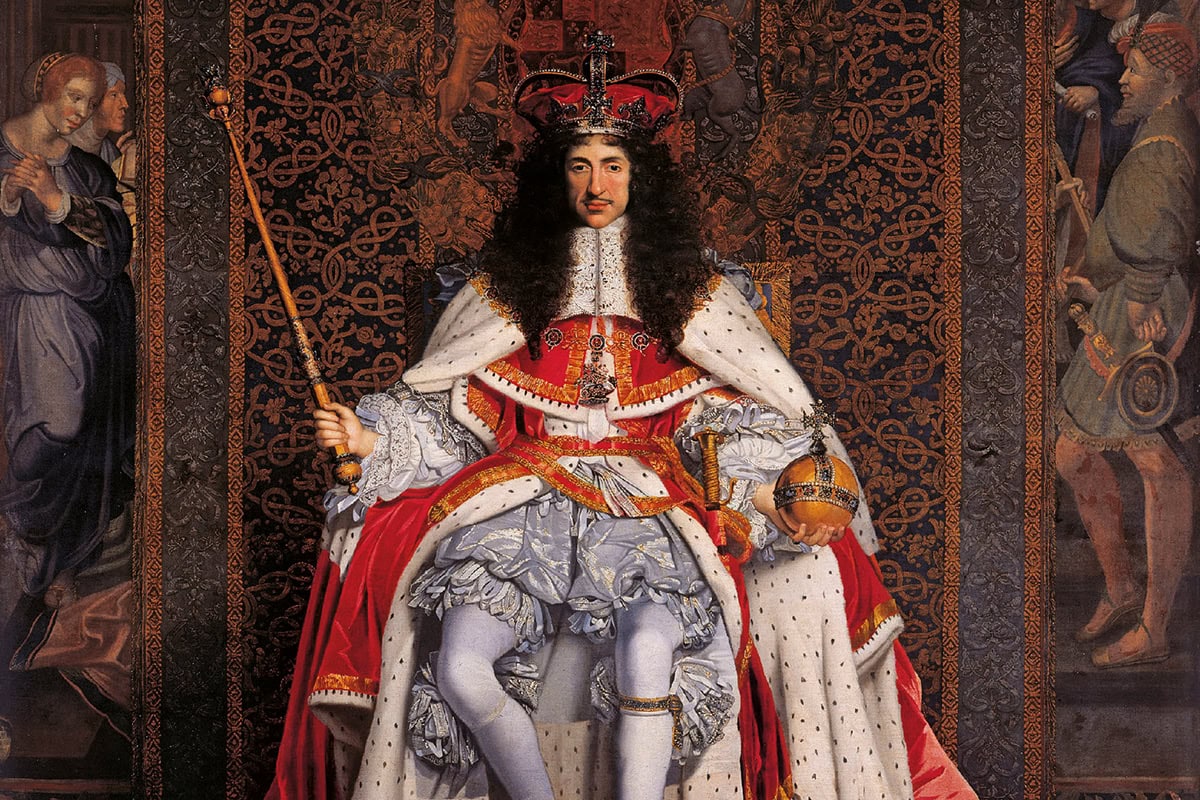
John Michael Wright, Charles II, c. 1671-76. Royal Collection Trust.
This module examines how the tools of small representative government could challenge the authoritarian practices of a large and expansive system of royal power.
The setting is New England in the 1660s, specifically the Massachusetts Bay colony, an English settler colonial area in North America. Residents of this Puritan-led settlement were subject to the rule of King Charles II, yet they were able to forge their own modes of self-government for decades. Their relative autonomy threatened the king, and thus he began to consolidate his power. As Professor Adrian Chastain Weimer shows, Massachusetts Bay residents refused to capitulate to this royal encroachment using a simple tool: the petition. This primary source exemplifies how residents of the colony defined and articulated their rights to govern and worship without royal obstruction. The module suggests that familiar narratives of British colonial rule in North America can be reframed as an example of a kind of royal authoritarianism. The teaching plan offers a chance to think about a familiar political tool, the petition, as a communal rebuke to British royal authoritarian moves. The petition was an accessible mode of protest in the Massachusetts Bay colony, used by women, Native Americans, and free and enslaved Black people. Its heavily religious vocabulary will help students understand how political resistance was expressed through religious language in this period. As part of Authoritarianism 101, this module helps teachers explore the histories of how people challenged authoritarian rule.
Access Full Module
Multimedia
Contributor
Adrian Chastain Weimer
Adrian Chastain Weimer is a professor of history at Providence College. She is the author of A Constitutional Culture: New England and the Struggle Against Arbitrary Rule in the Restoration Empire (University of Pennsylvania Press, 2023), which won the Winthrop Prize. Weimer’s research has been supported by long-term fellowships from the John Carter Brown Library, the National Endowment for the Humanities, and the Andrew W. Mellon Foundation.
Have you used this module with your students?
We want to hear from you! Give us your feedback here.