About This Module
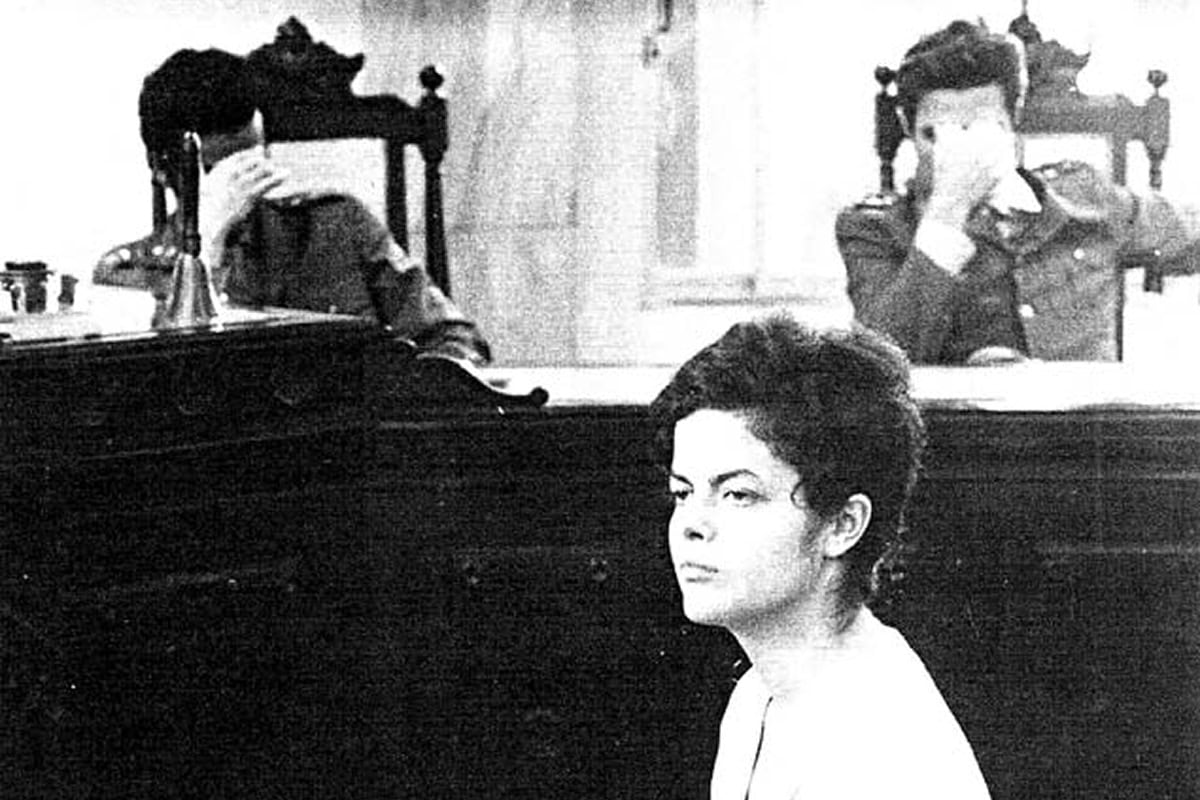
The young Dilma Rousseff facing a military tribunal in 1970.
This module explores how and why authoritarian states have simultaneously engaged in severe repression while maintaining forms of democratic practice in what some historians have called “a pantomime of democracy.”
The module is set in early 1970s Brazil just after massive protests erupted against the military regime that had ruled the country since 1964 in what was part of an authoritarian wave in Cold War era Latin America. The primary source is a photograph of Dilma Rousseff, the future president of Brazil (2010-16), before a military tribunal in November 1970 after months of detention and torture. Professor Barbara Weinstein demonstrates how, along with suspending habeas corpus and torturing its opponents, the Brazilian military state also insisted on subjecting political prisoners to military tribunals that were carefully documented with photographs and transcripts. Weinstein notes that her students are always surprised by how poised and defiant Dilma appears in contrast to her tribunal judges who furtively hide their faces. The teaching plan offers a set of questions that draw on those anomalies in the photograph to open up a student discussion of why Dilma’s judges, who had a monopoly on power, appear to be embarrassed or afraid of what they are doing and why the military regime in Brazil might want to preserve the formalities of the rule of law to maintain its legitimacy. As part of Authoritarianism 101, this module helps teachers explore histories of authoritarian control and challenges to authoritarian rule.
Access Full Module
Multimedia
Contributor
Barbara Weinstein
Barbara Weinstein is Silver Professor of History at New York University and a past president of the American Historical Association. Her publications include The Color of Modernity: São Paulo and the Making of Race and Nation in Brazil (Duke University Press, 2015).
Have you used this module with your students?
We want to hear from you! Give us your feedback here.