The September 2026 issue of the American Historical Review ranges widely across the archives, from Africa to Indonesia and the environment to the family.
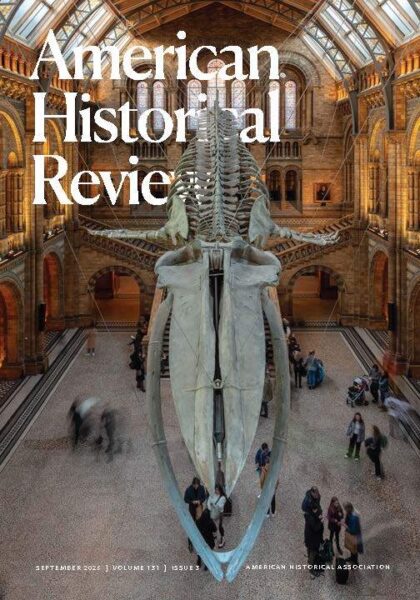
The skeleton of a blue whale on the cover of the September 2026 AHR is among the forms of physical documentation that center “Reading Nature’s Archives,” a History Lab forum that foregrounds new approaches to the research and writing of environmental history. As a part of this forum, in “On the Uses of Whale Bodies for History,” Thomas Fleischman and Ryan Tucker Jones discuss the archival nature of whale biological artifacts that capture specific details of the whales’ individual lives and the societies in which they lived. The skeleton hangs in the Central Hall of the Natural History Museum in London. Diego Delso/Wikimedia Commons/CC BY-SA 4.0
In “Camera Time: Personal Photography and Modern Selfhood in Colonial Egypt and Beyond,” Lucie Ryzova (Czech Academy of Sciences) shows how in the early decades of the 20th century, scores of men, women, and children around the world used the camera to enact their aspirational selves. While the power relationship inherent in some photographic encounters has been amply theorized, historians have been less concerned with a deeper understanding of ordinary personal portraiture, and especially its mimetic and ludic character. Ryzova focuses on ordinary photographs commissioned or produced by middling urban Egyptians in order to make several methodological and historiographical interventions. Paying attention to ordinary photographic practices brings new insights into these debates, as it also highlights the centrality of the camera to the emergence of modern forms of selfhood.
Catherine Molineux (Vanderbilt Univ.), in “The Python God and the Empty Chair: Crafting Royal Power in the Early Modern Bight of Benin and Europe,” explores how African royal power over the slave trade shaped transatlantic and cross-cultural interactions around sovereignty in the early 18th century. Employing an interdisciplinary approach, she analyzes the rich visual and material culture archive produced by the coronation ceremony of King Hufon of Hueda. This event offers a window into how Africans and Europeans negotiated, displayed, and subsequently reinterpreted cross-cultural relationships as part of competing political projects. By tracing the evolution of the story of Hufon’s coronation in Europe over many decades, Molineux shows how authors, artists, and publishers altered the memory and thus the archival imprint of Hufon’s power, obscuring the political subservience European merchants experienced in the kingdom. Molineux argues that Hufon’s statecraft reverberated across African-European, inter-European, and inter-African relationships, demonstrating that the deep reconstruction of actual African-European relations in West Africa is necessary for understanding both Hufon’s coronation ceremony and how African power projected through Atlantic commerce shaped European and African imperialism.
In “An Absent Mother Between Two States: Third World Internationalism and the Politics of Motherhood in Indonesia and China,” Taomo Zhou (National Univ. of Singapore) examines the centrality of motherhood to understanding the rise and decline of Third World internationalism. The article focuses on Francisca Casparina Fanggidaej, a left-wing Indonesian activist in the Afro-Asian solidarity movements and a mother of seven who endured decades of forced separation from her family. Based on a close reading of her diaries, personal letters, and oral history interviews with family and friends, Zhou discusses the politics of maternal absence in Indonesia and China and explores how these two countries shaped the public and self-perceptions of nonresidential mothers through their welfare provisions and reproductive policies. Zhou argues that the fall of Third World internationalism signaled not only a missed opportunity to reconfigure global geopolitics but also a lost chance to redefine motherhood—not as the individualized enterprise of the birth mother alone but as a communal effort involving a diverse assemblage of caretakers including both kin and nonkin, men and women.
Safia Aidid (Univ. of Toronto) explores colonialism in Africa as a textual encounter in “A Revolution of Letters: Text, Sight, and Spectacle in Socialist Somalia.” Somalis, a predominantly oral people spread out across five colonial territories in the Horn of Africa, resisted Latin-based orthographies for their language. After World War II, Somalis vigorously debated the written form Somali should take. Following Somalia’s independence in 1960, the continued use of colonial languages for writing threatened the postcolonial nation-building project and its larger ambitions to unify the partitioned Somali territories into a Greater Somalia, a central objective of Pan-Somali nationalist politics. Aidid examines the history of the Somali orthography and the making of a nationalist discourse ecology that brought together text, sight, and spectacle in revolutionary Somalia at a time when the Somali state looked beyond its borders and mobilized for war.
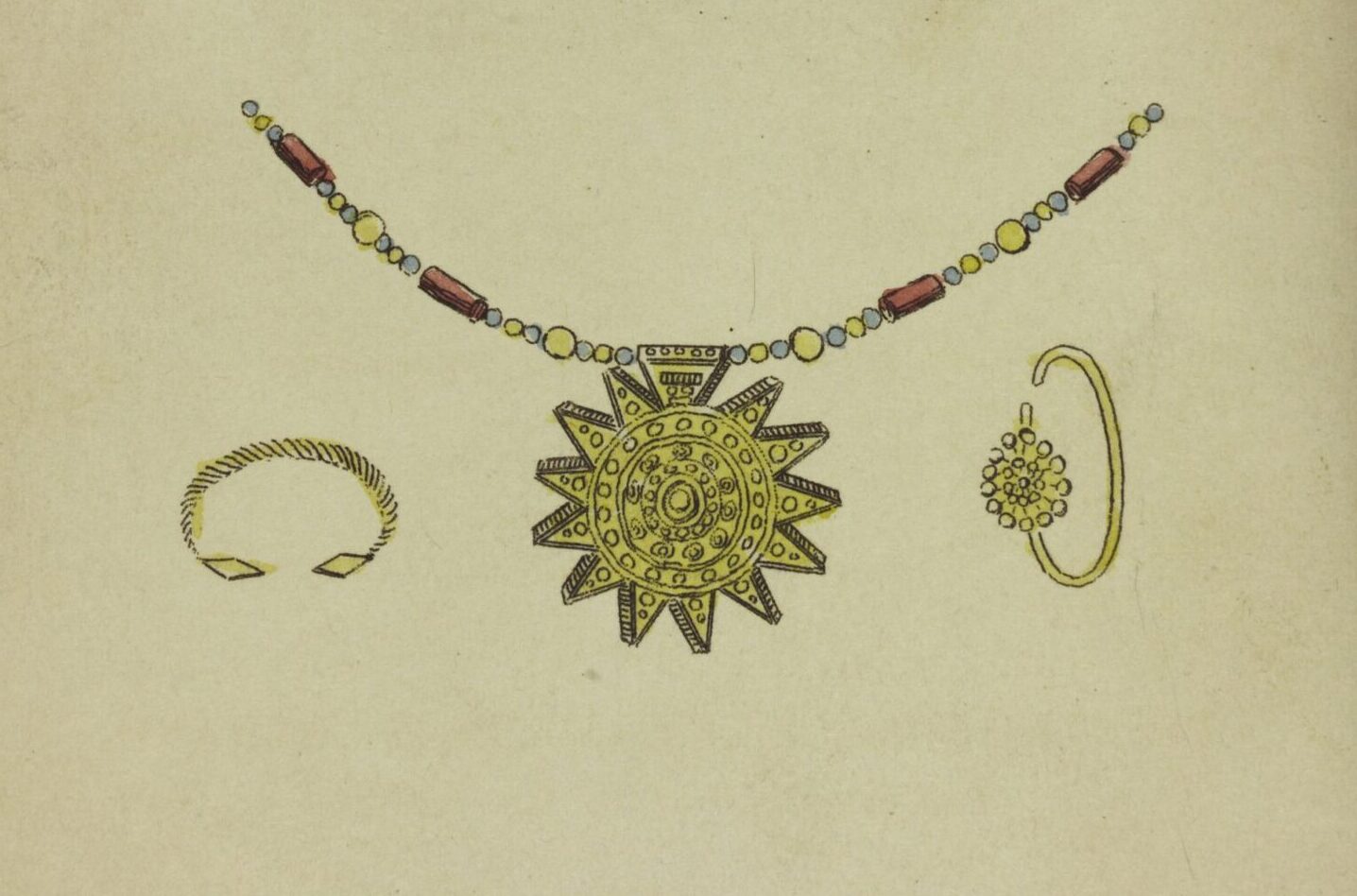
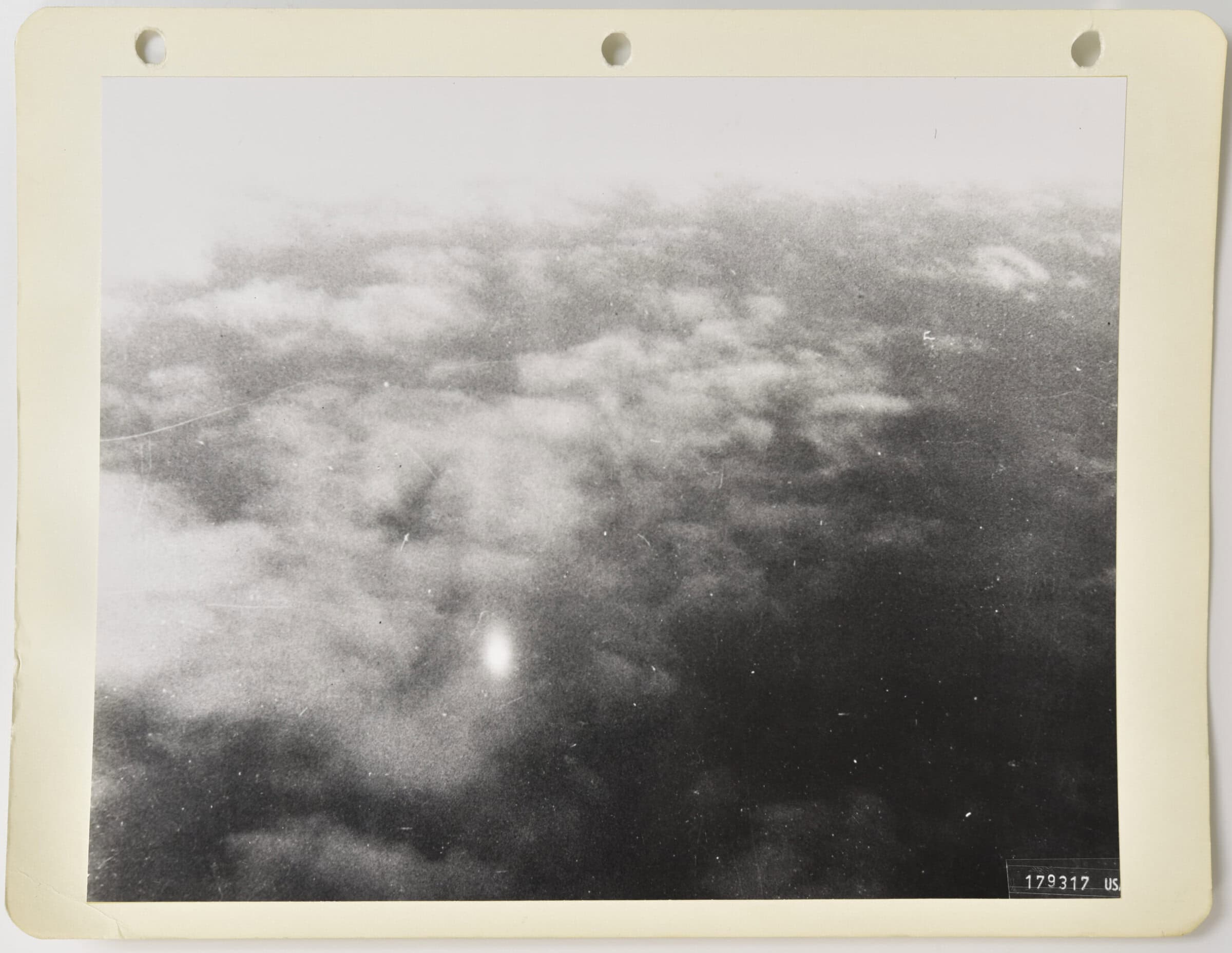
The History Lab includes a forum on environmental history, two History Unclassified essays, and the latest modules of the #AHRSyllabus project Authoritarianism 101: A Global History. “Reading Nature’s Archives,” a forum organized by David Biggs (Univ. of California, Riverside), brings together a team of distinguished environmental historians who each offer short essays centered on a reading of a particular object or visual form of documentation. Their “archives” range from ivory figurines, whale bones, roof tiles, porcelain earthenware, and botanical prints to a colonial-era cattle census, photographs of the sun, aerial imaging of former warscapes, and a 20-sided golden cosmic box. Together, the contributors provide a set of novel critical methods for reading these sources that are attuned to how longer histories of borrowing, theft, erasure, and resilience often shape forms of knowledge about nature.
The issue’s History Unclassified essays explore the complexities and rewards for historians in drawing on primary sources from and about their own families. In “From Here to There: Thinking with a Chinese Family Archive,” Tobie Meyer-Fong (Johns Hopkins Univ.) examines a small collection of documents, photographs, and artifacts preserved by her mother-in-law, Yueh-Kam Fong. Meyer-Fong considers how these intimate histories allowed her to write a different kind of transnational microhistory of war, revolution, and the migratory processes of isolation, engagement, and return for a Chinese American family during the second half of the 20th century. Today, she argues, “the family archive affords the opportunity to think expansively through that which is local, small, personal, and intimate and to amplify our understanding of an interconnected world.”
Family history is also at the center of Stephanie Palazzo’s (Franklin & Marshall Coll.) “Forever in Fiction: The Politics of Closure,” a reflection on her fieldwork on the closing of the Three Mile Island Nuclear Power Plant in the wake of the most publicized civilian nuclear accident in the United States. Palazzo grew up in a Pennsylvania town near Three Mile Island. As a young girl, some years after the accident, Palazzo lost her sister. Years later, early in her fieldwork, she encountered a book at the local public library that purported to detail her sister’s illness and death. The tidy narrative the book told of grief and closure, at odds with the more ambiguous realities of her sister’s death and its aftermath, ultimately prompted Palazzo to reframe her approach to the everyday meanings of nuclear decommissioning. More broadly, she now resists what she sees as the urge to silence messy realities in prevailing narratives of historical closure.
The Lab concludes with the publication of new modules from the Authoritarianism 101: A Global History project, designed to offer teachers and students a broad historical perspective on the history of authoritarianism in all regions of the world. Each module features a single textual or visual primary source to focus on big questions about the global histories of authoritarianism and provides a brief contextual essay and teaching plan. The Authoritarianism 101 modules featured in this issue engage with authoritarian histories in China, the United States, Egypt, Cuba, India, Argentina, and Korea through a variety of primary sources, including short texts, photographs, and film. All the modules in Authoritarianism 101: A Global History are free to access. They are available on the project website along with supplementary teaching materials.
This work is licensed under a Creative Commons Attribution-NonCommercial-NoDerivatives 4.0 International License. Attribution must provide author name, article title, Perspectives on History, date of publication, and a link to this page. This license applies only to the article, not to text or images used here by permission.