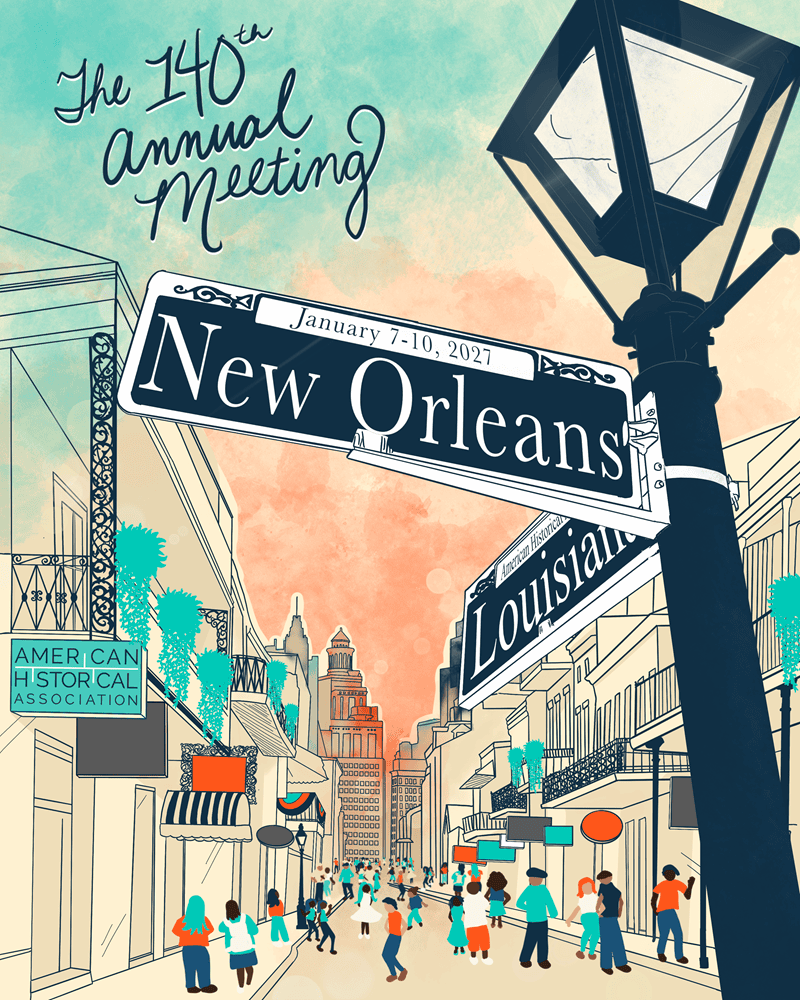
It was a gorgeous day in Atlanta to kick off the 2016 AHA annual meeting. Many first-time visitors found themselves marveling at the architecture of the Hyatt and the Marriott hotels. Built between the 1960s and the 1980s, the hotels were designed by neo-futurist architect and developer John C. Portman.
Bones and spine. #aha16#arthistorianataha pic.twitter.com/rudD77Appw
— Cecile Fromont (@CecileFromont) January 7, 2016
For a third year in a row, historians interested in learning digital tools and techniques gathered to attend the “Getting Started in Digital History” workshop before the meeting officially began. The workshop included both beginner and intermediate hands-on sessions on topics such as digital pedagogy, introduction to GIS and mapping, big data, etc. Participants grappled with what public history is and how we can use it to engage our students as well as the communities we serve:
How do we expand history from physical institutions into virtual spaces? – food for thought w @jason_m_kelly on #dighist#gsdh#aha16
— Christine Axen (@ChristineAxen) January 7, 2016
#aha16#dighist#gsdh Think about how you can structure your project in a way that encourages student engagement.
— (@kritikaldesi) January 7, 2016
Participants also discussed the pressing issue of how digital history projects can be assessed by departments to determine promotions and tenure. Much discussed was the report on “Tenure, promotion, and the publicly engaged academic historian” released by the working group on evaluating public history scholarship:
Tenured faculty need to advocate evaluation and support for digital scholarship for benefit of junior faculty. #aha16#dighist
— Glenn Kranking (@GustieGlenn) January 7, 2016
#gsdh hey history depts, the AHA, NCPH, & OAH did the work for you! see https://t.co/KLy6Vhob2l to measure public/digital historian work
— Averill (@aearls) January 7, 2016
As the annual meeting officially began, attendees filled their day with sessions ranging from the origins of women’s prisons in the United States—a panel where all the presenters were incarcerated at the Indiana Women’s Prison and delivered their papers via pre-recorded videos—to challenges facing the National Archives:
#aha16#s20 higher education program at the Indiana Women’s Prison–how do you teach history without traditional resources?
— Sadie Bergen (@sadiebergen) January 7, 2016
Richard Immerman discussing results of survey of National Archives users, summarized at https://t.co/kczEA7JfzL#AHA16
— Rob Townsend (@rbthisted) January 7, 2016
Some panels continued ongoing discussions at the AHA on tuning and dual enrollment:
Does focus on dual enrollment neglect similar/related issues in AP classes and the quality of intro-level college courses. #AHA16
— Rob Townsend (@rbthisted) January 7, 2016
Four C’s of intro history surveys: coverage, content, competencies, and concepts – how to balance amongst them all? #aha16#s1
— Jessica Otis (@jotis13) January 7, 2016
The afternoon included sessions on the LGBTQ historians task force survey and report:
Lou Roberts announces that the AHA will now have a standing LGBT committee. Huge success! #aha16
— Cmte on LGBT History (@CLGBTH) January 7, 2016
RT @CLGBTH: 71% of survey respondents identified employment issues as paramount for LGBT historians. #aha16#s29
— Susan Ferentinos (@HistorySue) January 7, 2016
One respondent talks about the difficulty of being Trans and receiving medical care as a history grad student #aha16#s29
— Amber N Mitchell (@anichellemitch) January 7, 2016
The popular AskHistorians of Reddit:
Top @askhistorians post: “Why are there so many medieval paintings of people battling large snails?” #aha16#s34https://t.co/7b642WcVSl
— Zoe LeBlanc (@Zoe_LeBlanc) January 7, 2016
The comparative study of revolutions:
Talking about the revolution #aha16pic.twitter.com/GAbtOs3Zdq
— Kristie (@thehistoriann) January 7, 2016
And a panel on history and the future of interdisciplinary ethnic studies:
Great panel asking what History and Ethnic/Indigenous Studies can do for each other. Excellent start to #aha16pic.twitter.com/ldlm4z0uRb
— Cathleen Cahill (@CathleenDCahill) January 7, 2016
By evening, historians were headed to either a myriad receptions (including one for graduate students and another for bloggers and twitterstorians), or to the hotel bars to try one of the AHA annual meeting’s signature cocktails:
“I think I’m gonna like it here!” #aha16#signaturecocktails by valjeanjb #atlanta#livetweetpic.twitter.com/z5Eu741BLm
— Instagram Of Atlanta (@igofatlanta) January 7, 2016
The highlight of the day, however, was clearly the plenary on the confederacy, its symbols, and the politics of public culture:
#aha16 Packed room for plenary on The Confederacy, Its Symbols, & the Politics of Public Culture. Amazing speakers https://t.co/CJzj7jXkAX
— Jennifer Serventi (@JenServenti) January 8, 2016
David Blight: “We live in the present, but sometimes the past explodes in the present.” #aha16
— John Fea (@JohnFea1) January 8, 2016
Stone Mountain may be the most elaborate shrine to white supremacy. – W. Fitzhugh Brundage @ #aha16
— Ramona Houston (@ramonahouston) January 8, 2016
Brundage suggests making it a site interpreting the history of white supremacy, but may not be feasible or accepted #aha16
— Kathleen Thompson (@K_Logo_Thompson) January 8, 2016
A call for a possible hierarchy of confederate sites. Those that cross a line are removed. The others reinterpreted #aha16
— Amber N Mitchell (@anichellemitch) January 8, 2016
Berry: notes that the students led the charge for changing campus statuary #aha16
— Kathleen Thompson (@K_Logo_Thompson) January 8, 2016
#aha16 Berry: What is role of the historian? To provide the context in which ppl can understand the complex issues of the past and present.
— Stephanie A Kingsley (@KingsleySteph) January 8, 2016
This plenary panel on confederate symbols and monuments is powerful and moving. Staring uncomfortable history in the face. #aha16
— Mike Mantin (@mikemantin) January 8, 2016
Check back tomorrow for highlights for day 2, and don’t forget to tweet at #aha16!
This post first appeared on AHA Today.
This work is licensed under a Creative Commons Attribution-NonCommercial-NoDerivatives 4.0 International License. Attribution must provide author name, article title, Perspectives on History, date of publication, and a link to this page. This license applies only to the article, not to text or images used here by permission.