Last year, in a cozy restaurant on a chilly night in Georgia, we shared a meal with a woman named Mary DeBardelaben. DeBardelaben is 76 and lives in an Atlanta suburb. A few months before, she had received a package in the mail that she said changed her life. It was a thick packet of documents, most of them 80 years old. They were federal records, and they were being released by the Civil Rights Cold Case Records Review Board. As two of the four members of that board, we had authorized their release.
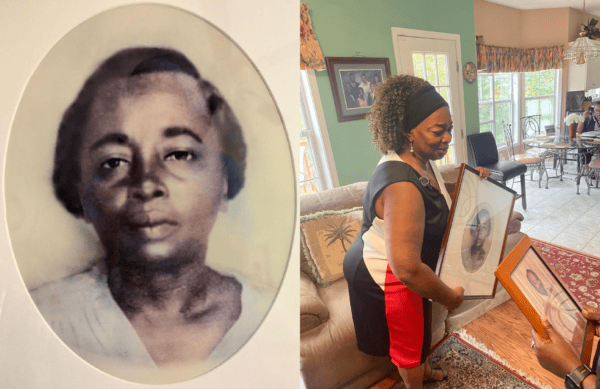
When the US government released records related to the death of Hattie DeBardelaben (left), it changed her granddaughter Mary’s (right) life. Courtesy Mary DeBardelaben (left); Steve Fennessy (right)
These records concerned the death of DeBardelaben’s grandmother, Hattie DeBardelaben. In 1945, Hattie was washing clothes in the yard of her home in Autauga County, Alabama, when four law enforcement officers—three of them federal—drove up. They were looking for illegal whiskey and asked to search her property. Hattie agreed, even though the men didn’t have a warrant. In rural Alabama in 1945, a Black woman insisting on her constitutional rights did so at her peril.
During their search (which turned up no illegal alcohol), the lawmen started roughing up Hattie’s young nephew, James. She demanded that they stop. And they did—only to turn on her. They began beating Hattie, and she fell against the pot of water she’d been boiling to wash clothes. A few minutes later, the officers put her and her 15-year-old son Edward into the backseat of one of their cars. On the way to the jail, Hattie began vomiting. As the police car rolled past the Alabama countryside, she died, her son sitting helplessly next to her. She was 46 years old.
Her granddaughter Mary was born four years later. Growing up, she often wondered about the grandmother she never knew. Her father, Bennie, had been present on the day his mother died. He was so frightened that the officers would come after him next that he moved to Birmingham. And he refused to speak about what happened that day, even to his own daughter.
For the first time, she said, pieces of her family’s past began to fit together.
As an attorney and a historian, we have spent our careers examining the staggering breadth of crimes committed against Black Americans due to racial animus. We have spent countless hours examining records of horrific violence. On the night we met with DeBardelaben, she described in poignant detail the impact that the release of these records has had on her and her family. For the first time, she said, pieces of her family’s past began to fit together. Her grandmother, who for so long she had known as little more than a portrait on her wall, now took on new and courageous dimensions. Hattie became flesh and blood. DeBardelaben talked about feeling the spirit of her grandmother more strongly than ever. After she read the records, DeBardelaben told us, she looked up at her grandmother’s portrait and wept.
The Civil Rights Cold Case Records Review Board owes its existence in large part to a group of high school students from suburban New Jersey. In the mid-2010s, students in Stu Wexler’s Hightstown High School civics class grew frustrated as they researched the Jim Crow era and the Civil Rights Movement. They filed Freedom of Information Act (FOIA) requests for federal documents, but it would take months and sometimes years before they heard back—and too often what documents they received were obscured by redactions.
The FOIA process, they learned, was often ill-suited to the task of finding out details of the hundreds of civil rights violations—from assaults to kidnappings to homicides—that occurred in 20th-century America. So the students began advocating for a law to compel the release of records, lobbying lawmakers and winning overwhelming bipartisan support. Their efforts culminated in 2019, when President Donald Trump signed the Civil Rights Cold Case Records Collection Act into law.
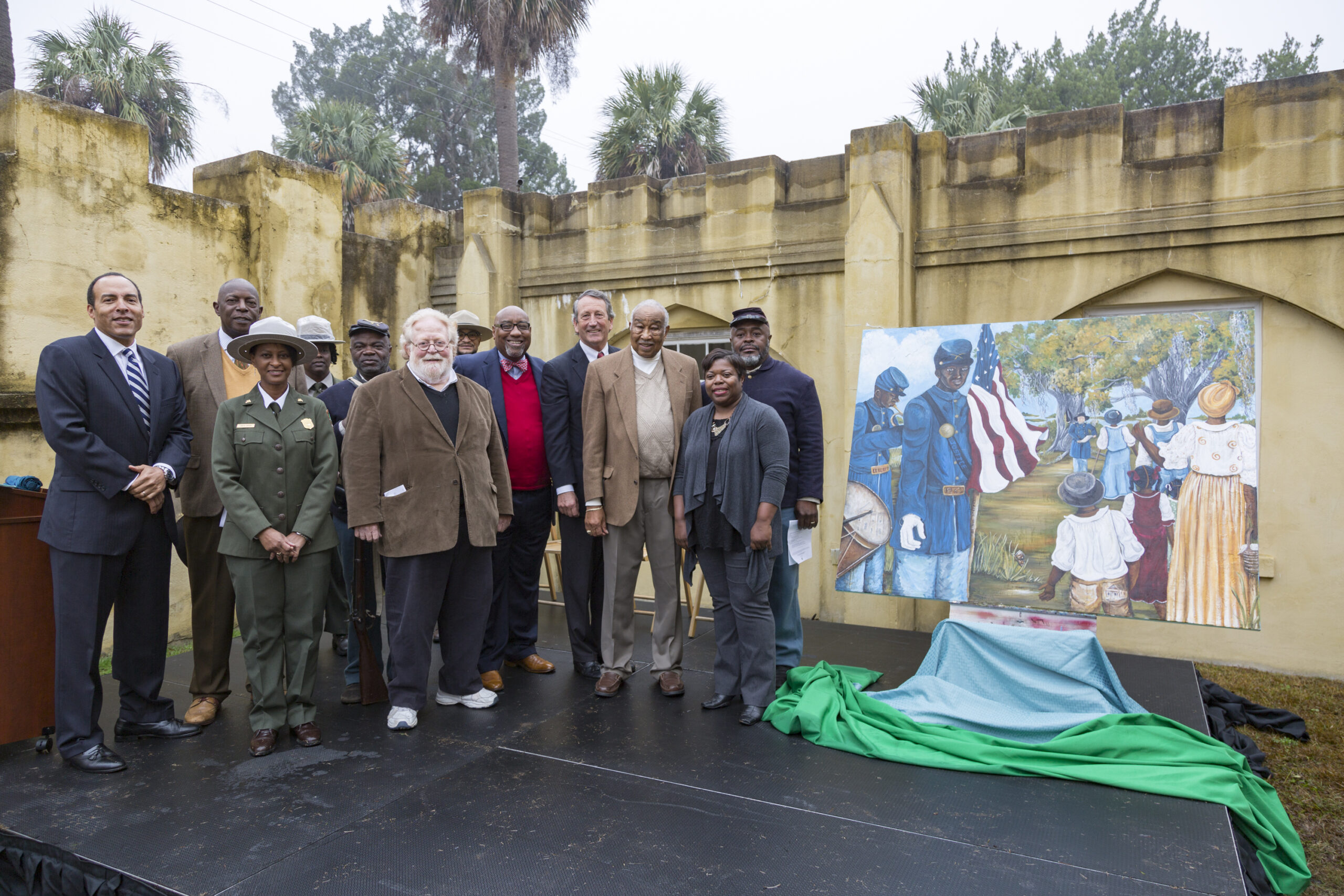
The act authorized the creation of our board, whose members were nominated by the president based on expertise. We are lawyers, journalists, archivists, and historians. When we were sworn in in 2023, we were honored to join an effort that, at its core, is about government transparency and illuminating a dark chapter in our nation’s history. Since October 2024, the board has released records on 52 cases, spanning more than 14,000 pages. The cases are both notorious (such as the 1955 lynching of 14-year-old Emmett Till) and full of victims who otherwise might have been lost to history. These include people such as Bob White, a 28-year-old laborer shot dead in a Texas courtroom in 1941; John Lester Mitchell, who served his country during World War II and then was shot outside a Louisiana bar by a security guard in 1951; or A.C. Williams, a 20-year-old Florida man who was targeted by a mob so insistently he became known as “the man who was lynched twice.” While the records deepen our historical understanding of this period, the impact on the families of the victims is far more than academic; it is as personal as it gets.
The process begins with names—long lists of Americans that board members know from our individual work were victims of civil rights violations between the years 1940 and 1979, the time period the cold cases law covers. These lists go to the agencies most likely to be custodians of these records—typically the Federal Bureau of Investigation (FBI), the Department of Justice, and the National Archives and Records Administration. The agencies comb through their archives searching for the records. If relevant records are found, the agencies review them, propose any redactions, and hand them over to the board. Then our team of four researchers reads every word of the documents while searching for other evidence—newspaper accounts, census data, state and local records—that shed further light on what occurred. The board members vote on the proposed redactions, sometimes requiring back-and-forth with the agency to finalize redactions. Any redaction, however, is intended to be temporary; the law requires that they be periodically reviewed with an eye toward full disclosure. Once the records have been cleared for release, case summaries, written by the researchers, are published on the board’s website, along with a link to the documents themselves. Some cases consist of just a few pages; others number in the thousands.
These documents are remarkable. Many reveal the FBI’s investigations—some perfunctory, some quite robust—into these crimes. Witnesses would be interviewed, leads chased down. But when the FBI turned its investigative reports over to the Department of Justice, often the prosecutors concluded that the crime in question was a matter for local authorities and closed the case. Meanwhile, the state law enforcement apparatus, including local prosecutors who were so often complicit in maintaining the status quo of racial oppression, would sweep the whole matter under the rug. Justice for the victims and their family remained out of reach.
With each case we release, a fuller picture comes into focus of what life—and, too often, death—was like for so many of our fellow citizens.
We are often asked if our work might lead to new investigations and possibly even prosecutions. That’s a decision that only government prosecutors can make. The reality is that most perpetrators in these crimes are long dead. But with each case we release, a fuller picture comes into focus of what life—and, too often, death—was like for so many of our fellow citizens. We see the lack of accountability in these records. We hear the voices of mothers like Ethel Davis, who wrote the US attorney general in 1945, calling for the prosecution of the police officer who shot and killed her 24-year-old son Willie Lee, a US Army technician, outside a Georgia juke joint. “Is there any justice in the South?” she wrote. For Davis, there would be no justice. But now her son’s story, and the details of the FBI’s investigation into his death, are available for all to contemplate.
Although we have released dozens of cases so far, there are hundreds, perhaps thousands, more still to be researched, processed, and released. But will they see the light of day? Unless Congress passes pending legislation that would extend the tenure of the Civil Rights Cold Case Records Review Board by four years, our work is statutorily required to cease no later than next January 2027. The ticking clock gives us an even more profound sense of urgency—not only so a fuller picture of this difficult time in American history can emerge but so more people like Mary DeBardelaben can begin to understand what happened to their family members all those years ago. As DeBardelaben told a CBS reporter, “I want the world to know what happened to my grandmother.”
There are hundreds more stories like Hattie DeBardelaben’s, waiting to be told.
Margaret Burnham is University Distinguished Professor of Law and founder of the Civil Rights and Restorative Justice Project at Northeastern University. Brenda E. Stevenson is Distinguished Professor and Nickoll Family Endowed Chair in History and African American Studies at the University of California, Los Angeles.
This work is licensed under a Creative Commons Attribution-NonCommercial-NoDerivatives 4.0 International License. Attribution must provide author name, article title, Perspectives on History, date of publication, and a link to this page. This license applies only to the article, not to text or images used here by permission.