The AHA is pleased to announce this year’s summer columnists. Follow along as these graduate students share their experiences researching the global history of capitalism through women’s experiences in Senegal, exploring trust in photography through UFOs and AI, and teaching American history as a French immigrant to the United States.
Becca Aponte, Africa, Women, and the Global History of Capitalism
Becca Aponte
Over the past two decades, a wave of scholarship on the global history of capitalism has transformed our understanding of trade, empire, and exploitation. Where once there was a bloodless narrative of class struggle, now we are reckoning with violence and coercion. But this scholarship has largely left Africa behind. When the continent is included, it figures as a source of enslaved labor and extraction, while its own economic worlds—the traders, borrowers, and markets that predated and outlasted the slave trade—are left out of frame. Yet Africa is not merely an overlooked case. It is where the contradictions of capitalism were most exposed: where men and women creatively reinvented the terms of their own economic lives even as commerce and conquest sought to command them.
Senegal is one place where that history can be found. As France’s first territorial possession and center of trade in West Africa, it generated records of remarkable detail and duration. But this history did not begin with the French. Before colonial rule, women operated as entrepreneurs, brokers, and producers with their own currencies, credit instruments, and goods for exchange. European commerce did not displace them. It collided with them. Women in Senegal emerge not as a footnote in the global history of capitalism, but as the vantage point from which it looks fundamentally different: uneven and contested by the very people it sought to dispossess.
The first column, “Capitalism at Ground Level,” opens on a modern street in Dakar, where the transformative force of capitalism is evident: vendors hawking goods including t-shirts produced by factories on the other side of the world, women cooking food for workers at dawn, and French-made taxis threading through roads built for a colonial capital. I consider how these informal operations are, in fact, the invisible infrastructure of global capitalism. Understanding how Dakar became a cosmopolis in the 20th century requires going back to the ordinary Africans who built the city’s economy through the improvised currencies, credit networks, and economic relationships that no French administrator sanctioned.
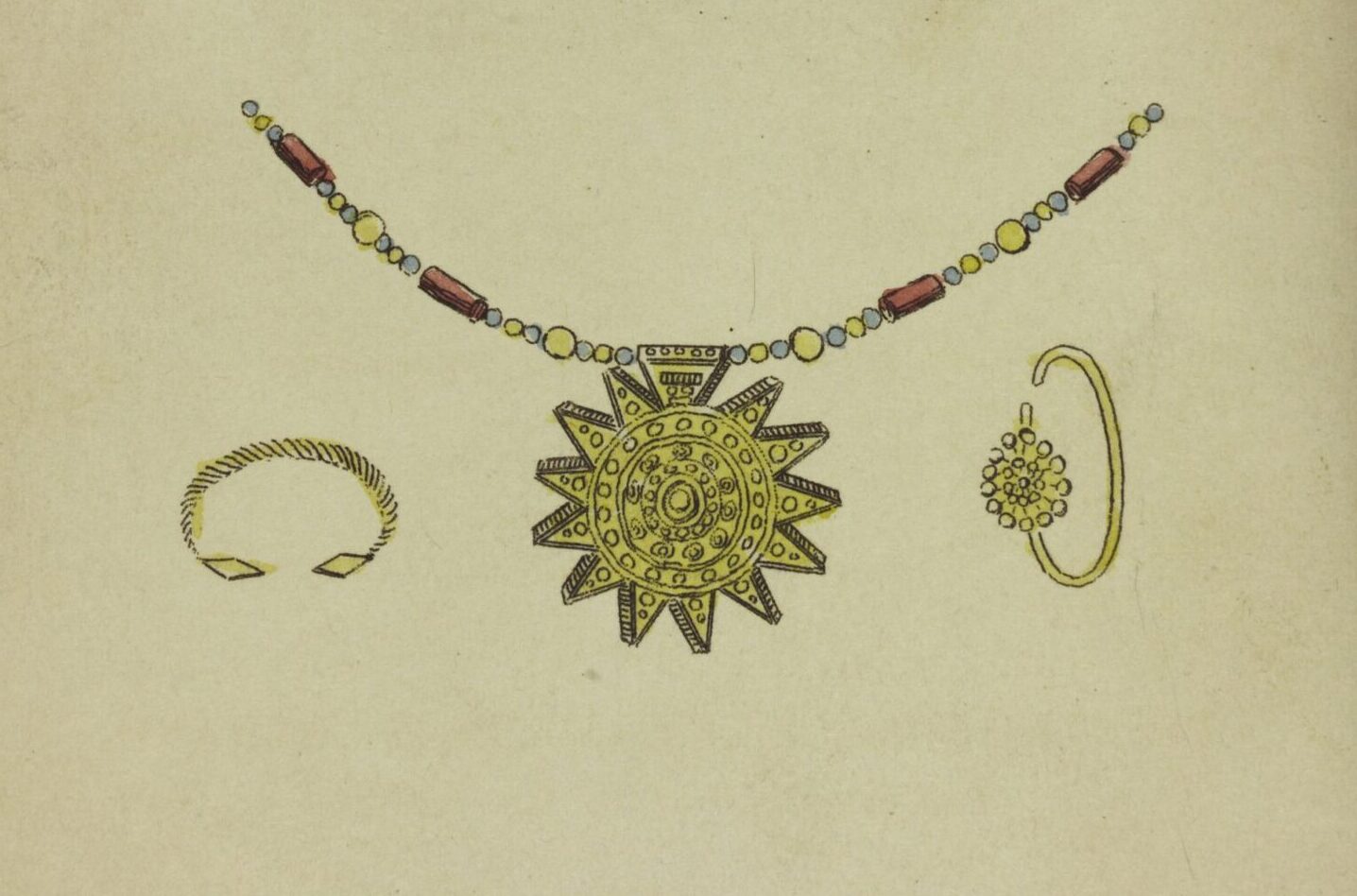
The second column, “Small Property, Big Meanings,” moves from the street into the archive, asking what it means to follow those who vanish as soon as they enter the record. In Senegal, jewelry was never merely an adornment—it was collateral, a credit instrument, and a reputational marker in a society that denied women access to formal financial institutions. Yet these objects, and the women who fought for them, appear in the archive only at moments of legal dispute. I argue that treating these traces not as dead ends but as the substance of historical method is what it takes to center African women as actors in rather than casualties of capitalism.
Together, these columns insist that, sometimes, the answers to our most consequential questions hide in the most inconspicuous places: the route to the archive, a debt of a few francs, a woman whose name survives only because someone tried to take what was hers.
Becca Aponte is a doctoral student in history at Emory University, where she studies gender, law, and economy in French West Africa. She is a collaborator on the Senegal Liberations Project, a public-facing digital humanities initiative that traces the lives of enslaved Africans who actively sought their freedom in the 19th century.
Madalyn Shaw, Unphotogenic Flying Objects: On Seeing and Believing Photography
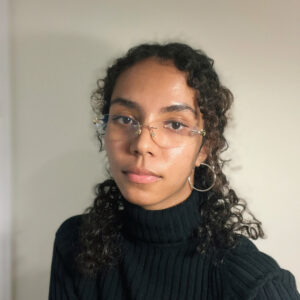
Madalyn Shaw
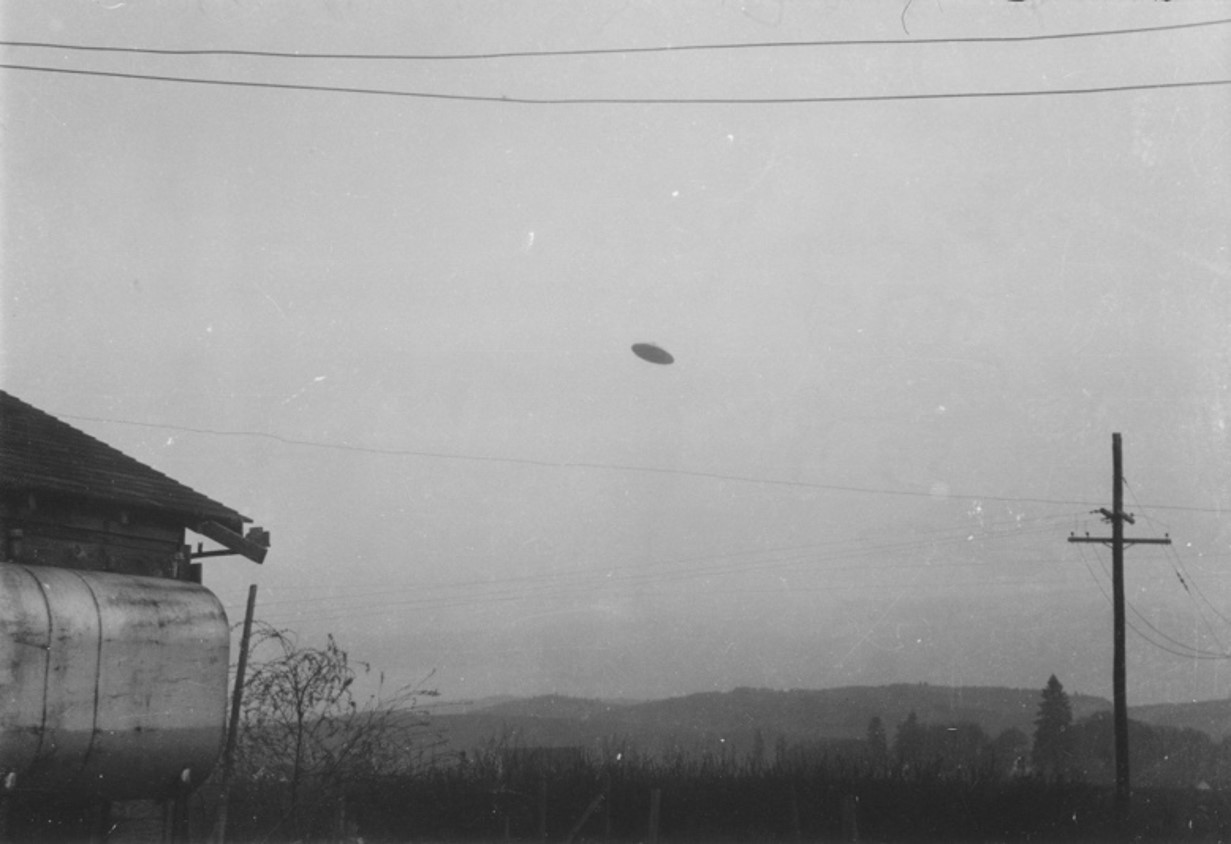
In his 1959 book Flying Saucers: A Modern Myth of Things Seen in the Sky, Carl Jung wrote about the psychic origins of the UFO phenomenon. While reflecting on the ambiguity around eyewitness reports, he notes “how few ‘authentic’ photos of UFOs seem to exist,” concluding that “UFOs are somehow not photogenic.” My columns take their origin point from these comments to reflect on the state of seeing and believing images in the modern age.
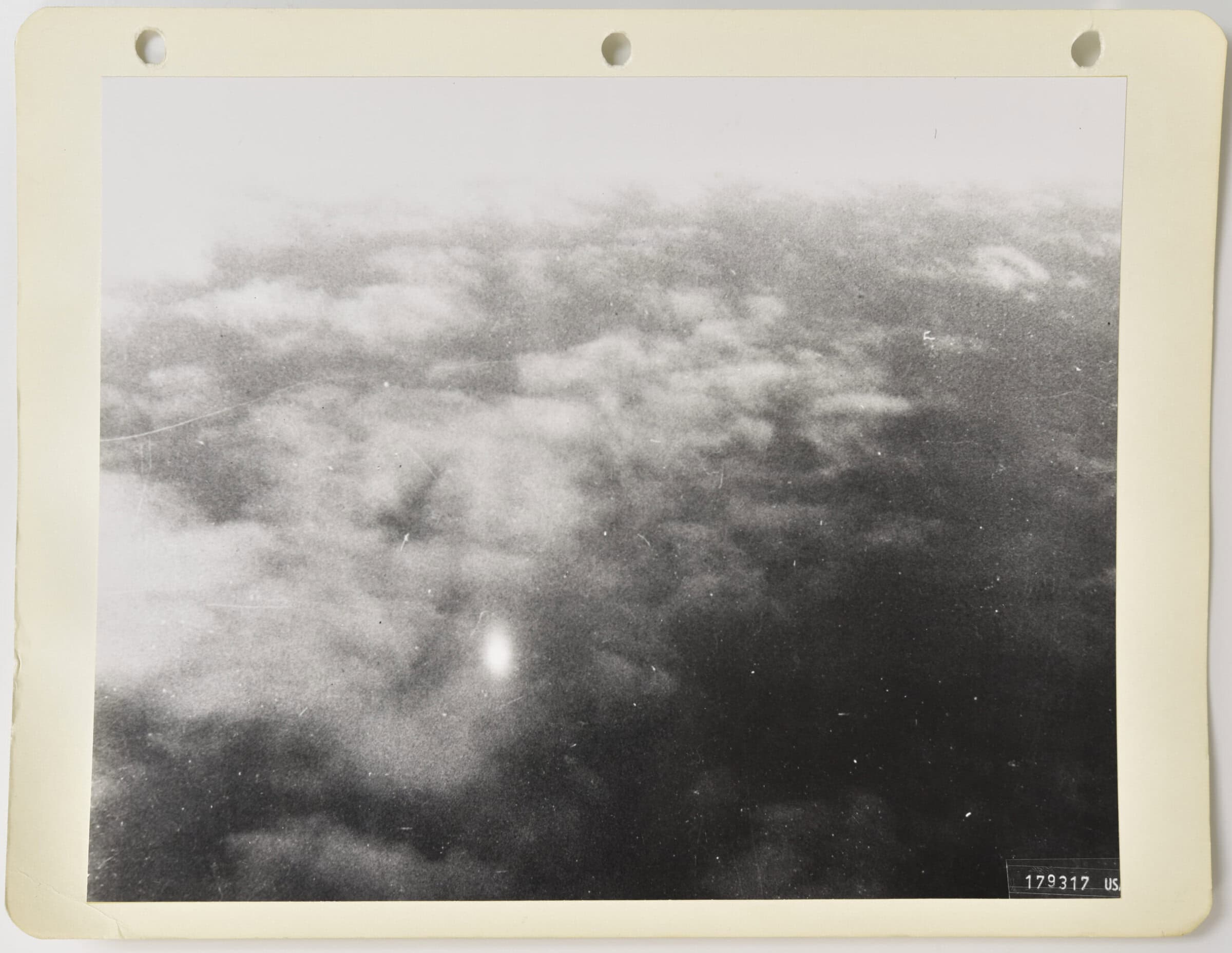
As a pictorial genre, photographs of unidentified flying objects (UFOs) present a challenge to traditional historiographic analysis in the history of photography, which often oscillates between coding images as documentary (based on fact) or imaginary (based on fiction). While scholars recognize these categories as fluid, photographs of UFOs put pressure on (and simultaneously rely upon) the assumption that photographs depict reality. In contrast to a strict photo realism, UFO photographs combine the documentary and imaginary, the seen and unseen, the conscious and unconscious, and the possible and impossible.
In these columns, I ask two questions: Why do we want to believe what we see? And what if we can no longer believe what we see? I approach both from the perspective of photo history and theory. In the first column, I explore how audiences came to rely upon photographs to depict reality and argue that Jung’s conclusions stem from the inability of the camera to capture and render the UFO knowable. At the same time, the desire to believe photographs—consider the infamous “I Want to Believe” poster from The X-Files—suggests an investment in the worldmaking capacity of photographic truth claims (thus, a world where alien spacecrafts exist and visit Earth).
In the second column, I examine what happens when trust in the truth of the image breaks down. I foreground the visual connection between artifacts or glitches in AI-generated images and “real” UFO photographs, suggesting that such images demonstrate how the value of the photographic image as evidence may be overdetermined or easily corrupted. In short, I argue that the threat AI-generated images pose to the public’s trust in what they see obscures an already strained relationship between photography and the truth that predates AI. The solution to the problem of how to trust images in the age of AI, I suggest, is to avoid treating images as though they can speak for themselves. All photographs require contextualization and must be investigated to discern their true meaning.
Studying the history of photography—particularly through the lens of UFOs (what Jung might redefine as “unphotogenic flying objects”)—may relieve our compulsion to blindly believe what we see and prompt us to investigate further. By capitalizing on the strange and obscure, these photographs offer a metacommentary on the supposed truthfulness of photography and present an opportunity for viewers to develop visual analysis and critical thinking skills that are essential in a “post-truth” era in which the stakes of discernment are raised.
Madalyn K. Shaw is a PhD student in art history at the University of Toronto. Her research focuses on photography, science fiction, and postwar visual (oc)culture, particularly through the lens of UFO photography.
Justine Truc, Who Gets to Teach American History? A French Teaching Assistant’s Perspective
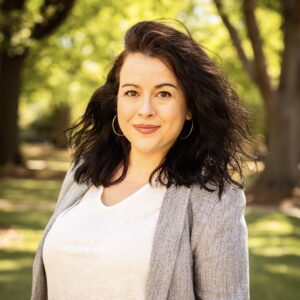
Growing up in France, I realized at a young age that the only two things I was really good at in school were history and learning English as a second language. Naturally, I combined both of my interests and became obsessed with the United States. I watched its movies, listened to its music, followed its politics, and learned its history. Eventually, that obsession brought me to South Carolina in 2021 to pursue a PhD in American history, confident that I understood a history that was not my own. Then I started teaching it.
My two columns reflect on what it meant to study American history in France and then teach it in the United States, while learning how to move between two different approaches to discussing the past. The first column opens with my initial experiences as a new teacher in a new place. Almost immediately, I realized that American classrooms operated very differently from those I had known in France. Students addressed professors more casually, approached classroom discussions differently, and had strong expectations about the kind of education they were paying for.
In the column, I describe specific moments in the classroom where my expectations no longer held. For example, while teaching a course on the history of science and technology, I did not anticipate how sensitive the theory of evolution could be for some students, particularly in a context where religious beliefs shape how such material is received. In France, this had never been a concern. It quickly became clear that my students did not approach debate and disagreement the same way I did. Although debate had been central to my training in France, I had to resist the impulse to push discussions toward more controversial territory, as I realized students were often reluctant to engage.
The second column begins with a moment of pushback. While teaching a course structured around the idea of freedom, a student questioned the class’s focus on minority groups, arguing that “we never talk about white people,” and that they, too, had been oppressed. In that moment, I hesitated—not because I did not know how to respond, but because I had to consider how my response would be received in a classroom shaped by expectations I was still learning to navigate, especially as a foreign instructor teaching on a temporary visa.
This moment led me to reflect on questions of authority and legitimacy. As the “French TA,” I became aware that my presence carried assumptions about who should teach American history and from what perspective.
At the same time, I had to rethink my expectations of what students know. It sounds obvious, but I had never fully considered how Eurocentric my knowledge of certain events was. For instance, my understanding of World War II did not always align with the more US-centered narratives my students brought to the classroom. I found myself adapting my teaching to allow students to reveal what they know before I intervened, and framing discussions in ways that could open both their perspectives and my own.
Together, these columns invite readers to reflect on what happens when a country’s history is taught by someone who grew up outside it. Through my personal experience, I came to realize how deeply national identity shapes the stories we tell about the past and how many assumptions I carried into the classroom without realizing it. I hope these columns encourage a broader conversation about who gets to teach American history and from what perspective.
Justine Truc is a PhD candidate in history at the University of South Carolina. Her dissertation examines reform efforts within the South Carolina Department of Corrections under Commissioner William D. Leeke (1968–87) during a period of growing national emphasis on punitive approaches to crime. She has served as a teaching assistant in the history department for more than five years. Originally from France, she earned her bachelor’s degree in American studies and her master’s degree in American history from the Université de Toulon.
This work is licensed under a Creative Commons Attribution-NonCommercial-NoDerivatives 4.0 International License. Attribution must provide author name, article title, Perspectives on History, date of publication, and a link to this page. This license applies only to the article, not to text or images used here by permission.