
Vicente (Vince) Leuterio Rafael, eminent historian of the Philippines and scholar of translation, died on February 21, 2026.
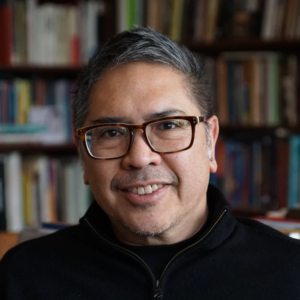
Vicente L. Rafael
Vince was born in Manila in 1956, nine years before the election of Ferdinand Marcos Sr. to the Philippine presidency and 14 years before the declaration of martial law, under which he would come of age as a young adult and budding scholar. Shaped by the emergence of authoritarianism and student protest within the dynamic and eclectic creative world of the city during the Cold War, he completed his BA in history and philosophy at the Ateneo de Manila University in 1977.
In 1979, he began graduate studies at Cornell University, where he earned his MA in 1982 and his PhD in 1984. His dissertation would become his first monograph, Contracting Colonialism: Translation and Christian Conversion in Tagalog Society Under Early Spanish Rule (Ateneo de Manila Univ. Press and Cornell Univ. Press, 1988; repr., Duke Univ. Press, 1993). Writing for the journal Philippine Studies, Vince reflected on the book’s lukewarm reception upon its release. Initially the book was dismissed as irrelevant to the serious study of the Philippines and his prose as too dense and difficult. He resigned himself to the idea that his work would fall to the wayside of the emerging canon of Philippine scholarship. However, despite these early criticisms, Contracting Colonialism is now regarded as a classic in the critical study of language and translation, early modern Spanish empire, and, of course, Philippine and Southeast Asian studies.
Over the next four decades, Vince wrote prolifically across disciplines and geographies, particularly around the politics of language, vernaculars, and translation under global imperialism. In 2000, with Duke University Press (which would become his publisher of choice), he published another classic of Philippine and Filipino diasporic cultural studies, White Love and Other Events in Filipino History. In White Love, through his signature methodological eclecticism and carefully selected historical ironies and ruptures, he eschewed the epic mode of historical writing in favor of the episodic historical essay. Praised by the political scientist John Sidel for its “style and nuance,” White Love won the National Book Award for History from the Manila Critics’ Circle.
Returning to the study of translation and empire, Vince published Motherless Tongues: The Insurgency of Language amid Wars of Translation (Duke Univ. Press, 2016). Expanding on his close focus on philology and vernaculars in earlier works, Motherless Tongues scrutinized the politics of area studies through the genres of academic biographies, which, he argued, are also ways that scholars translate their lives into languages and epistemologies. It famously ends with an interview between himself and the translation scholar Siri Nergaard, in which he declared that, rather than simply a luxury or a profession, “translation is a compulsion, not simply a choice.”
His final book, The Sovereign Trickster: Death and Laughter in the Age of Duterte (Duke Univ. Press, 2023), was a remarkable work of analytical courage and critical pessimism. Written alongside the unfolding of the presidency of Rodrigo Roa Duterte, who infamously waged the so-called War on Drugs against the urban poor and enemies of the state, The Sovereign Trickster is a cultural anthropology of the rhetoric of authoritarian rule, which examines the fraught rise of our contemporary political moment from the perspective of the Global South postcolony.
Vince’s scholarly career was as border-crossing as his work on translation. He held positions on faculty at the Ateneo de Manila University, the Department of History at the University of Hawai’i at Mānoa, and the Department of Communication at the University of California, San Diego, as well as visiting appointments across the United States and Europe. At the time of his death, he was a professor of history and Southeast Asian studies and the Colonel Donald W. Wiethuechter USA Retired Faculty Fellow in Military History at the University of Washington in Seattle. Over a 23-year tenure at UW, he supervised generations of scholars in Philippine, Southeast Asian, and Asian American studies.
Vince will be missed for his care for the field of Philippine studies and his deep love for younger scholars, especially those whom he mentored around the world, both formally as an advisor and (most frequently) informally as a comrade. He is survived by his wife Lila Ramos Shahani, the scholar and former secretary-general of the Philippine National Commission for UNESCO.
Adrian De Leon
New York University
This work is licensed under a Creative Commons Attribution-NonCommercial-NoDerivatives 4.0 International License. Attribution must provide author name, article title, Perspectives on History, date of publication, and a link to this page. This license applies only to the article, not to text or images used here by permission.