
Ambassador Samuel R. Gammon III served as the executive director of the American Historical Association from 1981 to 1994, a critical time for the organization and the discipline. He helped lift the Association out of a period of financial difficulty and played a vital role as the scholarly community negotiated challenges from the Reagan administration.
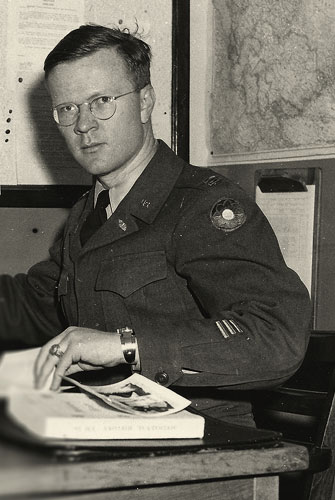
Samauel Gammon
Sam was born into the world of academic history. His father, Samuel R. Gammon Jr., was professor and chair of the Department of Government and History at Texas A&M University. Starting his studies at Texas A&M, Sam was called away to US Army service in World War II, after which he returned to complete his BA in history in 1946. He then went to Princeton University, but his studies were interrupted again by service in the Korean War. He eventually completed his history PhD in 1953.
Sam then entered the Foreign Service and served in a wide array of posts in Europe and Africa before retiring as ambassador to Mauritius from 1978 to 1980. Throughout his tenure at the AHA, he continued to carry the title of ambassador and the diplomatic bearing of his years in the Foreign Service. Even though he spent much of his time after earning the PhD either abroad or in Washington, he also found time to turn his dissertation into a monograph, Statesman and Schemer: William, First Lord Paget, Tudor Minister, in 1973.
When Sam joined the AHA, it was suffering from declining revenues and a reputation for not being collegial with other scholarly societies, so his diplomatic skills and financial acumen were a particular benefit for the organization—and especially needed as a new Republican administration embarked on an agenda to cut funding to history activities and involve itself in a range of historical subjects.
The cautious and well-honed diplomatic approach Sam learned in the Foreign Service proved invaluable as a way to keep the Association in those conversations, opening doors on Capitol Hill and the various departments and agencies in the city. Early in his tenure, he revitalized the political efforts of the Association by pushing back on Reagan administration efforts to politicize the National Archives, undermine various public records acts, and slash funding for the National Endowment for the Humanities and National Historical Publications and Records Commission.
As executive director, Sam instituted numerous institutional reforms that persist today. The most visible involved turning the then quite modest AHA Newsletter (consisting largely of research notices, letters, and committee reports) into a wide-ranging publication, now called Perspectives on History, about practices in the discipline. He incorporated into the newsletter job ads (previously published separately in the Employment Information Bulletin) and invited specialists in a variety of the discipline’s activities to serve as contributing editors (from film and museums to teaching and professional issues). He also instituted renewed outreach efforts to historians around the country and helped reverse almost a decade of declining memberships. And toward the end of his tenure, he recognized the rising significance of the internet. He encouraged staff to develop a website for the Association and negotiated with the Mellon Foundation to make the American Historical Review the first journal in JSTOR (though neither project was completed until after he left).
Sam’s innate sense of caution ran afoul of changing political times as the Reagan and (first) Bush administrations gave way to the Clinton era. With a new generation of historians rising into leadership positions, Sam’s political acumen and the internal reforms he had put in place early in his tenure began to appear staid and complacent. He retired after a contentious debate over the financial costs of canceling the hotel contracts for the 1995 annual meeting in Cincinnati after the city voted to eliminate gay rights from its Human Rights Ordinance.
He continued to be a visible presence in Washington over following decades before he moved to Charlottesville, Virginia, where he died on October 21, 2024, at the age of 100.
This work is licensed under a Creative Commons Attribution-NonCommercial-NoDerivatives 4.0 International License. Attribution must provide author name, article title, Perspectives on History, date of publication, and a link to this page. This license applies only to the article, not to text or images used here by permission.