
Norman L. Jones, professor emeritus at Utah State University, died on February 9, 2026, after a year of treatment for esophageal cancer.
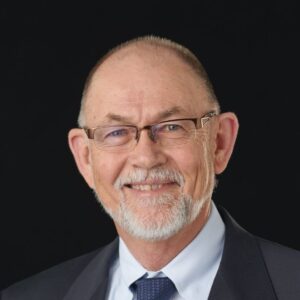
Norman L. Jones
Norm grew up on a farm in southern Idaho, where he developed a lifelong love for books and dogs. He earned his BA in history at Idaho State University (1972); his MA in history at the University of Colorado, Boulder (1974); and his PhD at Clare College, Cambridge (1978), under the supervision of Sir Geoffrey Elton. His first book, Faith by Statute: Parliament and the Settlement of Religion, 1559 (Royal Historical Society; Humanities Press, 1982), based on his doctoral thesis, won the Whitfield Prize from the Royal Historical Society in 1982. This award marked the beginning of a storied career that spanned over four decades, 11 books, and more than 40 articles on Tudor history.
Norm’s research focused on the intersections between religion, politics, and society. Since the 1980s, he was particularly interested in William Cecil, Lord Burghley’s management of Elizabethan England—an interest shaped by Norm’s 18 years as a department head. In addition, Norm highly valued collaboration. The volumes he co-edited substantially contributed to our understanding of English legal, social, political, and religious history. He cherished friendships and collaborations forged through fellowships at the Huntington and Folger Shakespeare Libraries, Oxford University, the University of Geneva, and Cambridge University. One of the highlights of his career was becoming the Burghley Visiting Fellow at St. John’s College, Cambridge, in 2023.
Norm taught for one year at Harvard University before taking up a permanent post at Utah State University (USU), where he taught the Western civilizations survey and classes in early modern Europe, Reformation England, and the history of Christianity. A great storyteller, he taught with rigor and joy, always eager to bring students into the practice of history as consumers and producers of knowledge, as sharp critical thinkers, and as accomplished communicators. As a leading scholar in Reformation history, he recruited students from across the United States to USU’s master’s program. Those students had the advantage of working with Norm in a small program that allowed for close mentoring—and he was an outstanding mentor. When one of his graduate students pressed him about why he hadn’t sought employment at a more prestigious program where he could train PhD students, he gestured toward the surrounding mountains and valley and said that he did not want to leave the beauty of the Intermountain West and that he deeply valued showing students who came from a background similar to his what was available to them in the wider world. For him, a land grant university in the landscape he loved was the best job he could imagine.
Beyond the classroom, Norm was a leader in curricular reform at USU, in the state of Utah, and nationally. He was instrumental in encouraging collaboration between Lumina Foundation and the American Historical Association on the Tuning project. Developed in the European Union at the turn of the century, the faculty-led, discipline-focused, and student-centered project brought educators together to address a central question: When students complete a course, a program of study, or a degree, what should they know, understand, and be able to do? In other words, what would students take from their studies into further education, employment, and civic life? In 2009, when Lumina experimented with Tuning in the United States across three state systems, Norm helped guide the initiative in Utah. He quickly recognized that this project would be more effective and persuasive if led by professional disciplinary societies (rather than educational administrators). The partnership Norm suggested led to a generous Lumina grant for the Tuning the Historical Discipline initiative from 2012 to 2016. Faculty work in Tuning inspired changes in courses, curricula, assignments, and grading. But the project also contributed to wider conversations with parents, employers, legislators, and the public at large. Tuning strengthened faculty work in building equitable introductory courses, meaningful assessment, K–16 collaboration, career guidance, and legislative advocacy. The project has continued to have a transformative effect on the work of teaching and learning among historians.
Norm leaves his loving wife Cecile Gilmer, his siblings, nieces and nephews, and a host of friends and colleagues.
Susan M. Cogan
Utah State University
Daniel J. McInerney
Utah State University (emeritus)
This work is licensed under a Creative Commons Attribution-NonCommercial-NoDerivatives 4.0 International License. Attribution must provide author name, article title, Perspectives on History, date of publication, and a link to this page. This license applies only to the article, not to text or images used here by permission.