
Sung Bok Kim, noted historian of early America and distinguished professor emeritus at the University at Albany, State University of New York, passed away on February 23, 2026, at his home in Mattapoisett, Massachusetts.
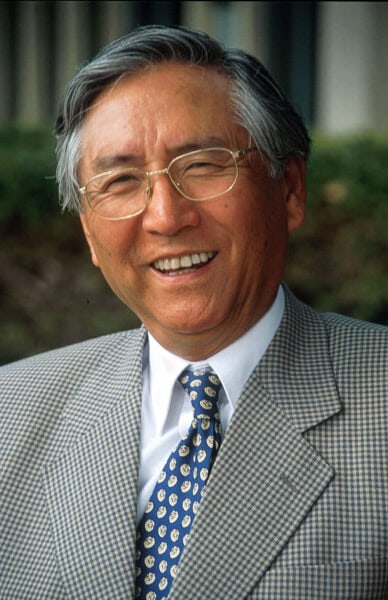
Photo courtesy University at Albany
Born and raised in South Korea, Kim developed in childhood an interest in early American history that was later magnified by his contact with Americans during his service in the Republic of Korea Army near the end of that peninsular conflict. As he told the story, he lied about his age to enlist as a means to establish connections he hoped would assist him in his quest to study in the United States. Following his army discharge, he enrolled at Kyungpook National University, where he undertook the first translation of The Federalist Papers into Korean, which he published in 1959. Upon graduating, he emigrated in 1960 to pursue an MA at the University of Wisconsin before proceeding to doctoral work at Michigan State University, earning his PhD in 1966.
During a postdoctoral fellowship at the Institute of Early American History and Culture (today’s Omohundro Institute), Kim expanded his dissertation on New York’s Van Cortlandt family to include other prominent 18th-century Hudson Valley grandees, specifically the Livingstons, the Van Rensselaers, and the Philipses. He then accepted a position as assistant professor at the University of Illinois in 1971. Enamored as he was with the Hudson Valley region, when a position at the University at Albany opened in 1973, he leapt at it and made his career there. His first book, Landlord and Tenant in Colonial New York: Manorial Society, 1664–1775 (Univ. of North Carolina Press, 1978), made his reputation as the authority on the region’s sociopolitical landscape and remains a touchstone for anyone exploring that field. Challenging the prevailing scholarship characterizing the valley’s “great lords” as ruthlessly exploitative and the tenants as nearly powerless, Kim argued that the tenant farmers collectively exerted considerable influence that, when exploited by expansionist-minded Massachusetts politicians, resulted in violent “disturbances” in the 1750s that gained the tenants some important concessions that radiated outward to empower tenant farmers elsewhere in the American colonies.
In 1978, Kim’s essay “The American Revolution and the Modern World” in Legacies of the American Revolution (edited by Larry R. Gerlach, James A. Dolph, and Michael L. Nicholls) argued convincingly that the ideological origins of the French Revolution—and by extension all subsequent revolutionary movements—lay in the American revolutionaries’ ideology. In “Impact of Class Relations and Warfare in the American Revolution: The New York Experience” (Journal of American History, 1982), he argued that the agrarian disturbances of the 1750s influenced the tenant farmers of the 1770s to embrace Whig ideology, thus turning many of their landlords into reluctant revolutionaries. Reflecting on his memory of the impact of the Korean War on the people living in the most active war zones, he devoted attention to the effects of the War for Independence on the people of Westchester County, New York, published as “The Limits of Politicization in the American Revolution: The Experience of Westchester County, New York” (Journal of American History, 1993), in which he argued that the people there became progressively depoliticized by the concussions of the war.
During his time at UAlbany, Kim served as department chair and later as dean of undergraduate studies before returning to full-time teaching as Evan Revere Collins Fellow and Distinguished Service Professor of History. Along the way, he built a collaborative relationship between UAlbany and Seoul National University to foster the study of American history in Korea. His students remember him as a stern, demanding, yet good-humored fatherly figure who expected the best from his mentees and always knew exactly how to cultivate excellence.
Kim spent his retirement with his family and enjoying the company of his pugs and Bouvier des Flandres dogs, as well as working on a comprehensive history of the American Revolution. He is survived by his wife Leda, daughter Briana, and twin sons Cortland and Blakeley. His ancillary study of Iroquoian Indian history and cultures made him a fervent fan of lacrosse, which he watched his sons play with enthusiasm. Remembrances may be made in his memory to the University at Albany’s lacrosse program.
John Howard Smith
East Texas A&M University
This work is licensed under a Creative Commons Attribution-NonCommercial-NoDerivatives 4.0 International License. Attribution must provide author name, article title, Perspectives on History, date of publication, and a link to this page. This license applies only to the article, not to text or images used here by permission.