
Gabor S. Boritt, the Robert C. Fluhrer Professor of Civil War Studies emeritus at Gettysburg College, founding director of the Civil War Institute, co-founder of the Gilder Lehrman Lincoln Prize, and winner of the National Humanities Medal, died on February 2, 2026. He was 86.
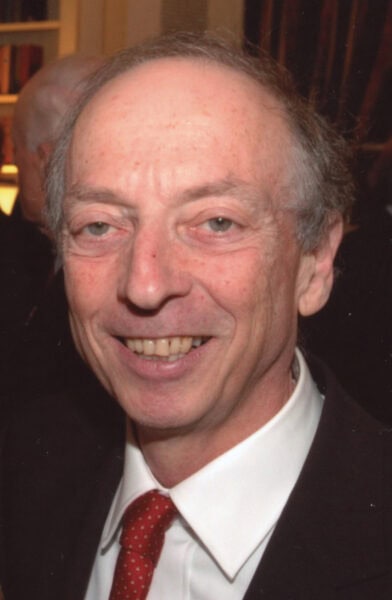
Special Collections and College Archives, Musselman Library, Gettysburg College
Born Róth-Szappanos Gábor in Budapest, he was four years old when the Nazis invaded Hungary, which forced his family into hiding. Gabor’s maternal grandparents boarded a train bound for Auschwitz, where they were executed. In Hungary, Nazi defeat yielded to Soviet occupation and, later, communist tyranny. In 1956, Gabor joined the Hungarian Revolution. Weeks later, Russian tanks trundled into Budapest to suppress the rebellion. Gabor sought refuge in the United States, taking advantage of Operation Safe Haven, a program that supplied sanctuary to perhaps 30,000 Hungarian refugees.
Gabor arrived in New York City, where Horace Greeley’s advice to “go west, young man” still resounded a century after it was written. A single suitcase in hand, Gabor followed that counsel out to Yankton, South Dakota. Inspired to study Lincoln after devouring a pamphlet of his speeches, Gabor graduated with his BA from Yankton College in 1962, before earning an MA at the University of South Dakota in 1963 and a PhD in history from Boston University in 1968.
Gabor wrote in many registers about the Civil War era, but at heart he was a prose poet who bore his soul on every page. In 1978, he published Lincoln and the Economics of the American Dream, a revision of his doctoral dissertation; the book remains the finest treatment of Lincoln’s economic thought. With Harold Holzer and Mark E. Neely Jr., he co-wrote a trio of books on popular lithography: The Lincoln Image (1984), Changing the Lincoln Image (1985), and The Confederate Image: Prints of the Lost Cause (1987). He edited a dozen books featuring now canonical essays, including Lincoln, the War President (1992), Why the Confederacy Lost (1993), and The Gettysburg Nobody Knows (1997). Gabor’s final book, The Gettysburg Gospel: The Lincoln Speech That Nobody Knows (2006), reanimated the Gettysburg Address by recovering its immediate context: the aftermath of the Civil War’s bloodiest battle.
Gabor was a public historian by instinct, understanding the capacity of Civil War history to reach many audiences. He arrived at Gettysburg College in 1981 and two years later, decades before such centers became fixtures on many campuses, founded the Civil War Institute. Gabor harnessed the power of place and good storytelling to build a signature annual event in late June—a sprawling conference that brings together seasoned and emerging scholars, high school students, and an enthusiastic public for lectures, panels, film screenings, and battlefield tours. Each session for more than 30 years began with Gabor’s recitation of a self-authored poem, celebrating how “old friends” and “new ones” gathered each year, just as reliably as fireflies glowed and orange tiger lilies “proclaim[ed] their eternal message.”
The Civil War Institute was but one piece of Gabor’s mission to make history accessible. In 1990, to encourage new scholarship aimed at a “broad literate public,” he co-founded (with philanthropists Richard Gilder and Lewis Lehrman) the annual Lincoln Prize, which awards $50,000 to the best work on Lincoln or the Civil War era. His legendary battlefield tours introduced Gettysburg to the likes of Colin Powell and Sandra Day O’Connor. In his later years, he released an audio battlefield auto tour as a companion to a documentary produced by his son, filmmaker Jake Boritt.
Until his final days, Gabor lived on a historic Gettysburg farm (appropriated during the battle as a Confederate hospital) that he lovingly restored and frequently opened to students and colleagues. No visit to “Farm by the Ford” was complete without Gabor showing off buckets brimming with Civil War bullets he had plowed up on the property.
Gabor leaves behind his wife of 57 years, Liz; three sons, Beowulf, Jake, and Dan; five grandchildren; and generations of students inspired by his remarkable life and exacting lessons. We will miss his beaming smile; the endless trove of aphorisms, each delivered in a thick Hungarian accent; and the quiet dignity of the refugee, immigrant, scholar, teacher, and mentor we were so fortunate to call our friend.
Brian Matthew Jordan
Sam Houston State University
This work is licensed under a Creative Commons Attribution-NonCommercial-NoDerivatives 4.0 International License. Attribution must provide author name, article title, Perspectives on History, date of publication, and a link to this page. This license applies only to the article, not to text or images used here by permission.