
Carl E. Prince, professor of history emeritus at New York University (NYU), died peacefully at age 91 at his home in Hoboken, New Jersey, on February 6, 2026.
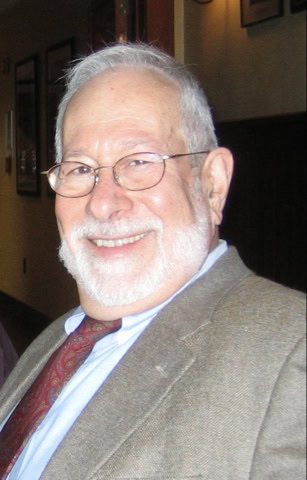
Photo courtesy Prince family
Prince was born in Newark on December 8, 1934, the son of Phillip G. and Ann (Silver) Prince. His father was a noted communist labor organizer. His childhood neighborhood was home to numerous Holocaust survivors, and the Nazis had murdered much of Prince’s extended family in Europe. Overcoming dyslexia, Prince graduated from Newark’s Weequahic High School in 1953. Guided by the diplomatic historian Henry Blumenthal, he earned a BA with honors from Rutgers University–Newark in 1956, an MA from Rutgers in 1957, and a PhD in 1963 under the mentorship of Richard McCormick Sr.
Carl’s first publication came when his MA thesis, “Middlebrook: The American Eagle’s Nest,” a study of General George Washington’s 1777–78 encampment, was published by the Somerset Press in 1958. His dissertation became the influential New Jersey’s Jeffersonian Republicans: The Genesis of an Early Party Machine (Univ. of North Carolina Press for the Institute of Early American History and Culture, 1967). His subsequent books were The Federalists and the Origins of the US Civil Service (New York Univ. Press, 1977); with Mollie Keller, The US Customs Service: A Bicentennial History (Dept. of the Treasury, 1989), covering from the department’s origins through the Prohibition era and the war on drugs; and Brooklyn’s Dodgers: The Bums, the Borough, and the Best of Baseball, 1947–1957 (Oxford Univ. Press, 1996). Rather than focus on the team’s wins and losses, Prince wrote eloquently about its significance to Brooklyn, with evocative chapters on the women of the Dodgers, the saga of Jackie Robinson, and owner Walter O’Malley’s betrayal in moving the team to Los Angeles. Writing was so central to Carl’s identity that he was working on a new project the night before he died.
Carl was also involved in important documentary editing projects. With Barbara Oberg, he edited a 51-reel microfilm collection of the papers of Albert Gallatin, an early secretary of the treasury and founder of NYU, which was released in 1970. Carl next undertook an edition of the Revolutionary War papers of William Livingston, New Jersey’s first patriot governor. Presented in a five-volume book set and a 25-reel microfilm format, the papers recovered a neglected founder. Carl secured sizable grants from the American Revolution Bicentennial Association, the New Jersey Historical Commission, and the National Endowment for the Humanities, funds that supported employment for Carl’s graduate students for the next 15 years. Carl was not deferential to the famed Livingston family. Doctoral candidate Larry Spinelli recalled when a Livingston family matriarch visited NYU and informed Carl that she was descended from passengers on the Mayflower. Carl replied that his ancestors arrived from Russia in a cattle boat.
Prince taught at Fairleigh Dickinson and Seton Hall Universities before moving to New York University in 1967, becoming the first Jewish faculty member in the department’s history. His undergraduate courses on early national and Jacksonian American history and, later, on baseball were highly popular. A skilled bureaucratic battler, Carl served as history department chair from 1978 to 1986. He acquired new departmental offices and established MA programs in archives, historical editing, and historical society management (1977) and public history (1983). He energized the department to focus on women’s history. Prince retired in 2001, though he continued to teach his baseball course for several years. His book collection is now housed at the New Jersey Historical Society.
Prince mentored over 20 doctoral students, dispensing tough, sympathetic criticism via extensive notes on numerous drafts. His personal advice was pithy. When this writer fulminated over a dismissive rejection letter, Carl interrupted, asking, “Isn’t that a bankrupt attitude?” He advised one early career professor: “Spend half your time on your work, the other half on cultivating colleagues.” At a luncheon with his doctoral students before his retirement, he announced that he loved us equally and that we were all high maintenance.
Family was central to Carl Prince’s life. He is survived by his daughter Elizabeth Prince, son Jonathan Prince, and their families. Always generous, Carl often helped to move his children’s families cross-country and spent countless hours with his grandchildren. His family, students, and friends across the historical discipline mourn Carl Prince.
Graham Russell Gao Hodges
Colgate University
This work is licensed under a Creative Commons Attribution-NonCommercial-NoDerivatives 4.0 International License. Attribution must provide author name, article title, Perspectives on History, date of publication, and a link to this page. This license applies only to the article, not to text or images used here by permission.