Far too often Advanced Placement teachers are forced by parental expectations, a narrow interpretation of the purpose of the course, and sometimes by evaluation procedures based on past student successes on the AP exam to forego much of the excitement of history in favor of teaching to the test. This is often done by copying the least attractive feature of college teaching: passive learning by means of lecture.
If AP is to be more than a mere service course, life must be infused in it; that is, there can and should be active student involvement in developing the knowledge and abilities that will make history a lifelong interest. Further, there can and should be additional social studies courses to provide students with opportunities to utilize their AP skills—life after AP. Therefore, part of our goal as teachers should be to encourage students both to use and love history, rather than merely to pass exams.
Life in AP
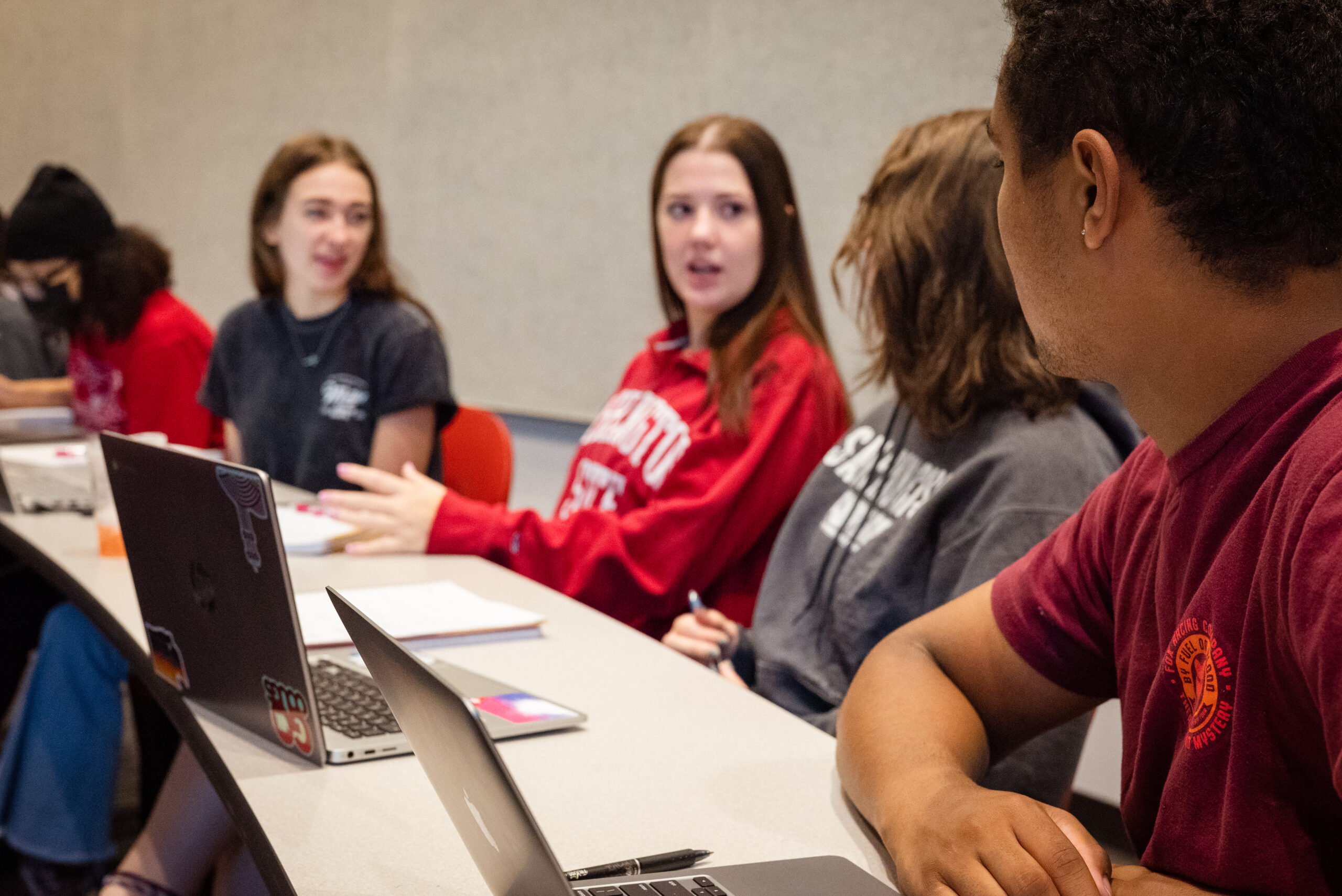
Several years ago, I attended a conference designed to introduce new AP teachers to the goals and purpose of, and to suggest methodology and sources useful in, teaching AP history. During the course of this conference, a number of comments were made concerning the need to make sure that the course was taught on a college level. It quickly became apparent that the consensus was that the way to accomplish this is by “covering the material” and “teaching to the test” by means of daily lecture. What was ignored is that often only a minority of the students enrolled in AP classes take the exam. To be sure, we must meet the needs of this minority, though without neglecting the majority who will not take the exam but who are obviously seeking a challenging college preparatory course. Both groups need to acquire a sound basic knowledge of the facts and major themes in history, and develop research, writing, comprehension, analytic, and interpretive skills. Since many AP history courses are one-year surveys, lectures and essay exams may at first appear to be the most efficient way of covering so much material and incorporating a plethora of skills. While lecture certainly has its place in college preparatory classes, daily lectures, regardless of how well they are researched or presented, are far too passive a form of learning to be satisfying to most high school students. Knowledge can be acquired not only from lectures but also from such varied sources as: guest speakers, research, oral reports, student-taught classes, interviews, debates, role playing, simulation games, and participation in small group discussions. Such activities are time consuming, but they revitalize the class and create a more efficient and productive learning environment in which students share the excitement of question-oriented learning that challenges rather than stifles curiosity.
Writing skills can also be honed in a variety of ways supplemental to, but less predictable and more enjoyable than the standard historical essay. Whatever format is used for written work, the ability to analyze, interpret, organize, and present data is useful not only in history classes but also is transferable to other academic endeavors as well as to law, business, government, journalism, and other fields.
Clearly, writing is an essential life skill for those headed to college, but how it is best taught? Even in this age of shortcuts, there is only one way to learn to write, and that is to write—every day. A few isolated essays during the marking period will not create a writer. But finding the time to evaluate student writing on a regular basis is difficult since most classes are larger than they should ideally be, and it is a rare teacher who has the extra preparation period the Advanced Placement Program recommends. A system that has worked well for me is to require one-page daily essays related to the subject at hand. Thus, students both review the material and practice writing at the same time. Writing quality improves, fear of writing declines, and knowledge and self-esteem are enhanced.
The first few assignments should be collected and evaluated to make sure students are using proper essay form and to note any serious writing problems. Once the momentum is established, essays can be collected and graded once or twice a marking period. The space limitation of one page a day encourages students because of its brevity, and at the same time forces them to abandon the belief that the only good essay is a long essay.
Writing skills can also be developed in a variety of other ways. For example, students can be asked to create a character and faithfully represent that person’s reactions to a major event or events of the day. The essay may thus be creative in nature, yet it must be historically accurate. The character’s age, race, sex, religion, social class, educational background, and geographic location must be determined, and the events of the day researched and related to a person possessing those characteristics.
Other useful ways to refine research or writing skills include: letters written as if students were participants in historic events; letters to the editor or to local, state, or national officials; guest editorials; essays on local history; and participation in historical essay contests. Researching, composing, and editing a TV or radio script on a historic theme can serve the same purpose and be presented to the class or videotaped for future use.
Research ability, like writing skill, is useful throughout life; it is not merely a device necessary to pass history courses (i.e., otherwise useless, always frustrating, and usually plagiarized). The type of research assignment is not as important as learning the research process. Once material is located, evaluated, and integrated, the results can be presented in the form of the traditional research paper, or as an article for a magazine, newspaper, or journal. Student work can often be published through a cooperative arrangement with the school print shop (See Charles E. Howlett, “Two Minds, One Thought: The Creation of a Students’ History Journal,” November 1983 Perspectives). Students may wish to become involved in oral history projects, propose legislation or write position papers on issues of importance to them. Such exercises involve all the skills we wish to develop and, at the same time, encourage students in the acquisition of those skills by illustrating an immediate use for them. While ideally students learn for the pleasure of learning, realistically the humanities, and history in particular, is increasingly called upon to prove its relevance. Surely history taught as described above is a clear response to contemporary criticism without compromising our profession.
In addition to writing and research skills, students need to be able to comprehend, analyze, and interpret materials. While essay exams serve as one device for determining this ability, debates, roundtable discussions, small group discussions, oral reports, oral summaries. simulation games, and the evaluation of media versions of historic or contemporary events serve as other methods of evaluating these important abilities.
The active learning techniques mentioned above have long been used by exactly the sort of conscientious teacher assigned to teach AP. However, the sheer magnitude of teaching AP or the designation of it as a college-level course intimidates far too many of us into retreating to teaching the way we were taught in college: to learn passively.
Teaching AP by encouraging active student involvement requires careful planning on the part of the teacher so that necessary skills are developed and essential information is imparted. Such planning is more complex and demanding and less predictable in day-to-day progress than a teacher-centered lecture course. It can be frustrating to watch from the sidelines as students laboriously wade through the process of problem solving or conflict resolution when the teacher could “save time” by quickly listing the options available. Such time saving, while tempting, may be an illusion since covering the material guarantees only that the student has been exposed to it, not that she/he has learned it. There are shortcuts, however, which assure that students are in possession of the necessary facts and still have an opportunity to solve problems. For example, if a debate is scheduled, students can be provided with fact sheets from which they can develop their arguments. Obviously, in the best of all teaching worlds, students would be expected to use their research skills to acquire information as well as to analyze, interpret, and use that information. Since time is a factor, however, this is one way to provide students with the experience of ordering and presenting arguments. If a writing exercise is also based on such work, the assignment reinforces many of the skills we seek to develop. Even so, there are those who will correctly point out that a debate will require at least two days of class time, yet the factual information gained could be covered by lecture in only part of one period. While the observation is undeniably true, students who participate do not merely learn the material; more important, they learn how to learn. Since AP exams emphasize the ability to analyze and interpret information accurately and well in written form, a case can be made for taking the time for activities that teach students to analyze and interpret complex, often contradictory material and to present arguments succinctly, convincingly, and well. It is an old truism, but a truism nonetheless, that learning how to learn, write and think are far more important than the actual facts learned. The facts, while not insignificant, should he merely the core around which other skills can be developed.
Other shortcuts can be used to increase class time as well; for example, some notes can be duplicated for student use so that lecture time can be used more effectively for the interpretations and anecdotes that add color and flavor to the historic pageant. It is more effective and efficient to distribute copies of statistical information to avoid the slow, often painful, process of note-taking from complex data. Students will have sufficient opportunity to practice note-taking skills on other material. Lecture outlines also make note-taking easier and faster. In addition to formal lecture, much factual material can be included by means of short oral reports. Reports planned so they fit into the unit maintain continuity and give students important experience in interpreting, summarizing, and presenting material.
Teaching a class in which students are active participants requires careful planning on the part of the teacher since the goal is not simply the excitement of activities (which can create an illusion of productivity without anything really substantive being achieved), but purposeful, creative, reflective activity dovetailed precisely to attain those informational and skills achievements desired of AP students. That the lessons are absorbed seems to be borne out by those who take the AP exams. In our school, as in many others in which the school board neither pays for nor requires students to take the AP exam, only a minority do so. Of those who do choose to take the exam, nearly all receive scores that make them eligible to receive college credit for the course. For the majority who do not take the exam, student evaluations of the course indicate that they feel that it meets their needs for an advanced-level college preparatory course. A further indication of student acceptance of what is considered one of the hardest courses in the school is that the number of AP sections offered has increased at a time when school enrollment has declined.
Life After AP
Even if the teacher has been innovative and the student a participant rather than a passive receptacle in the learning process, the question remains: Is there life after AP? What can a social studies department do to encourage students to pursue history? Clearly our goal is not to train more professional historians; the field is already overcrowded. Neither would AP courses be viewed solely as a route to college credit, but rather as a source of intellectual stimulation and a way to refine academic skills to be used both in the future and immediately in other programs within the social studies department.
One such program which builds on the academic base of AP history is offered by the social studies department at Franklin High School in Somerset, New Jersey. In the recently introduced nontraditional independent study program, students investigate eight topics of national or international importance during the year by means of selected readings, seminars, interaction with guest experts, field trips, and creative, analytic, or interpretative projects.
The goals of this after-school seminar program are twofold: to encourage personal intellectual growth and development, and to motivate students to involve themselves in the concerns and interests of the larger society. Traditional social studies courses provide little opportunity for students to affect change, or even to perceive that they are capable of affecting change. Even very able students tend to sec themselves as victims rather than potential agents of societal growth and development. It is the premise of this program that individuals are capable of influencing their environment in a positive way, while at the same time recognizing to the fullest their own capabilities and talents.
The year prior to offering Independent Study, AP students were polled to find out what topics they were most interested in having included in the course. Seven of those topics were developed for the course by compiling a bibliography and photocopies of articles. The original seven topics included the following: Energy and the Environment, Technology and the Future, World Economic Interdependence, The Influence of the Media in America, Problems of Development and World Order, Ethics and Politics, and Historic Preservation. An eighth unit, “One Person Can,” focuses on individuals who have served as catalysts for positive change; it is designed to provide role models as well as practical advice on how individuals can affect change.
Although any one of the topics could serve as the basis of a year’s—or even a lifetime’s—study, the AP students polled indicated that they preferred to be introduced to a wide variety of issues rather than focusing on a select few. Since only four to five weeks can be devoted to each topic, reading material is designed to provide students with raw data (facts, statistics, graphs, and charts) to analyze and interpret, materials raising the major questions to be considered in the seminars, and information illustrating conflicting points of view on the issues in question. A bibliography for each unit encourages further research within the parameters of this or some other independent study contract. The program is not designed to provide answers but to raise questions, disseminate information, encourage discovery, and generate higher-level learning through positive and supportive group interaction.
Once students have completed the readings, after-school seminars are held to discuss and analyze the assigned materials. Guest lecturers contribute their expertise and enthusiasm as well as practical advice on how to prepare for a career in the profession, and insight on how their profession has an impact on the problems nations face today. Guest experts have included a Peace Corps volunteer, a representative from the Jamaican mission to the United Nations, a highly placed United States official at the United Nations, local government officials, state assembly members, a local reporter, the legislative counsel to the governor of New Jersey, experts on historic preservation, an official of the Federal Reserve Bank, a chief of prison security, a lawyer, a representative from a nuclear power station, a speaker on solar energy use, a nuclear physicist, an expert in heavy-metals pollution in New Jersey water, and a representative from the Space Studies Institute who discussed the potential for space mining and colonization. To ensure proper scheduling, it is important to contact potential speakers as early as possible, although one month in advance of the speaking date is usually sufficient lead time. Many speakers are acquaintances of teachers, students, or students’ parents. Such personal contacts are most helpful in getting quality speakers. All speakers donated their time, efforts, and talent. Several commented that they had been rather unsure of how to speak to a high school group, but had been pleasantly surprised to find how attentive the students were and how thoughtful and insightful their questions were.
Field trips directly related to the topics of study are an important and valuable part of the learning experience. Since a school bus can carry more students than there are in this course, other classes have been invited to join the trips related to their courses. Thus the trips serve more than one class in the department and, for about $1000 (photocopying and field trips), the Board of Education has been able to provide significant participatory experience for many students. Field trips have included visits to a high-technology beef cattle-bison breeding farm (genetic engineering), Princeton Plasma Physics (fusion energy), Wall Street (Federal Reserve Bank, Stock Market, Commodities Exchange), and the United Nations, as well as historic tours of Princeton, Trenton, and Franklin Township, a visit to the New Jersey State Assembly, and visits to a radio station and the New York Times. These trips are in-depth and behind-the-scenes inspections that challenge students to apply what they have learned in the previous weeks.
In addition to independent reading and participation in seminars and field trips, students are expected to complete a project for each of the eight topics studied. To encourage creative, analytic problem-solving approaches, the range of activities from which projects may be selected is designed to be as broad and open-ended as possible, with group projects encouraged. To promote intellectual exploration, it is expected that different types of activities will be utilized. If a student’s main interest is creative writing, half of the projects could involve some aspect of creative writing. Other projects, however, must explore alternative methods of approaching an issue. This encourages not only the development of recognized strengths, but offers an opportunity to discover latent talents and abilities in a nonthreatening environment. Student projects can involve creative writing, research and analytic writing journalism, art, independent trips, participation in public meetings, conferences, workshops, lectures, leadership and organization activities, or student-proposed projects. Many completed projects have proven to be highly imaginative and creative. Representative examples were published in booklet form and distributed to class members at the end of the year.
Fulfillment of course requirements has not proven to be a problem since the students involved are highly motivated. During the first year of the program, students were carefully screened before being invited to participate. Selection was based on demonstrated performance in previous social studies courses, achievement test scores (reading, language arts, and reference skills), mental ability scores, and teacher recommendation. Parental approval for participation in the program was also required. This year, as an experiment, the course was opened to all students with an average of B or better in AP history or approval of the Independent Study advisor. This has served to make the course less elitist, yet the level of enthusiasm and the quality of those who choose to participate has remained high. Since the class meets after school and much of the work is done independently, the self-selection process seems to produce excellent results and has the advantage of being both simpler and more egalitarian than our original selection process. So far we have not run into a problem of having to turn students away, though some students and parents were disappointed that they or their children were not selected the first year. Last year there were 23 students in the course; this year there are 26.)
The class could be run with fewer students or, if more qualified students were interested, two sections could be offered. The financial and operational limit would probably be one school-bus load for field trips. Although the program is still in its infancy, student and community response has been positive. The message that “if you’re not part of the solution, you’re part of the problem” seems to have been retained by many of last year’s students who continue to work to improve local and national conditions. Students have written letters, participated as volunteers in political campaigns, met with the school board, worked on township historic restoration projects, and served as volunteers in conservation projects. These students dare to think in terms of action rather than passive acceptance of the status quo. The type of intellectual and practical involvement provided by the Independent Study program allows students to explore a variety of important issues within the context of a discipline in which they have demonstrated success in the past, and at the same time encourages them to become active participants in improving the quality of life for all.
If students are encouraged not only to participate actively in an AP course, but are also offered enrichment opportunities that allow them to make use of the skills developed, AP history becomes not a dead end, but an opening up of new vistas, and we can answer the question posed at the beginning of this article affirmatively: “Yes. there is life after AP.”
Patricia Matuszewski teaches Advances Placement American history and ancient history, and serves as advisor to Independent Study and Academic League at Franklin High School, Somerset, New Jersey. She has recently been named Social Studies Educator of the Year by the New Jersey Council for the Social Studies.