Excellence in education has once again become a major national issue. Advanced Placement teachers in high schools have never lacked commitment to either excellence or the right of talented students to receive the kind of education appropriate to their level of motivation and intelligence. But what has often been missing, is the support for such teachers beyond the classroom. Even when parents and school administrators have expressed their approval, the hard-pressed teacher of Advanced Placement or accelerated courses has received only meager help from col leagues in colleges and universities.
High school teachers attempting to introduce their students to college-level materials have been isolated because typical secondary school texts are often inappropriate or out of date. They also have not had an opportunity to communicate and share their needs and experiences with college faculty. College teachers, for their part, have known little or nothing about the previous educational experiences of their best students who have taken Advanced Placement or accelerated courses. And this lack of knowledge has compounded the problem of placing these incoming high school students in courses at an appropriate level of sophistication and difficulty.
Four years ago some faculty and administrators at Carleton College set out to do something about this situation. We decided to create week-long workshops to be conducted during the third week of June, when high school faculty could escape the pressure of their demanding teaching schedules and, working closely with college teachers in small seminars, explore recent developments in their own disciplines. The object was to foster an environment in which ideas could be shared and course materials revised and brought up to date.
Although a historian was the prime mover in establishing the first contacts with high schools in Minnesota and in setting up the first workshops, these were never restricted to history alone. By the summer of 1983, the Carleton Institute for Teachers of Talented Students offered seminars in no fewer than seventeen disciplines, ranging from art history to problem solving and from computer science to humanities. From the beginning, however, the program has included courses in both American and European history, each taught by one American and one European historian from our department, and in one case from a neighboring institution. In all, some 600 high school teachers have attended at least one of the workshops over the last four years. The Carleton Summer School Office makes the first contacts with high school teachers in late February or early March, when it sends out brochures containing brief descriptions of all the workshops and application forms to department chairs of high schools in the Upper Midwest and selectively beyond; the cost is approximately 50 cents per announcement. Advertisements are simultaneously placed in newsletters of the appropriate professional and teacher associations. More specific information about readings and assignments is sent to applicants by the individual instructors as the applications come in. All assigned books or other materials are conveniently available by mail through the Carleton Bookstore. After that point, and until graduate credit is awarded formally through the Registrar’s Office, the individual disciplines and workshops function independently.
The challenge we have faced in the two annual history seminars was to engage teachers in at least some of the most significant new areas, approaches, and debates in the discipline, and explore together how these ideas might be integrated into the typical year-long accelerated high school course. From the beginning, we did not try to tell the high school teachers how to teach these materials. Nor did we advise them on the technical aspects of how to set up an AP course. Rather, our goal was to provide the kind of academic environment in which high school teachers could debate some of the most important and exciting ideas in the discipline with an eye to using them in their own courses.
The particular topics covered have varied somewhat from year to year. The European history workshop has emphasized the modern and contemporary period. We have striven for balance among new areas, new approaches, and recent developments in traditional topics, which have remained of central interest both to historians and students. The most obvious were the chronological and gender extensions: Europe since 1945, which until recently was generally omitted in European/world history courses and is still only barely present in the AP European history examination, and women’s history for which classroom materials have been developed only recently. Most popular and probably of greatest practical value for teachers and students have been the units on recent interpretations of the great European social revolutions, the French and Russian Revolutions, and the phenomena of Nazism, fascism, and totalitarianism in our century.
Lest the workshop become all too utilitarian, we set aside time to delve into nontraditional AP materials such as the history of technology, the political economy of economic development and decline, and governability and interest groups in the corporatist state. As foci for the discussions, strong thesis books were assigned, among them Pierre Ayçoberry, The Nazi Question; Theda Skocpol, States and Social Revolutions; Renate Bridenthal and Claudia Koonz, Becoming Visible; E. O. Hellerstein, L. P. Hume, and K. M. Offen (eds.), Victorian Women; Daniel Headrick, The Tools of Empire; Mancur Olsen, The Rise and Decline of Nations.
In the American history workshop, we have followed a similar pattern, focusing on recent interpretations in the fields of the new social history, intellectual history, the history of women and the family, slavery and minority studies, American studies, the Cold War and Vietnam. Particularly popular have been the units on the American Revolution, women’s studies, and Vietnam. Like the European class, the American historians also spent some time on non traditional AP materials. A particular concern was how to use novels, short stories, paintings, music, films, and architecture in the survey course. The seminar began with a discussion of textbook strengths and limitations, prompted by the reading of Frances Fitzgerald’s America Revisited. Other readings were then used to suggest the spectrum of possible approaches to the study of political and social history, including Robert Gross, The Minutemen and Their World; Allen Weinstein and Frank O. Gatell, American Negro Slavery; William Chambers and Walter D. Burnham, The American Party Systems; and Gerda Lerner, The Majority Finds Its Past.
The practical format of both workshops has been adapted as far as possible to the circumstances and needs of the high school teachers. The letters from the instructors, detailing seminar objectives, assignments, and approximate daily schedules, were sent out about two or three months before the sessions. Included in these letters were the titles of the four to five major books that would serve as starting points for the discussions each day. During the workshop week, the seminars met every morning from 8:30 to noon, with a common coffee break for all institute participants from 10:00 to 10:30. Afternoon sessions varied in length and format, but usually ran from 1:30 to 4:30, with some time set aside for individual consultations and coffee or library breaks. In the later afternoons and evenings, participants were free to read assignments or begin work on their course outlines and lesson plans.
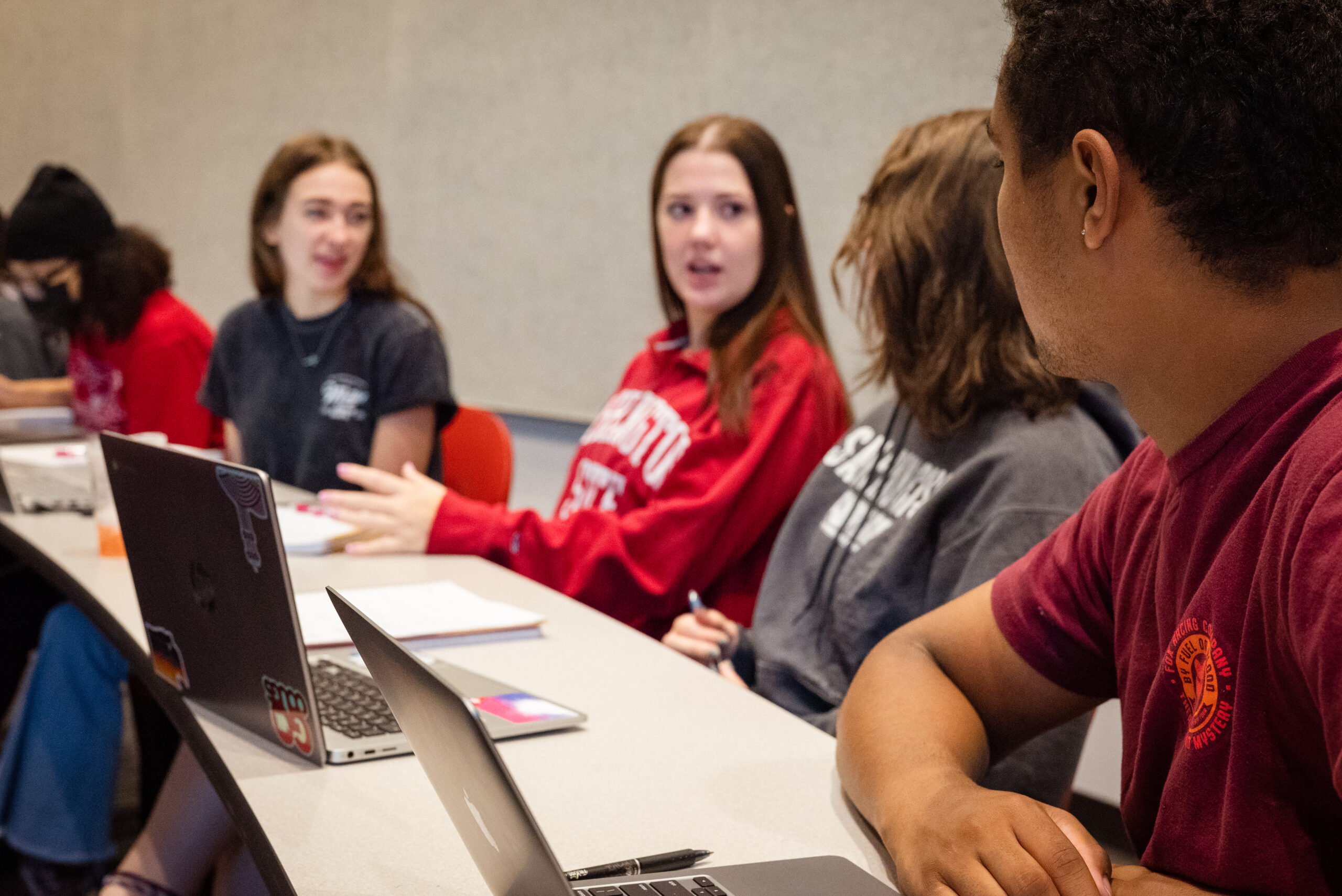
In the daily routine, the college instructor normally took the lead at the start of the class and introduced the context for the book under discussion. The group then proceeded to explore the broader implications of the particular interpretation and investigate sources for further study. During that discussion and in the early afternoon, the teachers commented further on ways in which these perspectives might be integrated into an accelerated high school course. Later in the afternoon, time was set aside to share practical experiences with different approaches, materials, and methods in AP or other advanced courses. Here participants have appreciated extensive suggestions by the college instructors for further reading and for books that might be used effectively in the high school classroom. Beyond that, however, the high school teachers played the leading role in this part of the workshop by sharing their experiences with certain topics and materials, and asking each other about different options of course organization, emphases, teaching aids, and reading materials in open discussion.
The written assignments have been similarly tailored to the needs of the participants. Generally, teachers were asked to write up course plans or prepare particular units that would integrate some of the new perspectives discussed in the workshop. In practice, the end products have ranged from completely new syllabi to revised units on particular topics. In European history, for example, one participant did a sophisticated revision and expansion of his unit on Nazism and the Holocaust, which was of particular interest to the students in his suburban school. Another designed a topical unit on autocracy vs. totalitarianism, which allowed her to try a wholly different thematic approach. The new course plan ranged from a completely new syllabus of a new AP teacher to a revision of a fine traditional course emphasizing the classics to include the materials that would enable his students to take the AP examination and gain Advanced Placement credit in college. Most plans in one way or another incorporated new approaches and fresh readings, especially in relatively new areas such as women’s history and changed fields such as history and technology. All syllabi included major revisions and expansions of the reading lists.
. . . the hard-pressed teacher of Advanced Placement or accelerated courses has received only meager help from colleagues in colleges and universities
In American history the pattern has been similar. Individual participants wrote syllabi for entirely new courses or created new units for established courses. One teacher developed a set of primary sources on the Pullman Strike, including extensive statistical information. Two teachers from suburban schools worked up annotated reading lists for new units on the Cold War and Vietnam. Yet another, seeking to focus on concerns that were central to her own students’ experiences, designed a new unit on youth in the 1920s. And a teacher from a parochial school created a “diplomat game” that allowed his students to role play and understand the dynamics of diplomatic history.
Economically, the workshops have not been overwhelmingly profitable for the college. Our goal from the begin ning was, at best, to break even financially. This goal has been reached consistently. At a cost, in 1983, of $180 tuition and $95 room and board for those who chose to stay on campus—as did most participants—the program has been self-sustaining, and the college has not sought outside funding. A number of the teachers have been sponsored by their school districts, usually in connection with planning new Advanced Placement courses. Faculty salaries have been modest, but we have felt richly rewarded by the experience. The history workshops, which have each drawn between eight and fifteen participants a year, have attracted some of the most interesting and lively minds among history teachers from all over the country. They have been ready to debate, challenge, and rethink historical materials from the moment they arrived on campus until the moment they left. They have been highly stimulating to teach. We have gone back to our college class rooms in the fall, and especially to our freshman classes, with enthusiasm and a fresh outlook.
To judge from the formal (and anonymous) evaluations by the secondary school teachers at the end of the Insti tute, the workshops were as successful as we had hoped in at least several related ways: they offered fresh perspectives on old and new topics in history, expanded old reading lists and, above all, refreshed the minds of all the participants. Several of the evaluations commented specifically on this last point. The experience has similarly allowed those of us in our department who have taught workshops—two of the five Europeanists and one of our two Americanists have been involved until now—to share with our colleagues the insight’s we have gained into the Advanced Placement program and the high school teaching of gifted students generally.
Thus, both the high school faculty and the college instructors have benefited from the workshop experience. The intense week of work has demonstrated that teachers from both levels can work cooperatively together, helping bridge the gap that too often exists between high schools and colleges. Perhaps more importantly, both high school and college faculty have come to believe that this type of program can encourage the kind of quality education for the most talented students that in recent years has all too often been neglected in this country’s public schools.
Clifford C. Clark, Professor of History and M.A. and A.D. Hulings Professor of American Studies. He has taught American history and directed the American Studies program at Carleton College since 1970.
Diethelm Prowe, Professor of History, has taught modern European history at Carleton College since 1966 and served as department chair until 1983. He was an AP reader in 1983.