Editor’s Note. At each annual meeting the Professional, Teaching, and Research Divisions, and the AHA Committee on Women Historians, sponsor sessions on issues that are central to a committee’s work and to the interests of many of our members. The 1985 Annual Meeting in New York City saw five sponsored sessions; the reports submitted by the session chairs are reprinted below. The chair of the Research Division’s session also includes the text of one of the session papers (on scholarly publishing) as an especially clear and urgent statement by the director of a major university press. Questions, comments, or requests for further information should be directed to session participants, or sent “in care of” to the AHA’s national office (400 A Street, SE, Washington, DC 20003).
Joint session with the AHA Committee on Women Historians
Women: History and Theory
CHAIR: David Herlihy, Harvard University
Women and History: A Revisionist Perspective
Gerda Lerner, University of Wisconsin, Madison
Is Gender a Useful Category of Historical Analysis?
Joan Wallach Scott, Institute for Advanced Study
COMMENT: Elizabeth Kamarck Minnich, Union Graduate School
Rayna Rapp, New School for Social Research
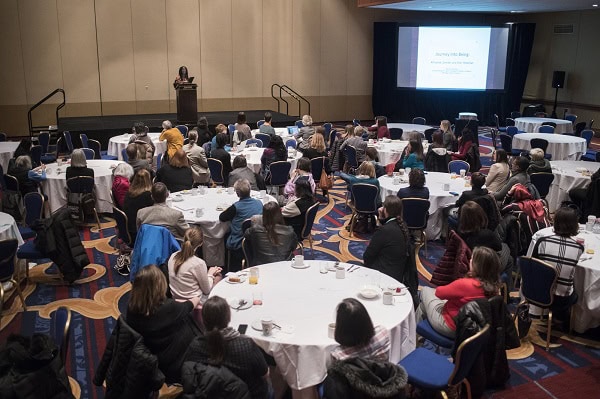
An overflow crowd of more than 200 persons was in attendance, and many late arrivals had to sit on the floor. The room was insufficiently ventilated, but the uncomfortable circumstances did not diminish the audience’s size or enthusiasm. David Herlihy of Harvard University presided.
Professor Gerda Lerner presented the first paper, which had been called in the program “Women and History: A Revisionist Perspective.” The more precise and appropriate title, she explained, would be “Gender and Class in State Formation.” Her paper was an outgrowth of a two-volume work she is now completing, to be called The Creation of Patriarchy. The crucial place and time in the origins of patriarchy were the Ancient Near East in the prehistoric period.
From her own reading of the ancient sources, Lerner proposed a revision of Frederick Engel’s famous theory that private property brought about the subordination of women. Rather, in Lerner’s view, the appropriation by men of women’s reproductive capacity and sexual services came first, and was one of the bases for the accumulation of private property. The new class hierarchy was thus built on gender, in the form of the prior enslavement of women. Her final point was that men and women experience class differentiation differently, and that historians should recognize those differences in any evaluation of social hierarchy. Full support for her theory will be given in her forthcoming book.
The second speaker, Professor Joan W. Scott, spoke on the subject: “ls Gender a Useful Category of Historical Analysis?” Her paper was a thoughtful consideration of four topics: the recent uses of the concept of gender; the theoretical terms in which it has been analyzed; the possibilities for a theory of gender; and the implications of such a theory for historical research. Gender is an appealing concept, as it has a “more neutral and objective sound” than does feminist or women’s studies. And it also implies that knowledge about women is also knowledge about men. Scott examined theories of patriarchy developed by numerous scholars and schools—Marxist, psychoanalytic, deconstructionist, psychological—developmental, and others. She then presented her own definition of gender and explained its implications for social relationships, power relationships, and the historian’s efforts to investigate these structures. Though the concept of gender is large and rather loose, it remains a powerful tool in reassessing the past.
The first commentator, Dr. Elizabeth Minnich, found both papers, from the perspective of philosophy, rich in in sight. The second commentator, Professor Rayna Rapp, also praised the two papers, while noting that broad or general categories should be used with caution. The audience was then invited to make comments or pose questions, but no one ventured to do so. The reason was probably that the topics alluded to had been so many and diffuse. It may have seemed awkward to single out one from among many for particular attention. The session ended at 9:20 p.m., though the discussions it stimulated doubtlessly continued far into the night.