Ed. Note. The following article is a little different from our usual offering in our Research Section of Perspectives. It is hoped that those readers who teach or advise will retain this article for student and researcher use. Most of the material contained in this article is timeless. If you are not sure about current policy at NARA, call the Central Research Room at 202/523-3232.
Introduction
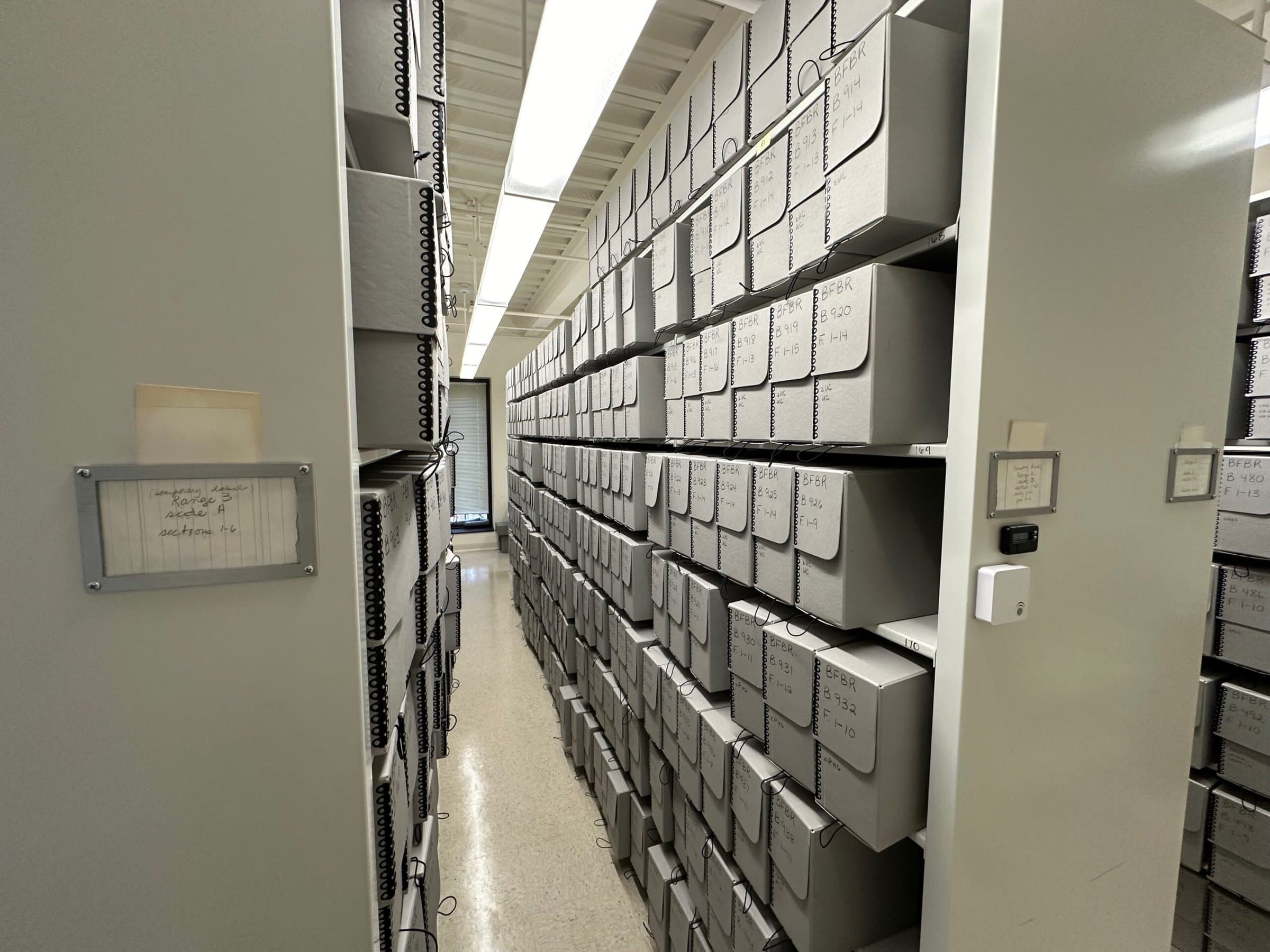
The National Archives and Records Administration (NARA) comprises the Archives building in Washington, DC, with branches at Pickett Street in Alexandria, Virginia and Suitland, Maryland; eleven field archives branches; nine Presidential Libraries and the Nixon Presidential Materials Project; and fourteen records centers, including the Washington National Records Center in Suitland and the National Personnel Records Center in St. Louis. (The records centers hold records of the agencies before they are either disposed of according to a records disposition schedule or moved into archival custody.)
These repositories hold the billions of federal records that are available to private researchers. Both the volume of records and the way they are organized can make using the National Archives a formidable task. This article describes NARA procedures at the main Archives building in Washington, DC, and ex plains how to get the most out of research time.
The National Archives preserves and makes available to researchers the permanently valuable noncurrent records of the federal government. Noncurrent records generally refer to records thirty or more years old. NARA does not have state, county, municipal, or pre-federal records.
Federal records are arranged by record groups, which are based on the originating agency or department. The title of a record group includes the name of the bureau or agency and a number; for example, General Records of the Department of State, Record Group 59.
Finding Aids
The Archives does not maintain comprehensive name or subject indexes, but there are publications called “finding aids” that describe the records. Guides, preliminary inventories and special lists, and catalogs of microfilm publications are three major types of finding aids.
Guides describe records in general terms. The Guide to the National Archives of the United States gives the broadest description of records available at the National Archives and the Presidential Libraries. This guide is being revised and the 1974 edition is out-of-print, but many university libraries should have copies.
Other guides available from the National Archives include:
- Black History: A Guide to Civilian Records in the National Archives
- The Confederacy: A Guide to the Archives of the Confederate States of America
- The Union: A Guide to Federal Archives Relating to the Civil War
- Documenting Alaskan History: Guide to Federal Archives Relating to Alaska
- Guide to Cartographic Records in the National Archives
- Guide to Records in the National Archives Relating to American Indians
- Guide to Federal Archives Relating to Africa
- Guide to Manuscripts in the Presidential Libraries
- Guide to Materials about Latin America in the National Archives of the United States
- Guide to Genealogical Research in the National Archives (revised 1986)
Information on purchasing these guides is given in the brochure Publications from the National Archives, free from the Publications Sales Branch (NEPS), National Archives and Records Administration, Washington, DC 20408.
Inventories and preliminary inventories provide researchers with series level descriptions of the holdings of individual record groups in the Nation al Archives; special lists describe individual records. Many of these finding aids are available free to researchers through the mail. A list of published guides, inventories, preliminary inventories, and special lists is included in the brochure Select List of Publications of the National Archives and Records Administration (General Information Leaflet #3, revised 1986), available free by writing to the Publications Sales Branch (NEPS), National Archives and Records Administration, Washington, DC 20408. Many guides and finding aids may be available at local public and university libraries.
NARA has microfilmed more than 2,000 series of records. Microfilm Resources for Research, A Comprehensive Catalog lists these microfilm publications by record group and includes a general index. Among the Catalogs that describe microfilm publications are Immigrant and Passenger Arrivals, Genealogical and Biographical Research, Black Studies, American Indians, Military Service Records, and Diplomatic Records. One roll of microfilm currently costs $20. It may be less ex pensive to buy several rolls of microfilm than to pay for a trip to Washington.
In addition to the general catalogs, many of the microfilm publications have individual descriptive pamphlets (DPs) that give brief administrative histories of the agencies that created the records and list the contents of each roll. For information on buying the catalogs and getting free copies of the DPs contact the Publications Sales Branch (NEPS), National Archives and Records Administration, Washington, DC, 20408.
Researchers should review the finding aids and guides before coming to Washington. After a researcher has decided which records are pertinent, he or she can call the Archives Reference Services Branch at 202/523-3218. A consultant will direct researchers to the appropriate custodial branch of the Archives. A researcher may need to con tact more than one custodial branch to locate pertinent records. The branch will also know what, if any, restrictions apply to the records, the volume of records, and whether the records are on microfilm.
Researchers should note the name of any archivist they work with. The archivist will not only help find out what records a researcher wants to review, but he or she will also help locate additional records or refer the researcher to pertinent materials in other repositories.
At the Archives
The main National Archives Building is at 8th and Pennsylvania Avenue NW, Washington, DC 20408. The Central Research Room (CRR) and the Microfilm Research Room are open for research from 8:45 a.m. until 10 p.m., Monday through Friday, and 8:45 a.m. to 5:15 p.m. on Saturdays. The other research rooms in the Archives Building—Military Reference, Diplomatic Records, Still Pictures, and Motion Pictures—are open 8:45 a.m. through 5 p.m., Monday through Friday.
When entering or leaving the building, a researcher must sign a register at the guard’s desk at the Pennsylvania Avenue entrance. The first time a researcher enters the building, the guards need to see either one piece of identification with a photograph or two pieces of identification with matching signatures. With each subsequent visit, the guards must see a researcher’s card, which is issued by the Archives (see below). Briefcases and packages are also checked every time a person leaves or enters the building. Cameras or computers are registered with the guard every time they are brought into or out of the building.
Research cards are issued to all researchers using original records. Researchers using only microfilm do not need research cards. Personal identification with a picture is needed to get a card. The card is valid at all National Archives depositories, except the Presidential Libraries, and is good for two years. Cards are not transferable and must be shown to guards or NARA staff members upon request. Regulations Ffor the Public Use of Records in Tthe National Archives (GIL 2), issued with the cards, includes current research room procedures. Researchers must also sign in and show their researcher’s cards whenever they visit the branches.
Records to be used Friday after 5 p.m. or on Saturday must be requested by 3 p.m. Friday. Records to be used after 5 p.m. Monday through Thursday must be requested by 4 p.m.
Textual records are usually delivered to the Central Research Room (CRR), Room 203; however, both the Military Reference Branch and the Diplomatic Branch have their own research rooms. It generally takes one to one-and-a-half hours for records to be delivered to the CRR. If it takes longer, researchers should check at the desk in CRR.
Citing Records in the National Archives of the United States defines terms frequently used by archivists and gives examples of ways to cite records. It is available in the CRR or free by mail from the Publications Sales Branch.
Central Research Room Procedures
In the summer of 1986 the National Archives started a “clean research room” policy for the CRR and other research rooms in the Archives Building (with the exception of the Microfilm Research Room) as well as the research room in Suitland. This policy strictly controls materials coming into and leaving the research rooms.
The following items are not allowed in the research rooms, but must be stored in nearby lockers:
- overcoats, raincoats, hats, and similar apparel;
- personal copying equipment including paper-to-paper copiers;
- briefcases, suitcases, daypacks, purses, or similar containers for personal property;
- fountain pens;
- notepaper, notecards (these are pro vided free by NARA);
- notebooks, folders, envelopes, and other containers for paper.
The lockers operate with a quarter, which is returned when the locker is reopened. The lockers are for use during research room hours. No materials may be left in the lockers overnight.
After a researcher has stored materials in the locker, he or she needs to sign a register located at the guard’s station at the entrance to the CRR and show a researcher’s card. Researchers sign out only when leaving for the day.
Any notes that are brought into the CRR must be stamped “approved.” Once an item has been stamped it can be brought into the CRR without being stamped again.
Researchers must sign the records in and out at the staff desk each time they are used. When finished for the day, researchers also return the records there. Records will be held for three working days unless the researcher specifically asks that they be held longer.
When using the records, it is necessary to maintain the files and documents within the files in their original order.
Use of Copiers
There are several ways to get copies made on paper-to-paper copiers.
- The self-service machines in the CRR.
- The staff in the Central Research Room can make copies.
- A bulk copier is available for large orders. The bulk copier can be reserved for one-hour segments in the
- The branches also can make copies.
Researchers can make copies of the records on coin-operated equipment avail able in the research rooms, but the staff in the research rooms must review all documents before, and after, they are copied. The following records cannot be photocopied in the CRR:
- bound archival volumes;
- records fastened together by staples, clips, acco fasteners, etc., when folding records or bending will cause damage;
- records too fragile to be safely copied; items larger than 11 inches by 14 inches;
- original art;
- declassified records that still have their original classification markings.
Whenever there is a question about what records can be copied, researchers should contact the attendants behind the desk.
Records that the researcher does not have the time to copy, can be copied by the staff in the custodial branches. In some case, records that cannot be copied in the Central Research Room can also be copied by the branches. Re searchers may check with the staff to find out what records can be copied and in what format (paper-to-paper copies, microfilmed, microfiched).
When the copies are to be made by the branches, special acid-free tabs for identifying pages to be reproduced are available at the desk. After the records have been tabbed, and a reproduction service order form filled out, the re searcher takes the reproduction order form back to the branch where the cost of the order is estimated. The researcher then takes the order form, with full payment, to the cashier’s office.
Records can also be microfilmed. For more information on ordering reproductions of records, researchers should consult Records Available from the National Archives, which is available free from the Publications Sales Branch.
The phrase “reproduced from the holdings of the National Archives” is automatically copied along the margins of all documents copied at the National Archives.
Classification Markings
Security classification markings on a document—such as “confidential,” “secret,” and “top secret”—must be cancelled before a document can be copied. Before the record files are made available to researchers they are declassified by the Archives, but because of the number of documents contained in a single file it is not always possible to mark each document with the authority under which it was declassified. If classification markings have not been cancelled, the research room attendant will contact the unit having archival custody of the records to cancel the classification marking and annotate the document with the appropriate authority. Before the documents are reproduced, the staff must make sure that all the documents in a file are marked declassified in accordance with Executive Order 12356 of April 2, 1982 (47 FR 14874, April 6, 1982) and by the Information Security Oversight Office Directive Number 1 of June 2, 1982 (47 FR 27836, June 25, 1982).
After 4 p.m. Monday through Friday or on Saturday, classification markings cannot be cancelled. Only certain staff members are authorized to cancel markings. If a large number of the documents need to have the classification markings removed, it will probably be necessary to have them reproduced by the custodial unit.
Signing Out
A guard checks all papers leaving the CRR. Papers that are not marked “Re produced from the holdings of the National Archives,” stamped “approved,” or are not on NARA-supplied note paper, will be carefully checked and may be retained if there are any questions.
For questions about the records, researchers should talk to the staff in the archival unit that maintains custody of the records. If a researcher has any questions about the policies in the CRR he or she should talk to the staff in Room 203, the consultant’s office in Room 205, or see Regulations for the Public Use of Records in the National Archives.
Constance Potter is a Reference Archivist in the Central Research Room at the National Archives. She has a Master of Arts degree in history from Washington State University.