The history of higher education in the United States is taught hundreds of times each year, but not within history departments. Institutions of higher education expanded throughout the 20th century, as did a profession focused on higher education administration, leadership, academic affairs, student affairs, and student development. There are currently more than 280 higher education and student affairs (HESA) programs designed to train these professionals. The Council for the Advancement of Standards in Higher Education, a consortium of associations representing student affairs practitioners, includes history in their program guidelines. As a result, most HESA programs require students to study the history of higher education, but these courses are rarely taught or developed by historians and often lack a focus on primary sources and historical thinking.
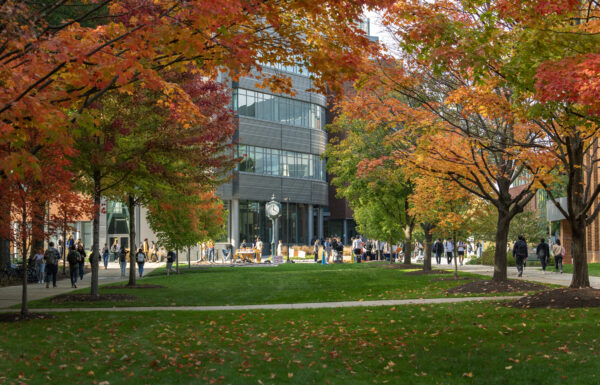
The higher education professionals who work on university campuses can benefit from understanding the history of such institutions. Evan Cantwell/George Mason University
I am a historian who found my way, through digital humanities, digital pedagogy, and the scholarship of teaching and learning, to becoming a HESA professor. Teaching the history of higher education course presented a rare opportunity to merge my academic and pedagogical worlds. I quickly realized, though, that most students did not share my excitement about the topic. In fact, they actively dreaded it. One assumed that it “was going to be my least favorite class,” while another asked more pointedly, “Why should I have to take this? Why should I know history?” I saw this as both a unique challenge and an opportunity. Could this course engage student affairs professionals in examining the past while making meaningful connections to their work today and in the future?
As James Grossman wrote a decade ago, all students can find history engaging if we “figure out how to connect our courses to the curiosities and passions that students bring with them.” Incorporating this advice, I redesigned the course to connect those curiosities and passions with the study of the past. After the course ended, students shared their revised perspectives. One appreciated that history “helps us understand where we’re situated now . . . it really sunk in for me.” Another reflected that history can help you understand how challenges were addressed in the past: “Was that handled well? Was it handled badly? Is that something that we can bring up in the dialogue for change?” They concluded that history provides “a road map to help conversations of the future.” Teaching the history of higher education in a HESA graduate program offered a valuable opportunity to expand historical thinking and appreciation for humanities among future higher education professionals and can, perhaps, serve as a model for other programs.
The first time I taught the history of higher education course, I started with the syllabus I inherited and looked for additional models nationally. Many used the same core text and followed a similar chronological structure. I did the best I could with the materials at hand, but in the end, I was disappointed. The core book focused heavily on elite institutions, and I struggled to find primary sources online. As noted, the students—who were required to take the course—approached it (at best) with reluctance and apprehension.
History courses in higher education and students affairs programs often lack a focus on primary sources and historical thinking.
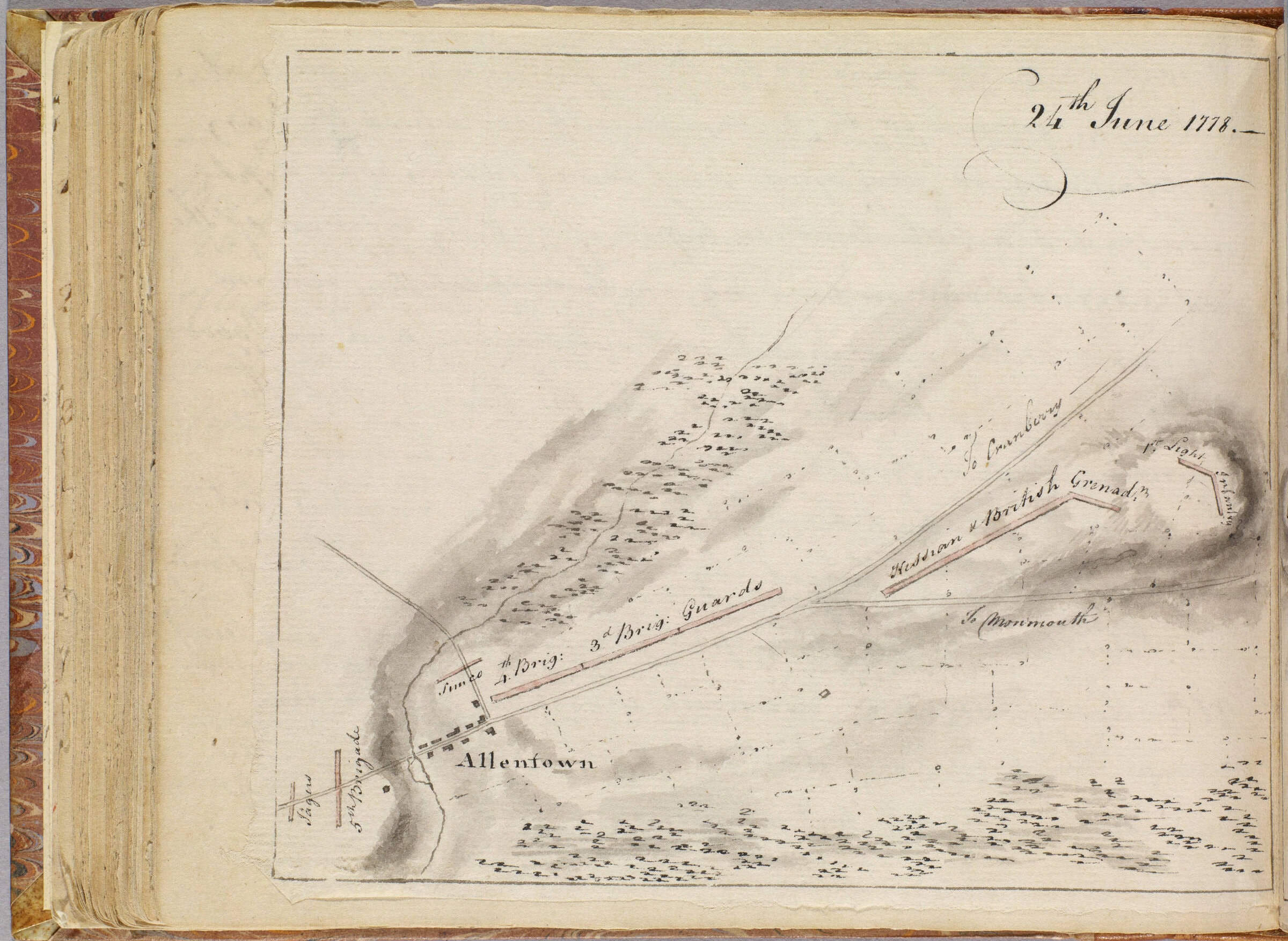
Drawing on my experience with digital humanities and higher education pedagogy, I spearheaded a redesign of the course. I focused on change and continuity over time, student access, and the contributions of diverse populations and kinds of institutions. Historical thinking is grounded in critical analysis of primary sources, and developing these skills requires practice and guidance. The redesigned course explicitly introduced primary sources and emphasized close reading, analytical questions, and attention to historical context.
Today’s higher education professionals are faced with a rapidly changing landscape and challenges including academic integrity, academic freedom, student protest, faculty governance, workforce preparation, financial uncertainty, and shifting federal legislation. Each of these issues, however, has a history that can expand our understanding of the complexities as well as efforts to address or resolve them over time. It is also critical to include a broad history of education that includes normal (teacher education) schools, community colleges, historically Black colleges and universities, Hispanic-serving institutions, tribal colleges, and vocational schools, among others, as these institutions have educated the vast majority of students since the late 19th century.
Collaboration played a key role in the redesign. As I began reimagining the course, I met D. Chase Catalano, an assistant professor in a HESA program who was teaching the history of higher education for the first time. We came from very different backgrounds, but we faced the same challenge of fostering student engagement in the history of higher education. Through conversation and experimentation, we found that our perspectives were equally important for reimagining the course with the goal of making it relevant for higher education professionals.
Together we designed and implemented a shared digital assignment requiring each student to create an online, asynchronous, primary source learning activity for their peers that examined the historical roots of an issue facing higher education today. This inquiry-based assignment encouraged students to think about knowledge creation and communication, including creative, interactive ways to engage classmates with primary sources. Students also learned digital skills and had the opportunity to think intentionally about pedagogy and peer learning. Topics included women’s athletics, LGBTQ+ rights, campus quarantines, college entrance exams, federal legislation, and financial aid. The assignment was carefully scaffolded with feedback throughout the semester. Students then worked through classmates’ activities and learned about a range of issues. The activity challenged students to experience doing history by producing student-centered, authentic work for an audience of peers.
The redesigned course centered primary sources, historical thinking, historical context, and real-world connections, but I wondered what students would take with them into their higher education careers. So I decided to conduct research, including five sections of the course taught by three instructors at two institutions. Seventy-three students completed the courses, and thirty-four (47 percent) participated in the research. Data, including student work and interviews, was collected, coded, and analyzed using thematic analysis. We found that students’ attitudes changed after completing the course.
Through scaffolded practice locating, analyzing, and curating primary sources, students developed an appreciation for the practice and craft of history. One student shared that it was “much more effective” to read about student experiences with hazing in the past than “just to speculate or assume what hazing would have previously looked like.” Another was initially discouraged by the lack of archival material about Asian American students but came to appreciate that absence also tells a story. Students also developed an understanding of historical context. One explored the history of international students through US immigration laws. She reflected after the course that her research “gave more insight into the context that allowed me to have a really good holistic picture of why this Immigration Act happened, what it did, and why it’s important now.”
Understanding the past and its role in shaping the present and the future supports the work of student affairs professionals.
Inviting students to bring their interests to the course fostered an appreciation for the relevance of history to their future careers. Making this connection explicitly (and repeatedly) is essential. Students in these courses envisioned using their new skills to contextualize current issues, such as institutional ties to slavery, debates over affirmative action, and budget shortfalls. One shared that the course “really changed my perspective. . . . By knowing the history of higher education—and particularly what’s made it inequitable—I can hopefully use that as a jumping-off point whenever I start my career in higher ed to pinpoint those things to change.” Another described a new appreciation for the discipline: “My big takeaway was that history is not something that just stays in the past.” One student expanded that notion, sharing that the course “made me start to realize how important all general history is because I’m like, ‘Wait, I can actually apply everything to what’s happening now.’”
Building on our lessons learned, we expanded the project. We ran a 2024 summer institute for higher education faculty on teaching the history of higher education with the goal of deepening understanding and appreciation of the humanities in higher education programs nationally. We also created an open educational resource on teaching and learning the history of higher education that includes secondary sources, teaching modules, and a database of 700 digitized institutional archives. Institute participants have since shared what they learned through articles and conference presentations, including how they have integrated historical thinking into their higher education policy, law, administration, and qualitative methods classes.
This project grew out of my commitment to strengthening humanities in higher education. It tapped into unexplored opportunities for expanding history and the humanities by introducing them to new audiences in professional programs. Understanding the past and its role in shaping the present and the future supports the work of student affairs professionals, helping to situate systemic issues within a broader historical context. Engaging students in this way can also provide a meaningful opportunity to introduce the value of history and historical thinking to new audiences and to shape the attitudes of current and future higher educational professionals.
Kelly Schrum is assistant provost for graduate academic affairs and professor in the higher education program at George Mason University.
This work is licensed under a Creative Commons Attribution-NonCommercial-NoDerivatives 4.0 International License. Attribution must provide author name, article title, Perspectives on History, date of publication, and a link to this page. This license applies only to the article, not to text or images used here by permission.