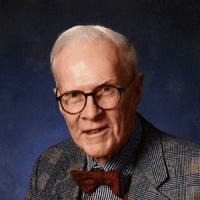
If you did not vote when your ballot came two weeks ago, dig it out and do so now. One of the perennial mysteries in the democratic world is why Americans do not bother to vote in their national elections. The same lethargy seems to afflict all learned societies. In the AHA, Nominating Committees for decades counted ballots from up to 35 percent of the members, but now thanks perhaps to our experiment with enclosing ballot material in Perspectives, we have slid into the middle twenties. We hope returning to a separate mailing of the ballot will reverse that unfortunate trend.
Your Washington headquarters staff spent a good deal of August absorbing vacation and sick-leave absences. (Yes, there has been a “bug” going around Washington, and for a change its not electronic.) While the usual load of meetings and consultations with other learned societies and educational organizations slacks off in the late summer, it never entirely ceases. We have exchanged views in the last five weeks with the American Association of Museums, the American Political Science Association, the American Association of Colleges, the Association for the Bibliography of History, the National Museum of American History, and with the publisher of our Writings on American History, Kraus International.
The largest change in the Association headquarters this summer is wholly cosmetic. We underwent a complete exterior paint job, that has been complemented by removal of aging and unsightly shrubbery and its replacement. No longer looking like a 103-year-old derelict, the Association headquarters is now sprightly, smart, and attractive. Stop by and say hello when you are in the neighborhood.
Late in August the Association was represented at the Second International Conference on Russian America, held August 19–22 in Sitka, Alaska, which was endorsed by the AHA just as its predecessor had been in 1979. The conference was quite successful, drawing some 200 specialists from the fields of history, anthropology, linguistics, sociology, and archaeology. Although the invited Russian delegation showed up in number well below expectations, several of those unable to come forwarded their papers. One valiant Soviet specialist had flown west—around from the island of Sakhalin through twenty-one time zones to reach Sitka and was returning the same way! The successful exchanges be tween representatives of so many disciplines proved one of the most valuable parts of the meeting.
And good news from the National Endowment for the Humanities: the Endowment has agreed to provide grant support for an AHA-sponsored conference on “Women in the Progressive Era.” Scheduled for March 10–12, 1988 at the Smithsonian’s National Museum of American History, the conference will bring together twenty-nine scholars to share their research on wom en’s contributions to American life at the turn of the century. Supported also by a grant from the Rockefeller Foun dation, the conference precedes a forthcoming exhibition, “From Parlor to Politics: Women in the Progressive Era,” scheduled to open in 1990 at the museum. For more information, contact Noralee Frankel, our assistant for women and minority interests.