This issue is being “buckled”—French journalese for “put to bed”—just after Labor Day. It therefore covers a number of July and August events, which may interest members.
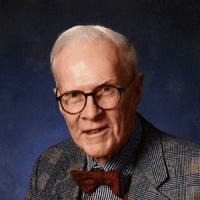
In the accompanying photograph, the two editors of the edition of the papers of J. Franklin Jameson, are shown with the executive director of the National Home Library Foundation, Charles Dobbins, and the representatives of the three prestigious organizations that are cosponsoring the Jameson Papers project: the National Archives and Records Admiinistration, the Library of Congress, and the AHA.
The National Home Library Foundation has just made a $5,000 grant to the project which, like a similar grant from the Morris and Gwendolyn Cafritz Foundation, is eligible for a matching grant from the National Endowment for the Humanities. The Endowment made an outright grant of $40,000 and a matching grant of up to an additional $22,000 to the Jameson Papers, which is also supported by annual National Historical Publications and Records Commission grants.
The project’s editors, Jacqueline Goggin and Morey Rothberg, have signed a contract with the University of Georgia Press to publish the three-volume edition, which is moving ahead very satisfactorily. We hope to go to press late next year, the fiftieth anniversary of Jameson’s death.
In mid-August the members of the Research Division Committee, from their various residences, research libraries, and resorts, fulfilled one of their recurring responsibilities to the profession by ranking a number of travel grant requests to the American Council of Learned Societies in order of relative priority. These recommendations go to the ACLS, which finds them useful in reaching a decision on the distribution of travel grants, where requests always outnumber available resources. These thrice-a-year telephone conferences follow a period in which the Committee members have carefully studied copies of all the grant requests. Their findings are debated and reconciled in the conference call and represent the best judgement of the profession’s elected representatives.
A potential risk to the Association, growing out of the liability insurance crisis, has been satisfactorily resolved this summer. Last April our insurers, as part of a broad program, summarily canceled the AHA’s liability insurance policy. Although we have never had a court case involving Association liability in our 102 years, we were nevertheless caught in the industry-wide crisis. After four months of theoretical exposure, we now have a new policy, retroactive also to cover the gap, at only double the old premium! (In the process, by vigorous comparison shopping, we fought off an attempt to quadruple the premium!)
As always the Association headquarters continues to draw an interesting visitors list. In addition to drop-in calls from members, we had an interesting meeting with the new director of the College Art Association, Dr. Susan Ball. Headquartered in New York, the CAA is the principal organization of art historians and a fellow member of the ACLS. We agreed that both profession al groups could benefit from a closer relationship, which already characterizes the relations between many of our members.
We had an interesting meeting with the new editor responsible for AHA publications at Kraus International, which publishes Writings on American Histo1y jointly with us and which has recently published Lewis Hanke’s magisterial five volume Guide to the Study of US History Outside the United States, 1945-80. Another caller was a diplomat from the Soviet embassy, interested both in the arrangements for the September 24-26 VI Colloquium of Soviet and American Historians and in what historians think about disarmament!
We encourage members who may be visiting Washington either for business or pleasure to stop by. AHA headquarters has been located for nearly a third of our existence in a double townhouse, just behind the Library of Congress, which our predecessors were canny enough to buy in the early fifties. Our low operating costs per square foot and our relatively low real estate taxes are the continuing envy of other less lucky learned societies. However, the welcome mat is out.