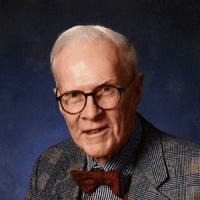
Our next issue will carry a full report of the 16th World Congress of the Historical Sciences, held in Stuttgart the last week in August. More than one hundred historians from the US were present for some or all of the Congress. About forty were official participants in the program, either delivering papers, commenting on papers or chairing sessions. The AHA was present in its capacity as the representative of history in the US on the International Committee of the Historical Sciences. Our president, William H. McNeill; president-elect, Carl Degler; vice president for research, Mary Beth Norton; chair of our committee on international historical activities, Nancy Roelker; editor of the AHR, Otto Pflanze, and former president Gordon A. Craig, in his capacity as first vice president of the International Committee, all attended.
We should acknowledge gratefully the skill and dedication of Professor Craig in his service over the last decade to the bureau of this international organization as a representative of our profession. It is not unknown for political or even Cold War considerations to crop up in this learned organization. However, the presence of so skilled a practitioner of diplomacy—equally renowned as a scholar—to represent this country and its historians has served both to avert many potential blunders and serve the profession and the bureau with distinction.
Craig’s scheduled retirement from the ICHS at the end of the Congress paved the way for the election of another representative of history in the US to the international bureau. AHA president-elect Degler was chosen to be a member of the bureau for the next five years. Scheduled rotation of the highest positions in the ICHS also brought the election of the Mexican historian E. de la Torre Villar as president of the ICHS, in succession to a Polish historian, and of the Hungarian historian Georg Ranki to be first vice president for the coming years.
The Assembly of the ICHS voted to hold the 1990 World Congress in Madrid as part of the follow-up to the Columbus quincentenary. The 1987 session of the assembly of the ICHS will be held in Athens. (A hotly contested candidacy by Venezuela to be the site in 1987 was averted by an American suggestion that the following inter-Congress assembly in 1992 might meet in Venezuela as part of the 1492-1992 Quincentennial.)
In Washington some movement is taking place on two federal appointments of abiding interest to historians, the position of Archivist of the United States and that of Chairman of the National Endowment for the Humanities. Rumors continue to fly that the candidacy for Archivist of Dr. Peter Duignan of the Hoover Institution is dead and that other candidacies are very much alive at the White House.
The Senate Committee hearing on the nomination of Edward Curran for Chairman of the NEH was held on October 2. It was not an easy hearing for the nominee. Although he had favorable support from Senators Grassley and Thurmond (members of the Committee) and Mathias and Simpson (witnesses). Curran also received benevolent attention from the chairman, Senator Hatch. He was “roughed up,” however, by the five Democratic Senators present from the Committee and by one Republican member, Senator Weicker. In general the criticisms might be summed up as relating to two areas: Curran’s lack of experience in post secondary education, in comparison with his long headmastership of a prominent private school, and his lack of recognition as a leader in the humanities.
There was much discussion and numerous hostile questions were volleyed at him over his abrupt reversal between the time of his confirmation in 1981 as head of the National Institute for Education and his recommendation to President Reagan the following spring the NIE be abolished.
The Modern Language Association went on record as flatly opposing his confirmation, being represented by its current president and by its former executive director, now the executive vice chancellor of UCLA. At this writing it is not easy to forecast the outcome. With one Republican joining the Democrats on the committee in opposing him, there may be delays in getting the Committee to vote favorably and there are only about six or seven weeks left in this session.
In another part of town, a moving ceremony took place at the National Archives in September 17, the 198th anniversary of the signing of the Constitution by its framers. A large number of new citizens of the United States in the Washington area were sworn in by a federal judge in the rotunda of the Archives building. The ceremony took place in front of the Constitution and a copy of the Magna Carta on loan to the Archives from Ross Perot, the Texas industrialist who has so effectively interested himself in the improvement of education in his native state. It was followed by a reception on the portico of the Archives building, overlooking the Mall, and by a luncheon honoring Perot, hosted by acting Archivist Frank Burke.
Anniversaries are much in the air in Washington. We are happy to report that the Federal Commission on the Bicentennial of the Constitution is at last under way. Its chair is the Chief Justice of the United States, who has been a stalwart friend and supporter of our own joint effort with the American Political Science Association, Project ’87. The Commission in its first organizing efforts has chosen another good friend and frequent Project ’87 helper, Dr. Mark Cannon, the administrative assistant to Chief justice Burger, to be executive director of the Commission. Although less than two years remains before the Constitution’s 200th birthday, we are gratified that the federal commission is now off and running.
Elsewhere in this issue the names of the members of the other federal commemorative commission of interest to us are reported. The Christopher Columbus Quincentenary Jubilee Commission held its initial meeting in mid-September in Washington at the Department of State. Its primary business was for the commissioners to be sworn in and to choose a chair and vice-chair from among their number. The chairman elected is John N. Goudie of Miami, Florida. We are very pleased to report that the vice-chairman is our own president, William H. McNeill, one of the commission members nominated by the President of the United States.
Although the Quincentennial is still a few years away, it is none too soon to start planning. The AHA’s own committee on the Columbus quincentennial, chaired by Professor Helen Nader of Indiana University and the AHR, will be working zealously in this endeavor.