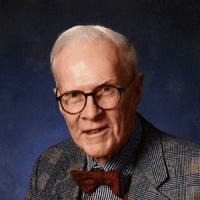
As these notes are being written, your headquarters staff is in the countdown period of preparations for the annual meeting in Chicago. The Association is fortunate to have the services of a very skilled group of professionals on its staff, who are able to mount and operate a complex meeting of several thousand historians with a minimum of glitches.
Curiously enough, considering the long and arduous hours put in at the meeting, the staff looks forward eagerly to the event and its attendant excitement, even though we all suffer from burnout during the first week of January! We regularly take two-thirds of our entire staff to the site of annual meetings, leaving only a skeleton force behind to keep the headquarters open and operating at a minimum level during the Christmas/New Years work days.
The principal item of interest to the membership during the time since the last issue of Perspectives was the meeting of the Professional Division Committee (PDC) on November 2.
The PDC continues to monitor a variety of ethical issues referred to it for action, and has asked the headquarters staff to prepare a memo for review at its spring meeting on the kinds of ethical standards or guidelines that other learned societies have developed. In connection with this, the Division is reviewing several cases of alleged outside intervention in the hiring of a historian and is in the process of gathering more information. The Division is also considering a request to amend the AHA’s guidelines on the rights of foreign historians. At present, Association policy is to protest only those rights violations which derive from an individual’s professional practice of history. The issue will be studied further and acted upon in the spring.
The PDC took note of the growing problem of part-time employment. Many “part-timers” lack the privileges and securities of their full time colleagues, and of course, are the most immediate victims of a tightened job market. The Division urges that departments of history take action to protect their full-time line positions—especially those relinquished by retiring faculty—from fragmentation into several part-time, intermittent, or temporary positions.
The Division was reminded by several complaints that departments do not al ways follow the EIB’s guidelines of open advertising and equal employment opportunity. It urges departments to list all job openings or searches in the EIB.
Finally, the committee took up a number of concerns of interest to women historians. It is bothered by the persistent reports of salary inequity, and will be reviewing the AAUP’s Salary Kit as one tool for departments wishing to conduct their own internal evaluations of gender pay equity. The Division has also recommended to the Council that representatives of the AHA meet with the NEH to discuss grant-making as it relates to various fields of history, especially some of the newer ones such as women’s, black, and social history. It agreed that more data is needed on the success rate of incoming NEH grant applications in history.
The month of November also saw the fulfillment of one of the important responsibilities of the elected officers of the Association—the conference of the Committee on Committees to draw up a slate of appointments to the many standing and special committees of the Association. That slate is presented to the Council at its December meeting and is usually approved with little change. Under the Constitution of 1974 and in order to insure a wide representation of members on the various committees and activities of the Association, members of the vital Committee on Committees are themselves elected by the membership in the annual election of the AHA. The size of their task, which is carried out in a telephone conference call usually lasting an hour-and-a-half, may be grasped by noting that sixty-three individuals were chosen from the membership as candidates and alternate candidates for appointment. We are pleased to note that the Committee chose a total of twenty-five women and thirty-eight men for these positions. The geographic breakdown was also reasonably good. The Southern states did as well as the traditional New England/Mid-Atlantic stronghold of the Association, with the Midwest and Far West accounting for almost as large a share of historians nominated.
Also in November, the Association was represented at two success celebratory occasions at the National Archives building to observe its newly won independent agency status, to take effect in April. On November 8, a formal reception was held in the rotunda of the Archives building in the presence of the Constitution and the Declaration of Independence, where the Archives Independence Act was also placed on display. Speeches appropriate to the solemnity and importance of the occasion were delivered by Congressman Frank Horton (NY), an active Congressional supporter of the independence bill and by the Honorable Edwin Meese (White House Counsellor), who had orchestrated the White House approval of the legislation. The AHA’s executive director was also asked to deliver some remarks on behalf of the oldest constituency of the Archives. A week later a very pleasant luncheon in the Archivist’s office assembled some of the most stalwart advisors and activists in the campaign for the National Archives and Records Agency.
The Association has also been offered a splendid gift by the family of one of our earliest and most distinguished members. Senator Albert J. Beveridge until his death in 1927, was one of our leading supporters. His grandchildren have offered to donate the Senator’s valuable library, which contains many of the secondary sources he used in preparing his magisterial life of Chief Justice John Marshall, to the AHA to be placed together with the Senator’s portrait in a room in our headquarters building to be dedicated to his memory. As members know, the Beveridge Fund originally endowed by the Senator’s widow, supports an annual book prize in western-hemisphere history as well as the very substantial program of research grants of up to $1,000 for historical research relating to the same area. In the last four years, Beveridge Awards have been given to 110 scholars in an amount totaling $60,934.
The Association, together with a number of other historical member associations of the American Council of Learned Societies, was represented at the conference of executive secretaries of the member organizations at a meeting in San Francisco, November 9–10. On that occasion, as well as at a meeting of the International Research and Exchanges Board in New York on November 1, it was a pleasure to be able to welcome to ACLS membership, the American Association for the Advancement of Slavic Studies.