The less I say in class, the more my students learn. This statement is part of my teaching catechism. It is especially true when I use role playing or simulations in my Advanced Placement (AP) American history classes. This belief flies in the face of traditional instruction, including former AP Chief Reader Robert Bannister’s advice to new AP teachers in his Teacher’s Guide to Advanced Placement Courses in American History. Buried in the text of Professor Bannister’s booklet is the suggestion that role playing exercises “are especially welcome as breaks before vacations and late in the year.” Bannister implies that simulations are best used when serious scholarship is not likely. As a twenty-year AP teacher, I have learned that simulations can, and indeed should, be used in the most important areas of scholarship. In fact, each year I try to anticipate the AP examination writers and play simulation games in areas where I think the May AP test will concentrate.
My faith in simulations did not develop overnight. During my first five years of teaching, my American history classes were modeled after Frederick Merk’s lectures at Harvard, and for the first ten years of teaching AP classes (fifteen years into my career) I kept close to the traditional models. Ironically, my decision to change teaching styles came at a time when schools were being held accountable in the press and public forums and the “back to basics movement was getting underway. Since I am not ordinarily suicidal, what compelled me to switch? First—I am sure this is not news—since 1973 or 1974 students have become increasingly accepting. That is, they do not, as their immediate predecessors did, challenge authority quite as much, and they are more status, material, and grade oriented. They want to know what to study for examinations so they can get the good grade or hit the jackpot on the American History Achievement Test. The brighter the student, in general, the less willing he or she often is to risk raising the good question or exploring an unusual aspect of a historical issue. Brighter kids think they have more to lose. Too often in the mid-1970s I found that I was the only active participant in my AP classes. This rather depressing revelation coincided with two convention papers I had given on social history. At each, a college teacher came up to me after the session and confessed that he had once been a junior high school teacher and had used a simulation game, “1787,” that I had designed in the mid-1960s for my regular American history classes; both said they had moved on to college teaching where they had used the game with college freshman in their introductory survey courses. In both cases the game worked successfully.
While lightning did not strike, it seemed to me that if simulations were good enough for professors in Georgia and Texas, they were good enough for me to explore in my AP classes. Afterall, simulation games appeared to stimulate active student involvement in their own education and improve the retention of important historical concepts.
Students learn more when they are active, and it is possible to integrate all traditional paper assignments under a simulation umbrella.
In my preparations, I started out with one strike against me: I am not comfortable with computers, so anything I designed would have to work without the complexities the computer makes possible. Also, I believed from my own earlier experience in creating canned simulations that it was far better for me to construct my own than to search for prefabricated simulations.
The principles upon which I based all my work were simple. Students learn more when they are active, and it is possible to integrate all traditional paper assignments under a simulation umbrella.
Some other guidelines I follow are logical ideas about gaming that I had learned from ten years of using them in my regular classes. First, if one uses a simulation, that exercise should be the sole vehicle of instruction to cover a topic. Classroom time is precious. Teaching a topic twice in the middle of the year means that some other subject is not taught at all in June. For the same reason, it makes no sense to use a game simply to kick off or review a period. If a simulation game can not be designed well enough to cover a period satisfactorily, then it would be better not to use it at all.
A second principle, and one somewhat harder to follow, is that every student has to be doing something all the time during the simulation. In my class trial, for example, the students who are witnesses also double as members of the jury. In that way, they are forced to listen to all presentations and not just prepare for their testimony and then sit passively while others testify.
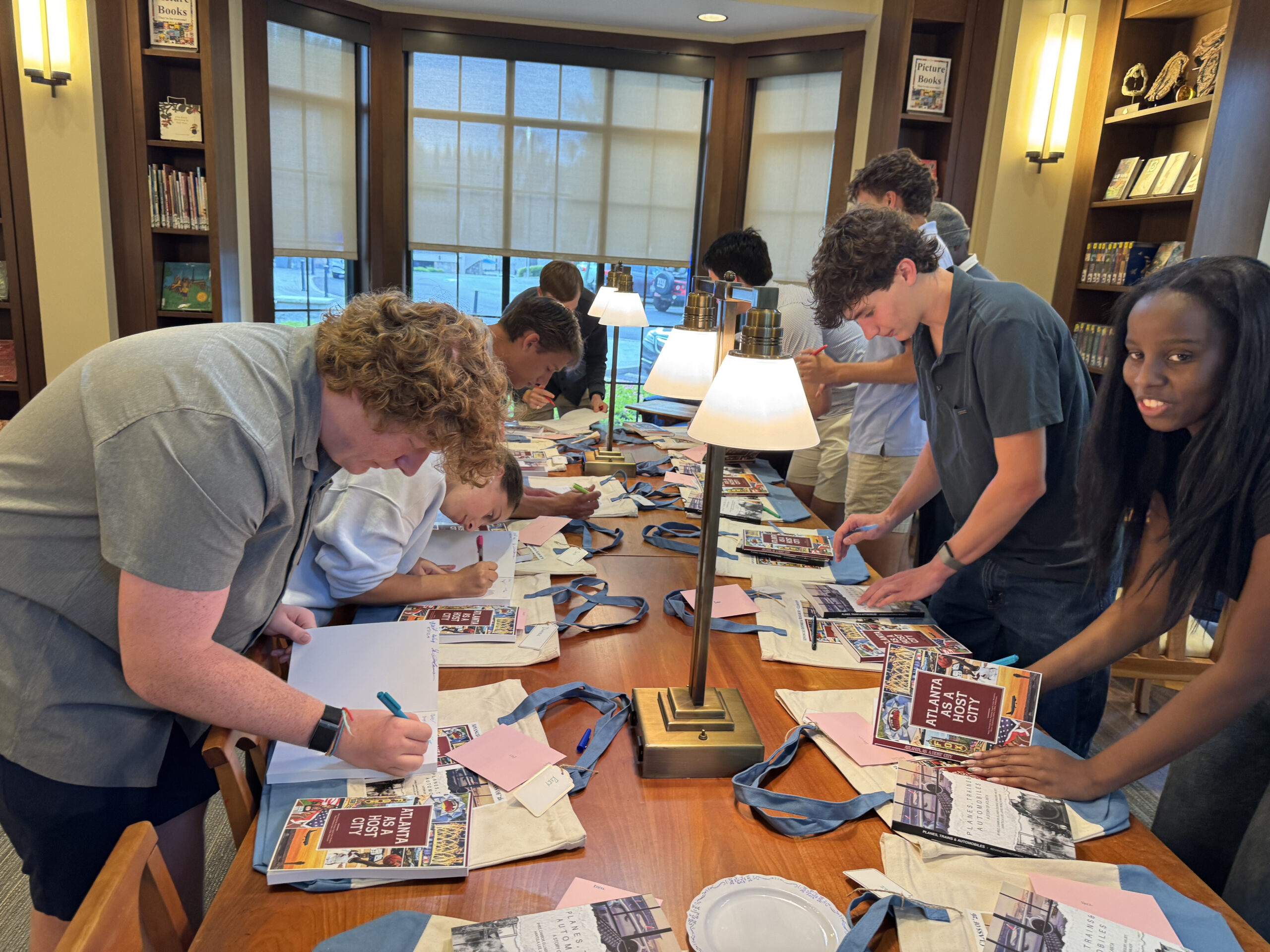
Assignments have to be made at least two weeks before any simulation begins: here is where the research takes place. Just before the game begins, a short descriptive paper, complete with scholarly documentation, should be required. In the trial, for example, the paper would present the substance of the anticipated testimony. Most simulations last about two weeks. Often I initiate them with a Sunday afternoon session in one of the students’ homes. Finally, a major paper is required based on the class presentations. Here students are required to to cite witnesses in the trial and argue a position—guilty or innocent or for or against—certain proposed constitutional amendments in another game my classes play.
Over the years I have created a number of games using the same format: an early paper, a presentation in class, and a follow-up project. My newest game was introduced in January 1988, and should bring groans to both college admissions officers and students at high-pressured high schools. I confess, I designed game because I had difficulty teaching the economic and social transformation that accompanied the Industrial Revolution in post-Civil War America. Too often I found myself force feeding the ideas of Hofstadter or Wiebe or McGerr to my students.
In whatever games I play, students be come deeply involved in their roles…
In this new game, all students are informed that they are teachers who have been asked by a student in their class to write a recommendation to the fictional United States University for someone living in the post-Civil War years. A the recommendations are turned in, all students are transmogrified into members of the admissions committee at USU and must present their “student” to the admissions board. After presentations and questioning, members of the admissions committee are required to list which ten “students” they would admit to USU, which they would reject, and which they would place on a waiting list; they must also explain why they voted as they did. Finally, I return to the admissions board a list of their ten “admits” and ask the students to make roommate assignments. This last twist was added to the game because a dry run suggested that students learn only their own ten admits well; requiring them to pair the admits forces them to think through some of the themes of the era.
In whatever games I play, students be come deeply involved in their roles; there is often tension and even anger between witnesses and attorneys in the trial, senators and witnesses in the amendment game, and university officials in the admissions game. Some characters serve to release tensions. I had a particularly quirky student play the role of Sylvester Graham. He pushed to the boundaries of good taste Graham’s insistence on proper eating as the key to sexual control. Whether serious or full of humor, students say who they are. They wear T-shirts proclaiming their character or adopt an accent or clothing for the occasion.
One simulation approach I use is slightly different from those outlined above. For lack of a better term, I call it “the leadership game.” In each leadership game there are six or seven political leaders and six or seven voting blocs. Each day every political leader has to make a presentation before the entire class and answer questions fired at him or her by members of the voting blocs and other political leaders. Each day one major crisis is the subject of discussion. In a game on Jefferson’s presidency, for example, the following crises were covered: Marbury v. Madison, the Tripolitan War, the Louisiana Purchase, the Pickering and Chase Impeachments, the trial of Aaron Burr, the Embargo and the Enforcement Acts.
In addition to the formal presentation, each political leader has a chance to circulate in the class and try to solicit support from the voting blocs. At the close of each class, each voting bloc must cast a plus one for the political leader whose position on the crisis comes closest to their own interests and a minus one for the leader who is farthest away. For homework each night the members of each voting bloc have to prepare a two page paper explaining the reasons for their vote. If a voting bloc reaches -3 for any leader, students in that bloc no longer can vote for or against him/her. In the end, the leader who has retained the most voting blocs wins. What almost in variably happens is that the centrist political leader comes out on top. (Students are informed that their grades are based on how well they have researched their characters and not whether they come in first, second, or third. A few years ago, a youngster played an absolutely arrogant John Quincy Adams, came in dead last in the game, and earned an A+ for his efforts.)
Of all of the devices I have used, the leadership model has been most consistently successful. The teacher can unfailingly measure the time necessary for the game: one day one issue. Also, there is no chance of a student cutting short his research since every day political leaders have to be prepared for their presentations and every night the voting blocs have to defend their actions. Unfortunately, for the teacher, every night there are papers to read which have to be returned the next day or students continue to repeat blunders.
All of these games may be plugged in at any point in the curriculum. I have played the “amendment game” (which posits a set of fictional constitutional amendments to address the political problems of an era) just before the Civil War, in the late 1890s, and at the end of the New Deal. All of these games permit as much flexibility as the instructor (or students) can stand. In the leadership game, one can get away with as few as four leaders; in the trial one could have two juries or include some historians as witnesses. And there can be some wonderfully unanticipated changes in a simulation. Six years ago, for example, my student “Calhoun” insisted on reappearing in a game taking place in April, 1850. And she did, complete with angel’s wings. Now I know this may offend some purists, but none of my students got confused about Calhoun’s place in the events after his demise. As long as scholarship is the payoff, nothing is out of bounds.
Obviously, I am enthusiastic about using simulations. Students have written some wonderful papers as spin-offs of these activities. Indeed, since a “C” paper invariably translates into a rather pathetic performance before the class, students may push themselves harder than when they know that a mediocre piece of work will be kept a secret be tween an instructor and his grade book.
Students do not forget the knowledge learned in simulations. In the leadership game, for example, a student hears six or seven different presentations on Louisiana Purchase. Likewise, in a trial students hear a number of people comment on the constitutionality of New Deal legislation. A student has to be nearly brain dead not to have some grasp of that event following the game.
To make sure my AP students take full advantage of their learning, I remind them just before their examination in May to review the roles they played and the papers they wrote during simulations. This invariably, holds them in good stead for the exams. Surely rethinking what they thought through before is a more effective form of review than a dash through a book or an effort to retain lists of names and dates. Other benefits from simulations include some sense of the problems of leadership and an understanding of court procedures.
Of course there are problems with simulations. They cannot replicate history. Indeed, I face that by consciously holding trials and hearings that never took place. More confusion arises when one tries Andrew Johnson instead of Lyndon Johnson. A trial of Andrew Johnson that resulted in his conviction would put a sixteen year old badly off balance and Reconstruction would never be the same.
Even the leadership model has problems. American history is more than a series of crises. The solution in these cases is to hold a debriefing session after the simulation. Students can raise questions about the period and the teacher can fill in the blanks. In a leadership game on Jefferson, for example, a student might ask a question on Napoleonic Wars that was not addresed in any of the speeches.
Time is another problem. Most simulations cost days. The answer is to admit that fact and simply assign other material for students to cover on their own. If I plan a simulation on the Reconstruction Era, then I inform my students that their reading on the military aspects of the Civil War is all the “instruction” they will get for that topic. My students, in this circumstance, simply do not learn the battles of the Civil War that thoroughly. They can come to my office if they have questions about the reading and they will eventually be tested on the material assigned, but the bottom line is that they simply will not know Antietam as well as the Civil Rights Act of 1866. Years ago that fact would have appalled me. Now I think, on balance, this loss is worth it.
Another problem involves material. There is no point in formulating a simulation if students do not have access to necessary sources. That should be less of a problem for college teachers. Also, there may be problems in finding material appropriate for the abilities of students. Invariably I give the key roles (at least the first time around) to the strongest students; they should be able to handle almost anything. Conversely, I give weaker students less demanding assignments. The most literary student in my AP class two years ago was assigned one of Horatio Alger’s novels for her presentation in a Congressional hearing. Simulations may involve some noise, even chaos initially. Some high school administrators, who prize control and order, judge teachers on their capacity to maintain silence and keep children in their seats. Here teachers may have to educate their “superiors” about the positive sides of excitement in the classroom. At times, teachers themselves can be the biggest enemy of simulations. Many believe that if they are not at the front of the room, talking to kids, they are not teaching. Here it is the teacher who needs to be educated. If the ultimate purpose of education is to create students who are independent learners, then a teacher who creates an environment that fosters this goal is indeed teaching. My own experience with my colleagues on this matter is that a few small successes with one-day simulations help reduce their concerns.
Lastly, simulations involve work. Putting them together is not easy and if they are to be done correctly and effectively, requires a lot of paper reading. There is no avoiding that truth.
How can one judge if all the effort is worth it? I tell people in my department to try a game and then give their students one of their traditional tests. Students always do well, whether they are given essays or short answer examina tions. Five years ago I had a special bonus. The Document-Based Question on the AP examination was on the populist movement and I had played an 1890s simulation on the period. AP exams are graded 1 through 5, with 5 the highest score. Twenty-two of my twenty eight students received 5’s. There was one three and one two.
If this paper has tempted the reader a little advice is in order. Design a game that will take place in the middle of the course. At that point, you will know your students well and can plan their roles carefully. Also, a simulation can provide a nice break for you and your students at mid-semester. If you have reservations about designing one yourself, have a student do so as an assignment. (This involves some hand-holding, but at its best can give birth to some creative work. A few years ago a young man came up with a “Saint Peter at the Pearly Gates” game in which characters from the mid nineteenth century had to justify their going to heaven.)
Simulations are not a panacea. Because of time constraints and because there can be too much of a good thing, I use only two or three games a year (about five or six weeks) in each class. If students are willing to work and if the simulations are designed carefully, the time spent can be the best five or six weeks in the year.
Eric Rothschild has taught AP American history at Scarsdale High School, Scarsdale, NY for twenty years. He serves as a consultant for the College Board and is a Table Leader at the AP reading. An earlier version of this paper was presented at an AHA meeting.