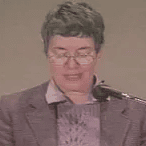
Curran Nominated for Chairman of NEH. On April 4 President Reagan nominated Edward A. Curran as chairman of the National Endowment for the Humanities. Curran received a bachelor’s degree from Yale University in 1955 and a master’s degree from Duke University in 1968. From 1968 to 1980 he was headmaster of the National Cathedral School, a private secondary school for girls in Washington, DC. Three years ago he became the director of the National Institute of Education. He resigned from this position after his recommendation that the Institute of Education be abolished led to a major clash with Secretary of Education Terrel Bell. Curran is currently Deputy Director of the Peace Corps. Because of Curran’s limited experience with higher education and public humanities programs, as well as his controversial views at the Institute of Education, some members of the Senate are considering placing a hold on Curran’s nomination to allow more time before the hearing to gather information. The Senate Committee on Labor and Human Resources, chaired by Senator Orrin Hatch (R-UT), has not yet set a date for the confirmation hearing; however, it may be in May.
CIA Considers Historical Review Program. On October 15, 1984 President Reagan signed into law the Central Intelligence Agency Information Act, which authorizes the Director of Central Intelligence to exempt operational files from disclosure under the Freedom of Information Act. At the urging of Senator David Durenberger (R-MN), as well as historians, the legislation did include a section that directs the CIA in consultation with the Archivist of the United States, the Librarian of Congress, and appropriate representatives of the historical discipline to submit to Congress a report by June 1, 1985 on the feasibility of conducting systematic reviews of the exempted files in order to declassify information of historical value. In a letter to William J. Casey, the Director of the CIA, during the negotiations over the provisions of the bill, Durenberger wrote, “We both know how important history is. I am an avid reader of history, and you are a writer of it. We both have been shaped in part by history that we have read over the years. As historians write the definitive works on the post-World War II era, it is terribly important that their studies be based on as full a record as possible, consistent with the need to protect our national security.” In March the CIA hosted a two-day consultation meeting to begin work on the recommendations for a historical review program. The three historians appointed by the US Archivist who are participating in this project are John Lewis Gaddis, Richard W. Leopold, and Gaddis Smith.
Code of Professional Standards for Historians. This spring the California Committee for the Promotion of History printed and distributed the “Code of Professional Standards for Historians” which they adopted at their 1984 annual meeting. In taking this step the California Committee for the Promotion of History becomes the first American historical organization to adopt formally a set of “standards.” Recognizing that “history is a profession, and the privilege of professional practice requires professional responsibility, professional competence, and an adherence to professional principles,” these Standards set forth the responsibility of the historian to the public, colleagues, employers and clients, as well as to his or her research.
The need of a formal set of Standards of Professional Conduct for historians has grown during the past several years. First, as more and more qualified historians find work outside colleges and universities as public historians, a new field in which many historians are now being trained, professional standards guiding academic historians have been found inadequate. Second, the increasing use of historical research in environ mental and planning analysis, a task often provided by persons poorly qualified as historians, also demands the establishment of standards.
The professional standards guiding college and university employed historians, which are codified in the American Association of University Professors’ “Statement on Professional Ethics” (1966) assumes that the historian’s work is influenced only by scholarly interest. But historians working for corporations, government, and consulting privately often find they are influenced by nonscholarly interests.
Since public historians perform historical research and analysis for a fee, they must deal with various potential conflicts of interest. How can the political climate within the public or private agency in which one works influence his or her freedom of research, analysis, and presentation of material? What are a historian’s responsibilities in dealing with access to and use of confidential data? How does a historian deal with the role of advocate which often comes with employment outside colleges and universities? What can guide a historian in assuring integrity of the historical work he or she does?
The California Committee for the Promotion of History’s Standards of Professional Conduct provides a touchstone for public historians as well as for academic historians who occasionally do consulting. When shared with employers it should go far toward eliminating potential conflicts, guaranteeing high quality historical work for employers and protecting the integrity of historians. While the California Committee does not see this as a panacea to all issues which may face public historians, it will certainly assist them in carrying out their professional responsibilities. For a copy of the “Standards of Professional Conduct” write: The California Committee for the Promotion of History, 6000 J St., Sacramento, CA 95819.