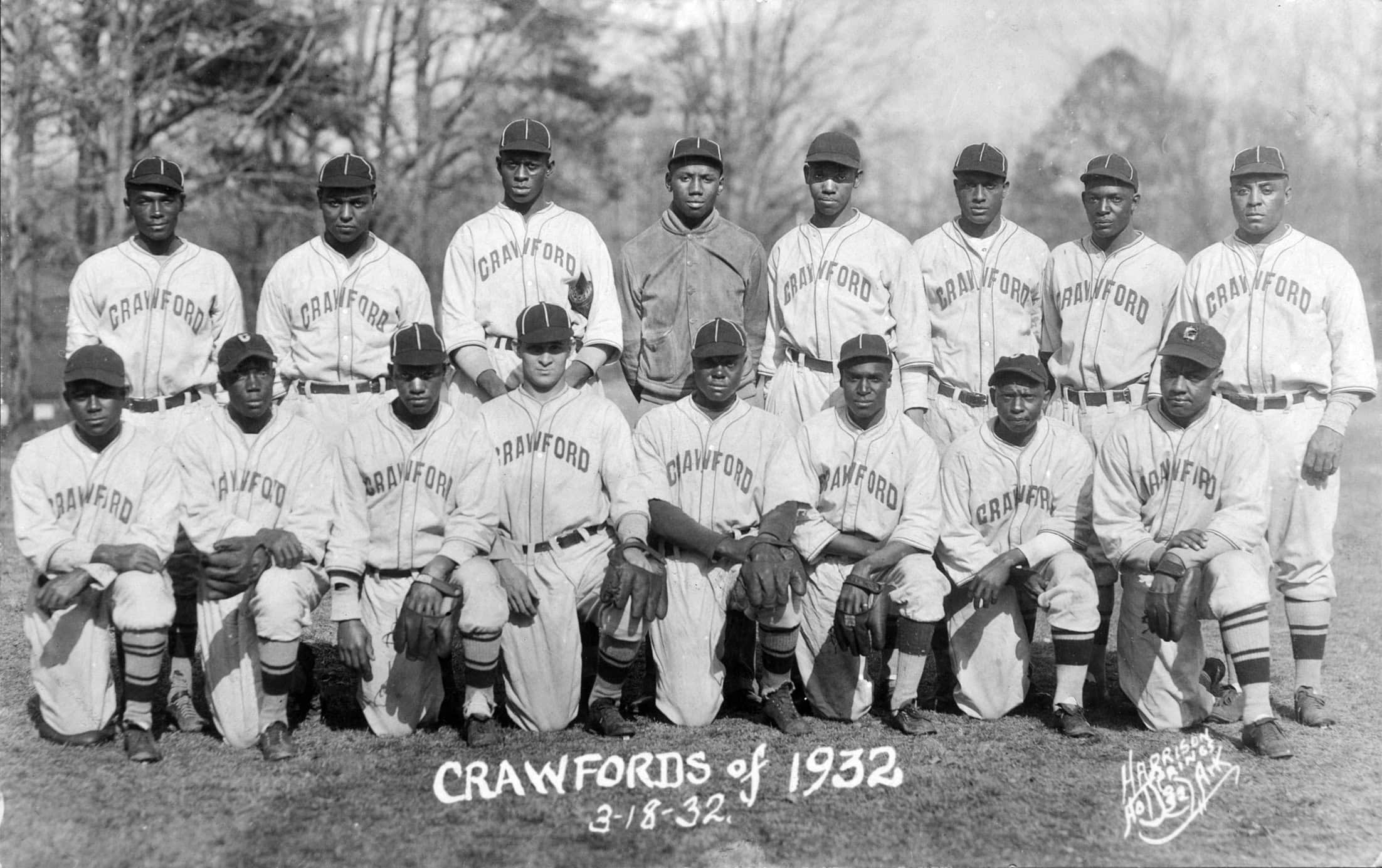
A 1984 grant by the Arkansas Endowment for the Humanities to a team of research historians has since produced a major project on the black experience within the state. Entitled “The Persistence of the Spirit,” the project focuses upon an exhibit that opened at the state capitol in June at ceremonies highlighted by the participation of John Hope Franklin, James B. Duke Professor Emeritus at Duke University.
The exhibit, which Franklin visited, is 108 feet in length and presents photographs, newspapers, letters, and other documents illustrating the history of the state’s black community dating back before Arkansas’ statehood 150 years ago. During June and July, while the “Persistence” exhibit was on display at the capitol building in Little Rock, it attracted more than 250 visitors each day. In August, it was moved to the University of Arkansas at Pine Bluff where the exhibit will be permanently housed.
There are several other important components to the project. Accompanying the display are booklets on the black experience in Arkansas that are based upon the work of the research team who informed the “Persistence” exhibit. Designed for reaching a general audience, the booklets augment the scholars’ narrative with illustrations and an annotated bibliography. The publication currently is available to visitors at the exhibit’s permanent location in Pine Bluff and may also be obtained from the Resource Center of the Arkansas Endowment for the Humanities in Little Rock. The AEH is a state program of the National Endowment for the Humanities.
That same Resource Center has also set up two traveling versions of the “Persistence of the Spirit” exhibit, each containing about 25 feet of display area. At the moment, 45 Arkansas communities have signed up to host this mobile variation of the permanent exhibit while the AEH Resource Center arranges for accompanying programs either by the original project scholars or their local counterparts. In addition to these programs, a statewide radio series on the black experience in Arkansas is currently under production and is drawing heavily upon both the materials and the scholars associated with the “Persistence” project.
This entire enterprise emerged from a single AEH grant, which then was generously supplemented by the National Endowment’s Division of General Programs. The state Endowment funded the initial research for “Persistence” and the NEH supported its presentation to the public. The two traveling exhibits were made possible by grants from private and corporate supporters, including the Southwestern Bell Foundation and the International Paper Foundation.
Professor Franklin’s assessment of this considerable undertaking was evident on his June 16 visit to the state capitol. He said, “I’m proud to participate in this very significant program. I have followed with some interest its development over the last years and have remarked to more than one person that ‘Persistence of the Spirit’ is itself a landmark—an important achievement.”
In his address that day, Franklin went on to emphasize the need for authority, based upon the historical record, to protect and give identity to a people. Tracing the black experience in America, he maintained that the lack of such authority had worked to allow discrimination and worse. He recalled the experience of John Punch, a black indentured servant who was sentenced to a lifetime of servitude for running away from his Virginia employer. Franklin asserted that Punch was victimized because “there was no authority, no written historical record available to him to establish his status and his rights.” He concluded, “When you really study history, you can find authority and the understanding to move into any situation with confidence and grace.”
Franklin’s address was one of four scholarly presentations scheduled in the state capitol by the Arkansas Endowment to mark the opening of the “Persistence of the Spirit” exhibit. He was immediately followed to the podium by Professor Leroy Williams of the University of Arkansas at Little Rock, who spoke specifically to the subject, “The Black Experience in Arkansas.” Williams was one of the six scholars (four historians) who made up the research team funded by the AEH to provide the scholarly base for the “Persistence” exhibit. The others were: Patricia McGraw (English), University of Arkansas, Little Rock; Carl Moneyhon (history), University of Arkansas, Little Rock; Ruth Patterson, a Little Rock writer and educator; Orville Taylor (history), Georgia College; and Nudie Williams (history), University of Arkansas, Fayetteville. Each had been selected to examine a specific period of time or a problem encompassed in the exhibit.
While the research team plugged away on their task in the archives during 1984 and 1985, project director Ken Hubbell, director of the AEH Resource Center, worked to develop new materials from the community. Included among his finds were black newspapers, autobiographies and memoirs, letters, and photographs. This part of the project proved particularly successful not only because of the materials it located but because of the interest it generated in the community concerning the exhibit’s subject.
In a second day of public ceremonies on the occasion of the exhibit’s opening, Professor Michael Cooke of the Yale University English Department addressed the topic, “Afro-American Literature in the Twentieth Century,” and project scholar, Ruth Patterson, gave a paper on “Interpreting the Black Family Experience in Arkansas.” As noted earlier, Patterson’s research as well as that of her colleagues on the research team, is contained in the project booklet, which may be obtained for $4.50 from the Resource Center of the Arkansas Endowment for the Humanities (1010 West Third St., Little Rock, Arkansas 72201).
Carl H. Moneyhon is Professor of History at the University of Arkansas, Little Rock. He holds his PhD in history from the University of Chicago.