1987 brought the bicentennial celebration of the Constitution, and television producers rushed to join the birthday party bearing historical documentaries as presents. The American people were not especially excited about these gifts once they looked beyond the fancy packaging. Most of the programs presented awkward narrative and fragmentary history. Perhaps the subject matter was to blame. “The Constitution” represents an amorphous theme for television entertainment, and producers found it difficult to shape a compelling story that could excite public interest.
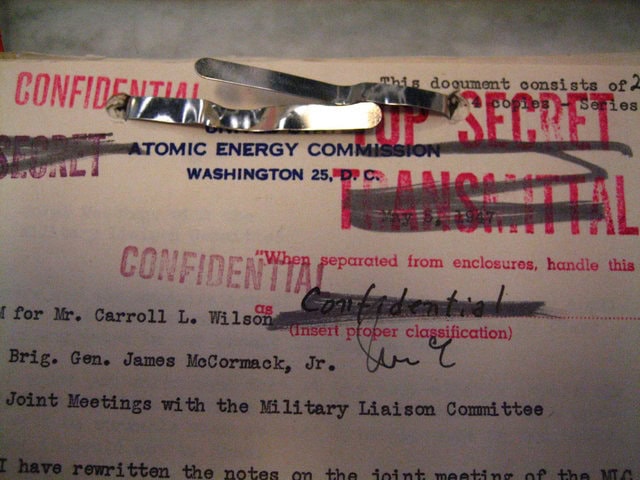
Bill Moyers has shown, however, that a highly motivated filmmaker who is excited about a thesis can bring the subject to life. In a ninety-minute PBS documentary entitled The Secret War: The Constitution in Crisis Moyers raises serious questions about the US government’s covert operations. Taking the Iran-Contra scandal as his lead, Moyers examines CIA involvement in diverse locales over the last forty years, including Iran, Guatemala, Cuba, Vietnam, and Chile. He also throws light on secret operations at home, revealing striking parallels of deception in the Watergate and Iran-Contra cases. Fully half of the program reviews the record of the recent Iran-Contra scandal, but through out this discussion the film places recent events in the context of history, noting how earlier patterns of behavior led to the contemporary crisis. Above all, the film reminds viewers that the Founding Fathers established principles of open and balanced government in the Constitution, and it claims that covert operators have frequently violated these principles.
In the manner of Peter Davis’ hard hitting documentaries (The Selling of the Pentagon and Hearts and Minds) Moyers drives home a message at every opportunity. Secret government “has been growing like a cancer on the Constitution,” he says, and we have justified its anti-democratic activities in the name of anti-Communism. Every presidential administration in the last several decades, Democrat and Republican, has authorized these secret activities. Covert operations often worked in opposition to our values, he notes, and “someone always pays for decisions made secretly in Washington.” Moyers shows how US interference helped to create instability and violence in the developing nations, tearing at the fabric of society and destroying lives. Xiong Lor, whose Hmong family had to leave Vietnam and resettle in America, states the thesis most powerfully. He blames his family’s misfortunes on an American “goof-up.” The US government treated people in Vietnam like pawns in a chess game, he says. When you lose a game, there is nothing at stake, “but when you lose a person’s life or devastate a whole country as they did to my country, then it’s very important.”
Moyers lays the blame for many present-day problems in the Third World squarely on the doorstep of the US government. He argues that covert operations helped bring the overthrow of Mohammed Mossadegh in the 1950s, preparing the way for Iran’s anti-Americanism and the Ayatollah Khomeini’s fanatic revolution of the 1970s. In Guatemala, decades of la violencia and death-squad activity followed the CIA inspired overthrow of the democratically elected president, Jacobo Arbenz. And, of course, in Chile, the CIA’s covert operations contributed to the fall of another democratically elected president, Salvador Allende, and the rise of General Augusto Pinochet’s right-wing military dictatorship. The complexity of each case is easily clouded in these brief forays into history. In the Guatemalan case, for example, Moyers’ terse analysis gives no attention to the record of left wing violence or to the social (as op posed to political) factors behind the carnage that cost thousands of lives af ter 1954. Similarly, the complex events surrounding the upheaval in Iran and the Ayatollah’s rise to power receive little attention in this brief analysis that, of necessity, must stress simple answers to complicated questions. Perhaps TV history will always emphasize single over multiple causation, but the style has its difficulties, as in this video essay which seems to argue that every time the CIA sneezes the Third World catches a cold.
Interviews can make a documentary a powerful learning device by giving viewers an emotional sense of the way historical events affected people’s lives, and in this respect The Secret Government is more successful than most films. It features poignant commentaries from an extraordinarily articulate group of participants and victims. A former counter intelligence agent describes his amazement when he reported his discovery of Klaus Barbie, only to learn that officials wanted to protect Nazi informants who could provide information about the Russians. Richard Bissell, a chief of covert operations with the CIA, states bluntly (in an interview recorded years earlier), that he regrets the CIA hired Mafia members in trying to assassinate Fidel Castro, but he does not oppose employing US agents in plots to kill foreign leaders. George Gorman, a former Marine Corps captain, expresses his deep disgust upon listening to Colonel Oliver North’s testimony, saying that he considered mailing his ring back to the US Naval Academy and denying he ever went there. The most memorable testimony comes from Ralph W. McGehee, who worked for the CIA for more than two decades and later wrote a book about his activities, Deadly Deceits. When McGehee realized that his efforts violated the very principles he treasured and resulted in the death of many people, he contemplated suicide and dreamed of jumping out of a hotel window displaying a banner that read, “The CIA lies.”
Individuals of different political per suasions are likely to disagree strongly in assessing Moyers’ stinging indictment. The Secret Government is a highly controversial documentary that naturally excites sharp commentary. Its provocative style will stimulate student interest and arouse likely classroom discussions about the role of covert operations in US foreign policy. In this respect the film is a notable success, for it serves as a useful tool for raising questions and encouraging viewers to probe deeper for answers. The Secret Government: The Constitution in Crisis is available on 1/2″ VHS videotape for $49.95 (for individuals) and $35.00 (for educational institutions) through: Public Affairs Television, 356 West 58th St., New York, N.Y. 10019, Tel. 212/560-6960.