The following is a list of recipients of the various awards, prizes, and honors presented during the 139th annual meeting of the American Historical Association on Thursday, January 8, 2026, in the Palmer House Hilton’s State Ballroom.
2025 AWARDS FOR SCHOLARLY AND PROFESSIONAL DISTINCTION
AWARDS FOR SCHOLARLY DISTINCTION
William H. Chafe, Duke University
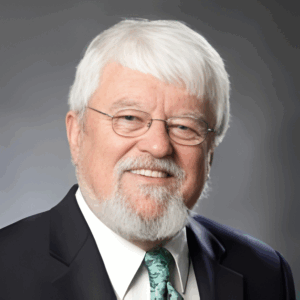
William Chafe
For more than five decades, William H. Chafe has been at the forefront of historical scholarship, reshaping how we understand 20th-century America. His early works, such as The American Woman (1972) and Civilities and Civil Rights (1980), were groundbreaking—opening new paths in women’s history and in community-centered studies of the Black freedom struggle. These landmark books changed the questions historians asked and set new standards for how we think about race, gender, politics, and power. His later works, ranging from biography to sweeping syntheses of modern US history, reflect his enduring interest in the intersection of those topics.
But Bill Chafe’s contributions extend far beyond the printed page. He has been a builder of institutions that continue to shape scholarship and public understanding. He co-founded the Duke Oral History Program, the Duke-UNC Center for Research on Women, and the Center for Documentary Studies. Through his project Behind the Veil: Documenting African American Life in the Jim Crow South, which collected more than 1,000 oral histories, he created one of the most important archives of Black life under segregation. And his leadership of the more recent initiative SNCC Digital Gateway has expanded access to vital historical voices and set models for publicly engaged scholarship in the digital age.
Chafe’s contributions as a teacher and mentor have been equally profound. Generations of students and colleagues have benefited from his guidance, his encouragement, and his vision. He has guided dozens of graduate students, many of whom are now leading scholars, public historians, and advocates for social justice. His service to the discipline is extensive, including leadership roles in the AHA, the Organization of American Historians, and numerous boards and editorial positions.
Throughout his career, Chafe has combined rigorous scholarship with a deep commitment to justice and democracy. Recognized with multiple book prizes, fellowships, and election to the American Academy of Arts and Sciences, Chafe exemplifies the historian’s role as a scholar, mentor, and engaged public intellectual. His lifelong commitment to illuminating the histories of race, gender, democracy, and inequality has enriched both the academy and the broader public.
For his extraordinary record as a scholar, teacher, mentor, and builder of institutions, the American Historical Association is proud to honor William H. Chafe with the Award for Scholarly Distinction.
Lorraine Daston, Max Planck Institute
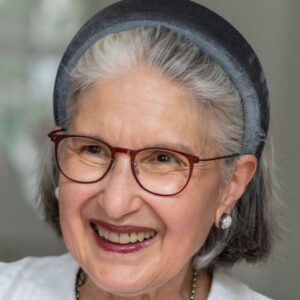
Lorraine Daston
Over the course of a remarkable career, Lorraine Daston has transformed the history of science and profoundly reshaped European, American, and global intellectual history.
Educated at Harvard and Cambridge, Daston held professorships at Princeton, Brandeis, Göttingen, and Chicago before taking on the role of director of Department II at the Max Planck Institute for the History of Science in Berlin, where she served from 1995 to 2019. There she reimagined what a scholarly community could be, nurturing generations of historians and convening international collaborations that bridged disciplines, languages, and national traditions. Under her leadership, Department II became the world’s premier site for intellectually rigorous, imaginative, and field-defining scholarship.
Daston’s own research exemplifies the breadth and creativity of her vision. She has written on topics ranging from the history of probability and medieval “wonders” to Cold War science and the moral authority of nature. Her studies of objectivity, scientific personae, rules, bureaucracy, and collective observation have become touchstones across the humanities and social sciences. Equally adept at close archival work and ambitious conceptual synthesis, she has reshaped how scholars understand knowledge-making, authority, and intellectual practices across time.
At the Max Planck Institute, Daston fostered an atmosphere of collaboration that drew together historians of science, philosophers, anthropologists, and practicing scientists. Her vision made possible groundbreaking projects on a huge range of topics, including the histories of archives, paper, recipes, extinction, and the sciences of the Cold War, while reconceiving the study of canonical figures such as Leibniz and illuminating the shared practices of research communities. Few living historians have had such a broad and lasting influence on the methods and questions of historical scholarship.
Daston’s brilliance has been recognized worldwide, with honors including the Pour le Mérite, the George Sarton Medal, the Dan David Prize, the Gerda Henkel Prize, and the Balzan Prize. She is a member of the American Philosophical Society, the American Academy of Arts and Sciences, and the German Academy of Sciences, and holds multiple honorary degrees.
For her transformative scholarship, visionary leadership, and profound service to the global historical discipline, the American Historical Association is honored to present Lorraine Daston with the Award for Scholarly Distinction.
Philip D. Morgan, Johns Hopkins University
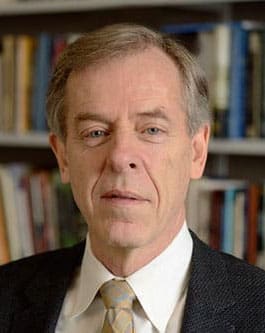
Philip D. Morgan
Over the course of his career, Philip D. Morgan has reshaped the study of slavery, early America, and the Atlantic world through his groundbreaking scholarship, dedicated mentorship, and deep service to the profession. Morgan stands in the company of the greats of his generation—yet what distinguishes him most is not just his scholarship but his generosity of spirit. His career embodies the best of what the historical discipline can be.
Morgan’s Slave Counterpoint: Black Culture in the Eighteenth-Century Chesapeake and Lowcountry (1998) stands as one of the most influential works of modern historiography. Monumental in scope and deeply humane in its insights, the book won 12 awards, including the Bancroft and Frederick Douglass Prizes, and remains a touchstone for scholars of slavery and early American society. Combining epic scope with fine-grained attention to lived experience, the book stands as one of the most important studies of slavery ever written.
Beyond this landmark achievement, Morgan has been an extraordinarily prolific and versatile scholar. His essays and book chapters have shaped multiple fields, often with the same field-defining force as his monograph. Equally remarkable has been his collaborative spirit. Through 11 co-edited volumes and numerous co-authored articles, Morgan has built intellectual bridges across time, space, and subfields, advancing Atlantic history, slavery studies, and comparative approaches to early modern societies.
His editorship of the William and Mary Quarterly was transformative, helping to expand the journal’s purview beyond the 13 colonies toward the wider Atlantic world, laying the groundwork for what is now known as “Vast Early America.” In this role and throughout his career, Morgan exemplified the quiet generosity of scholarly service, fostering the work of countless others.
Equally significant has been his generosity as a mentor and colleague. At Johns Hopkins University and beyond, Morgan has trained and supported generations of historians, combining intellectual rigor and deep personal support with unwavering commitment to his students’ success. His career exemplifies the highest standards of scholarship, service, and collegiality.
For his unparalleled contributions to the study of slavery and the Atlantic world, and for his profound service to the discipline, the American Historical Association is honored to recognize Philip D. Morgan with the Award for Scholarly Distinction.
HONORARY FOREIGN MEMBER
Erika Pani, El Colegio de México
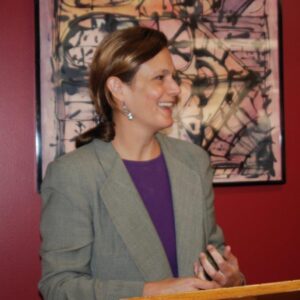
Erika Pani
The American Historical Association is proud to honor Erika Pani as an honorary foreign member in recognition of her transformative scholarship, her teaching and writing that bridge borders, and her dedication to international scholarly collaboration.
A distinguished historian of 19th-century Mexico, Pani has reshaped the field through her penetrating studies of the “Second Empire” and the construction of Mexican nationalism. Her work has deepened our understanding of the tumultuous decades that defined modern Mexico, while simultaneously situating those struggles within a transnational frame that brings Mexican and US history into closer conversation. By examining political institutions, the challenges of naturalization, and the contested meanings of citizenship, she has illuminated the ways in which Mexico’s experiences resonate with global questions of identity and belonging.
Pani’s scholarship has not only advanced the historiography of Mexico but also enriched the teaching of US history beyond its borders. Her widely used Spanish-language text on American history provides students in Mexico and Latin America with critical access to US historical narratives, fostering new generations of scholars and citizens who approach the past from a comparative and international perspective. Her dual commitment—to advancing Mexican historiography and to teaching US history abroad—epitomizes the kind of cross-border engagement that strengthens our discipline.
Equally notable is her record of collaboration with scholars in the United States. Pani has consistently participated in joint projects, conferences, and publications that bridge national academic communities, embodying the spirit of exchange that the AHA seeks to encourage through this honor. Her ability to navigate and connect distinct scholarly traditions has amplified dialogue across fields and national contexts, enriching historical scholarship on both sides of the border.
Erika Pani’s achievements have been widely recognized in Mexico and internationally, with awards and distinctions that attest to her standing as one of the leading historians of her generation. The AHA adds its voice to that recognition, honoring her not only for her contributions to history but also for her role as a bridge-builder between scholarly communities.
For her extraordinary scholarship, her commitment to teaching, and her dedication to fostering international collaboration, the American Historical Association proudly names Erika Pani as Honorary Foreign Member.
EUGENE ASHER DISTINGUISHED TEACHING AWARD
Lendol Calder, Augustana College

Lendol Calder
For over 20 years, Lendol Calder has been a leading light in history education. Through his writing, talks, and syllabi, he has been an innovator, a steward, and a provocateur for the best in history education. For example, his “uncoverage” model, a thoughtful response to the “coverage” impulse, prioritized historical thinking over content coverage and has become a widely used frame for history educators at all levels and across the nation.
BEVERIDGE FAMILY TEACHING PRIZE
Jazmín Isaura Puicón, Bard Early College–Newark

Jazmín Isaura Puicón
Jazmín Isaura Puicón teaches at Bard Early College–Newark, where 97 percent of students identify as being of color. Her compelling and smart interdisciplinary course, Innovative Newark, requires students to work on real issues related to their community and provides a model for linking academic work with community engagement. Puicón’s portfolio shows her commitment to active learning and inquiry, historical thinking activities, and culturally responsive and sustaining pedagogies.
EQUITY AWARD (INDIVIDUAL)
Michael A. Gomez, New York University
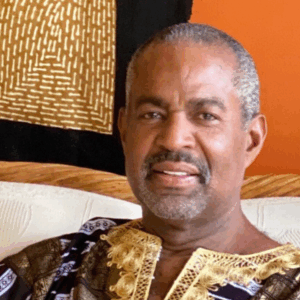
Michael A. Gomez
Michael A. Gomez has exhibited a long-term commitment to transforming the racial inequities that shape academia. His mentorship, advocacy, service, and scholarship have advanced the representation of minority students and faculty in the discipline, and as founder of the Association for the Study of the Worldwide African Diaspora, he has promoted the study of Africa and its diaspora within the broader discipline. He is a worthy recipient of the Equity Award.
LEPAGE CENTER AWARD FOR HISTORICAL WORK IN THE PUBLIC INTEREST
Saul Cornell, Fordham University
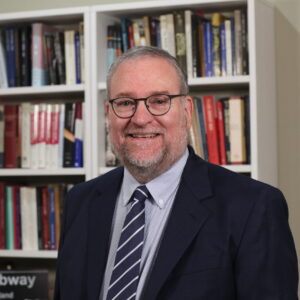
Saul Cornell
For decades, Saul Cornell has directly influenced precedent-setting Supreme Court cases on gun safety by entering rigorously researched amicus briefs and expert witness reports into the legal record. Taking advantage of the Supreme Court’s “history-focused tests” for constitutionality, he provides plaintiffs with historical backing to keep firearms from dangerous people, literally saving lives. Moreover, his historical gun laws database is a model of generosity and rigor, as are his how-to workshops, editorials, podcasts, and blogs.
JOHN LEWIS AWARD FOR HISTORY AND SOCIAL JUSTICE
Antoinette T. Jackson, University of South Florida
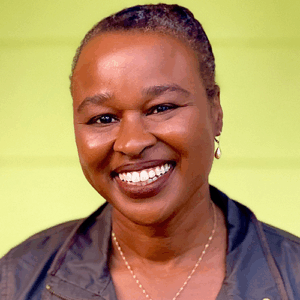
Antoinette T. Jackson
Antoinette T. Jackson’s work to recover and restore Black cemeteries exemplifies the intersection of historical work and social justice. As the founder and leader of the Black Cemetery Network, Jackson has been able to retrieve a rich but forgotten history of Black cemeteries as an integral part of Black life in the United States. Her historical research is creative and varied, ranging from site-specific recovery and interpretation to community oral history to historic preservation. Her work is collaborative, rooted in communities and civic organizations who want to preserve their histories as a resource for residents current and future. Jackson’s work illustrates how community-based historical research can both expand our scholarly narratives and serve communities trying to recover and reclaim their histories.
JOHN LEWIS AWARD FOR PUBLIC SERVICE TO THE DISCIPLINE OF HISTORY
Sidney Lapidus

Sidney Lapidus
Sidney Lapidus’s lifelong dedication to history has encompassed service as a collector, board leader, founder, and benefactor of numerous historical organizations. His guiding vision—that history is essential to our civic future—has inspired transformative contributions that advance access to sources, encourage scholarship, and strengthen the discipline.
From the moment he purchased a worn 1792 edition of Thomas Paine’s Rights of Man in a London bookshop for five dollars, Lapidus began a lifelong pursuit of collecting and sharing the sources of history. From that moment forward, he became a steward of the past, committed to making rare materials available for research, teaching, and public engagement. His collections, now housed at Princeton University, the Schomburg Center, and the College of William & Mary, are not only preserved but made accessible through digitization and research support, extending his generosity to future generations of scholars.
Lapidus’s vision has been transformative across the very institutions that safeguard and interpret history, including the American Antiquarian Society (AAS), the New-York Historical Society, the Center for Jewish History, the American Jewish Historical Society, and the Omohundro Institute of Early American History and Culture. As chair of the AAS, he guided the organization through major renovations and stood alongside President Barack Obama to accept the National Humanities Medal. At Omohundro, the Lapidus Initiative for digital scholarship and publication has helped reshape the field of early American history.
Beyond strengthening existing organizations, Lapidus has also created new ones. He helped found the Institute for Thomas Paine Studies at Iona University and established the Lapidus Center for the Historical Analysis of Transatlantic Slavery at the Schomburg Center, which advances scholarship and awards the Harriet Tubman Prize.
Throughout his career, Lapidus has demonstrated a strategic vision grounded in his conviction that history matters. His investments of time, energy, and resources have strengthened the foundations of the discipline while inspiring historians to pursue ambitious new directions. For his unmatched dedication to ensuring history’s vitality in public life, the AHA proudly honors Sidney Lapidus with the John Lewis Award for Public Service to the Discipline of History.
NANCY LYMAN ROELKER MENTORSHIP AWARD
Vera Garg, American Embassy School, New Delhi

Vera Garg
Students who have learned from and been shaped by Vera Garg’s mentorship describe how she inspired them to pursue careers in history, cultivate more nuanced worldviews, and appreciate a deeper understanding of the way history works not just inside the classroom but also in the food, streets, and people all around them. Garg teaches International Baccalaureate history but simultaneously models for students and colleagues alike how to bridge education with service. Administrators and fellow teachers note her unmatched, enthusiastic, prolonged commitment to history and generations of students. When returning alumni answer questions about their most influential mentors, they answer, “It is and always will be Ms. Garg.”
TIKKUN OLAM PRIZE FOR PROMOTING PUBLIC HISTORICAL LITERACY
Jamelle Bouie, New York Times
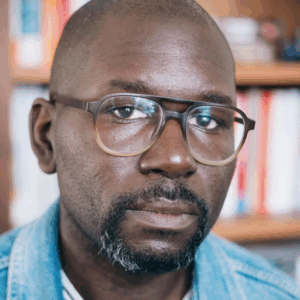
Jamelle Bouie
It is often said that journalism is the first rough draft of history. Few embody that axiom more fully than Jamelle Bouie, whose work as a columnist, analyst, and writer demonstrates a rare ability to blend journalistic insight with deep historical understanding. With clarity, eloquence, and rigor, Bouie brings to each of his columns not only sharp political analysis but also a deep engagement with the American past. He draws from the scholarship of historians of slavery, Reconstruction, Jim Crow, immigration, labor, economics, and race, and in so doing, he ensures that his readers encounter today’s events not in isolation but as part of the nation’s longer, contested history.
Since 2019, Bouie has served as a columnist for the New York Times, where his writing reaches millions of readers each week. He has also been a political analyst for CBS News since 2015. His career began with fellowships at The Nation and the American Prospect, followed by staff positions at the Daily Beast and Slate, where he became chief political correspondent. At every stage, he has brought a historian’s sensibility to the practice of journalism, explaining the present through the lens of the past.
Bouie’s Times columns—such as “If It’s Not Jim Crow, What Is It?” (2021), “What If the Framers Got Something Critical Wrong?” (2023), and “The New Deal Is a Stinging Rebuke to Trump and Trumpism” (2025)—reveal his sustained engagement with the work of historians and his commitment to showing how historical knowledge shapes public life. His 2018 Slate essay “The Fight for a White America” is emblematic: Tracing nativism from the 19th century to the Johnson–Reed Act of 1924, he situated today’s immigration debates within a long history of white supremacy, carefully crediting historians including Nancy MacLean and Mae Ngai.
Historians often lament that the press neglects or distorts their fields. Jamelle Bouie is a rare exception. He reads history. He cites it. And he makes it accessible to a national audience. For his extraordinary contributions to historical literacy and commitment to deepening public understanding of the American past, the American Historical Association is proud to honor Jamelle Bouie with the Tikkun Olam Prize.
2025 AWARDS FOR PUBLICATIONS
HERBERT BAXTER ADAMS PRIZE IN EUROPEAN HISTORY
Charlotte Lydia Riley, University of Southampton
Imperial Island: An Alternative History of the British Empire (Harvard Univ. Press, 2024)
In Imperial Island, Charlotte Lydia Riley skillfully reimagines the history of Britain since 1945. As Britain lost its empire, it remained, Riley argues, fundamentally imperial. Ranging widely across sources, she charts the centrality of formerly colonial subjects and cultures in the metropole, and shows that the British have continued to see the world and their island through an imperial lens. Engaging and highly readable, Imperial Island arrives with urgency.
AHA PRIZE IN AMERICAN HISTORY
Gloria McCahon Whiting, University of Wisconsin–Madison
Belonging: An Intimate History of Slavery and Family in Early New England (Univ. of Pennsylvania Press, 2024)
Belonging is a groundbreaking debut. Gloria McCahon Whiting reconstructs the lives of enslaved New Englanders with extraordinary care, weaving fragmented archival traces into intimate family portraits. The book is meticulously researched and crafted. Her luminous prose and emotional clarity draw readers into the heart of slavery and freedom, reshaping our understanding of slavery in early New England. Whiting reveals the centrality of family and kinship to the creation—and ultimate destruction—of slavery in Massachusetts.
AHA PRIZE IN EUROPEAN INTERNATIONAL HISTORY
Samuel J. Hirst, Bilkent University
Against the Liberal Order: The Soviet Union, Turkey, and Statist Internationalism, 1919–1939 (Oxford Univ. Press, 2024)
Samuel J. Hirst’s field-changing book reframes standard accounts of interwar Europe. Mining archives from Moscow to Ankara, Hirst shows how the Soviet Union and the early Kemalist Turkish republic forged an unlikely bond due to shared outsider status and the imperative to militate against political and economic marginalization. Moving erstwhile peripheries to the center of European history, Hirst flips the globe and challenges us to rethink histories of anti-imperialism, anti-liberalism, and interwar economic development.
AHA PRIZE IN HISTORY PRIOR TO CE 1000
Paul J. Kosmin, Harvard University
The Ancient Shore (Harvard Univ. Press, 2024)
The Ancient Shore examines Mediterranean and Indian Ocean coastlines as distinct from seas, ports, or land. These liminal spaces united distant populations of “fish-eaters,” from lighthouse keepers to traders and geographers; they provoked confrontation with the cosmos through creation myths, scientific observations, and reflections on death. Neo-Assyrian, Achaemenid, Hellenistic, and Roman rulers alike attempted to control them through theatrical displays, from ritual weapons washing to ordeal-like marches. The book’s breadth, erudition, and elegant writing deeply impressed the committee.
JERRY BENTLEY PRIZE IN WORLD HISTORY
Diego Javier Luis, Johns Hopkins University
The First Asians in the Americas: A Transpacific History (Harvard Univ. Press, 2024)
This book exemplifies the power of world history as a discipline. Rooted in multilingual archival research on three continents, Diego Javier Luis focuses on the hitherto relatively underexplored place of Asians in the making of early modern America. The book not only redefines the place of Asians in the Americas but also compels us to reconsider our approaches to scale in world history, combining the microhistorical focus on lived experience with an attention to the broader structures of global migrations and transformations.
BEVERIDGE FAMILY PRIZE IN AMERICAN HISTORY
Seth Rockman, Brown University
Plantation Goods: A Material History of American Slavery (Univ. of Chicago Press, 2024)
In Plantation Goods, Seth Rockman traces how Northern-manufactured commodities—axes, cloth, shoes, whips, and more—circulated in the plantation South, exposing the entanglement of free and enslaved labor in American capitalism. Rockman blends economic and labor history with material culture to show how these everyday objects also served as sources of contention and valuation for the enslaved population. This innovative, beautifully written study compels a moral reckoning with consumption, production, and the foundations of US inequality.
RAYMOND J. CUNNINGHAM PRIZE FOR UNDERGRADUATE JOURNAL ARTICLE
Claire DeVinney, University of Rochester
“‘This Popular & Malcontent Temper’: Pennsylvania Currency and Transatlantic Commerce, 1720–1723,” Pennsylvania History: A Journal of Mid-Atlantic Studies 92, no. 2 (Spring 2025)
Faculty adviser: Tanya Kevorkian, Millersville University
This well-written essay examines early 18th-century monetary policy in engaging and thoughtful ways. Claire DeVinney’s use of underutilized primary sources is excellent, her argument is clear, and her conclusions are reasonable. The article’s great strength is its ability to make an esoteric subject accessible and interesting to a nonspecialist audience.
PATRICIA BUCKLEY EBREY PRIZE IN EAST ASIAN HISTORY
Tana Li, Australian National University
A Maritime Vietnam: From Earliest Times to the Nineteenth Century (Cambridge Univ. Press, 2024)
Like a densely woven tapestry, Tana Li’s magisterial work offers a meandering, often lyrical, account of over 2,000 years of Vietnamese history told through material goods, mercantile actors, and stories that arrived on its shores and departed via its seas. A masterful synthesis of primary analysis and scholarly literature in multiple languages, A Maritime Vietnam overcomes landlocked nationalist historiography to nourish a more integrated historical imagination of premodern maritime East Asia.
JOHN K. FAIRBANK PRIZE IN EAST ASIAN HISTORY
Matthew H. Sommer, Stanford University
The Fox Spirit, the Stone Maiden, and Other Transgender Histories from Late Imperial China (Columbia Univ. Press, 2024)
Matthew H. Sommer’s The Fox Spirit, the Stone Maiden, and Other Transgender Histories from Late Imperial China is a landmark study that recovers the hidden lives of gender-nonconforming individuals through meticulous archival research. By combining legal, medical, and literary sources with a nuanced transgender framework, Sommer broadens the field of modern East Asian history, illuminating how embodiment, identity, and social practice shaped Qing society and redefining global conversations about gender and modernity.
MORRIS D. FORKOSCH PRIZE IN BRITISH HISTORY
Charmian Mansell, University of Sheffield
Female Servants in Early Modern England (Oxford Univ. Press, 2024)
Charmian Mansell elegantly and clearly brings fresh sources, questions, and answers to one of the most important institutions in early modern British history. She follows servants from the household to the economic and social centers of their communities. The result is a humane and systematic portrait of work and life in early modern England that finds a less confrontational notion of agency, a less rigid understanding of household patriarchy, and a less disruptive transition from service to day labor in the 18th century.
LEO GERSHOY AWARD IN WESTERN EUROPEAN HISTORY
Amanda Wunder, Lehman College and Graduate Center, CUNY
Spanish Fashion in the Age of Velázquez: A Tailor at the Court of Philip IV (Yale Univ. Press, 2024)
This is a brilliant and original book that utilizes the little-known archive of the Spanish royal tailor Mateo Aguado, illuminating the deeper meanings and significance of the court clothing painted in such detail by Velázquez and his contemporaries. Amanda Wunder combines analysis of labor, gender, and royal and court politics with art and material culture, revealing the worlds of the people who made and who wore this elaborate clothing, and all that it meant to them and their contemporaries.
WILLIAM AND EDWYNA GILBERT AWARD FOR THE BEST ARTICLE ON TEACHING HISTORY
Amanda I. Seligman, University of Wisconsin–Milwaukee, and Jaclyn J. Kelly, Wisconsin Labor History Society
“Staging Historical Reenactments on Twitter: History, Methods, and Ethics,” The History Teacher 57, no. 2 (February 2024)
Although many historians are resistant to new ways to engage students in historical thinking, judging them to be fads, this deeply researched article demonstrates how Twitter (or similar platforms) may be used to teach such competencies and to publish student work. The authors offer a nuanced discussion of the ethical issues of reenactments, which have a necessarily significant fictive element. Few students will become professional historians; this article pushes our creativity to meet those students where they are.
J. FRANKLIN JAMESON AWARD FOR EDITING HISTORICAL SOURCES
Pablo Miguel Sierra Silva, University of Rochester
Mexico, Slavery, Freedom: A Bilingual Documentary History, 1520–1829 (Hackett)
Pablo Miguel Sierra Silva’s volume is a remarkable achievement. Through a concise, rigorous introduction and a truly extraordinary range of archival sources, it reveals the central place of slavery in the legal, economic, political, and cultural histories of early modern Mexico. Attentive to Indigenous, African, Spanish, and Asian experiences, its bilingual format and original interpretations make Mexico, Slavery, Freedom a model of excellence in documentary editing as well as an indispensable resource for teaching and research.
FRIEDRICH KATZ PRIZE IN LATIN AMERICAN HISTORY
Marcy Norton, University of Pennsylvania
The Tame and the Wild: People and Animals After 1492 (Harvard Univ. Press, 2024)
Marcy Norton’s The Tame and the Wild is a conceptually sophisticated and elegantly written history that redefines the role of nonhuman animals in the Columbian Exchange. Drawing on Spanish, French, and Nahuatl sources, Norton foregrounds Indigenous perspectives to reveal how colonization reshaped human-animal relationships both in the Americas and in Europe. This groundbreaking work contributes to the historiographies of Latin America, the Atlantic world, and the history of science.
JOAN KELLY MEMORIAL PRIZE IN WOMEN’S HISTORY
Alissa Klots, University of Pittsburgh
Domestic Service in the Soviet Union: Women’s Emancipation and the Gendered Hierarchy of Labor (Cambridge Univ. Press, 2024)
Alissa Klots’s excavation and use of archival sources and oral histories creatively uncovers a hidden history of domestic work and workers in the Soviet Union. She skillfully integrates women into the evolution of Soviet society and, in doing so, reveals the persistent tensions between egalitarian ideology and gendered realities. The questions that she probes about class, political economy, and gender are capacious and represent how the lens of feminist theory can uncover critical new insights.
MARTIN A. KLEIN PRIZE IN AFRICAN HISTORY
Admire Mseba, University of Southern California
Society, Power, and Land in Northeastern Zimbabwe, ca. 1560–1960 (Ohio Univ. Press, 2024)
In Society, Power, and Land in Northeastern Zimbabwe, Admire Mseba offers a deeply researched, elegantly written examination of land and power in Zimbabwe over a longue durée, showing how contemporary inequalities are rooted in older social, political, economic, and environmental dynamics rather than simply emerging from colonial dispossession. With impressive methodological range and conceptual clarity, the book brings fresh insights to a long-standing historiographical debate about land in Africa.
LITTLETON–GRISWOLD PRIZE IN AMERICAN LAW AND SOCIETY
Alison L. LaCroix, University of Chicago Law School
The Interbellum Constitution: Union, Commerce, and Slavery in the Age of Federalisms (Yale Univ. Press, 2024)
Gorgeously crafted and scrupulously researched, this original synthesis introduces the “interbellum constitution”: an era, stretching from 1815 to 1865, marked by ferment over the overlapping, unsettled boundaries of local, state, and federal power in the United States. Alison L. LaCroix is utterly persuasive in analyzing the competing “federalisms” that drove public debates over concurrent powers, the regulation of commerce, and states’ rights. Her book illuminates a constitutional maximalism more dynamic, peopled, and capacious than we knew.
J. RUSSELL MAJOR PRIZE IN FRENCH HISTORY
Catherine Tatiana Dunlop, Montana State University, Bozeman
The Mistral: A Windswept History of Modern France (Univ. of Chicago Press, 2024)
In her beautifully written study, Catherine Tatiana Dunlop takes as her protagonist a natural phenomenon—the northwesterly wind known as the mistral, which has long shaped the climate and culture of southern France. From this angle, she offers innovative reconsiderations of key issues in modern French history, such as state-building, economic modernization, and regional identity. With its creative scope and impressive research, Dunlop’s book is a major intervention in both environmental and French history.
HELEN & HOWARD R. MARRARO PRIZE IN ITALIAN HISTORY
Mark Gilbert, Johns Hopkins University
Italy Reborn: From Fascism to Democracy (W. W. Norton, 2024)
In Italy Reborn, Mark Gilbert revisits the foundation of Italy’s democratic republic after 1945. Deeply researched, engagingly and humorously written, it makes the serious point that Italy does not get credit internationally, perhaps especially among Anglophones, for the durability of its institutions, the political savvy of its citizens, and the extraordinary abilities and dedication of the postwar leadership represented by Christian Democrat Alcide De Gasperi, Communist Palmiro Togliatti, and Socialist Pietro Nenni.
GEORGE L. MOSSE PRIZE IN EUROPEAN INTELLECTUAL AND CULTURAL HISTORY
Catherine Tatiana Dunlop, Montana State University, Bozeman
The Mistral: A Windswept History of Modern France (Univ. of Chicago Press, 2024)
In The Mistral, Catherine Tatiana Dunlop has written a compelling cultural history of the famous winds that shaped Provence. Drawing on an expansive array of sources, this book captures the power of sensory experience in the formulation of ideas. Dunlop’s deftly written book is both an ecological history of the lifeways in southern France and an examination of how state actors, scientists, and artists responded to nature in a modernizing world.
JOHN E. O’CONNOR FILM AWARD
Documentary: Hannah Arendt: Facing Tyranny
Jeff Bieber, director and writer; Chana Gazit, director and producer; and Maia Harris, writer (Jeff Bieber Productions, LOOKS Film & TV Produktionen GmbH, Suedwestdeutscher Rundfunk, and Rundfunk Berlin-Brandenburg in association with the Center for Independent Documentary and American Masters Pictures)
The committee awards this year’s O’Connor prize to Jeff Bieber’s stellar documentary, Hannah Arendt: Facing Tyranny. More than an autobiography of Hannah Arendt, the film is a study in the origins of totalitarianism that makes a timely and important intervention in the current historical moment. The film covers her private and public life, and, among others, the writing of The Origins of Totalitarianism, published in 1951, and her famous and controversial articles on the Eichmann trial.
EUGENIA M. PALMEGIANO PRIZE IN THE HISTORY OF JOURNALISM
Ira Chinoy, University of Maryland
Predicting the Winner: The Untold Story of Election Night 1952 and the Dawn of Computer Forecasting (Potomac Books, 2024)
In Predicting the Winner, Ira Chinoy reveals how the news industry made election prediction part of its very identity, and how it inserted itself into the process of Americans finding out who their leaders would be. Focusing on CBS’s partnership with UNIVAC and the rivalries it sparked, Chinoy tells a fascinating story about how journalists in partnership with technologists drove the push to forecast winners. Deeply researched and engagingly written, Chinoy illuminates journalism’s role in transforming US elections into spectacles of speed, certainty, and competition—and thus shaping how the American public has understood elections.
JAMES A. RAWLEY PRIZE IN ATLANTIC HISTORY
Marc A. Hertzman, University of Illinois Urbana-Champaign
After Palmares: Diaspora, Inheritance, and the Afterlives of Zumbi (Duke Univ. Press, 2024)
After Palmares is a deeply researched and methodologically innovative Atlantic-world study that bridges Brazilian, North American, and Africanist scholarship. Marc A. Hertzman’s book reconstructs the history of the famous maroon community from its 17th-century founding and debunks myths of total annihilation. The author traces the contested afterlives of Palmares and its legendary leader Zumbi, demonstrating their enduring significance for African and Indigenous communities, as well as their crucial place in cultural politics and national narratives through the present day.
JOHN F. RICHARDS PRIZE IN SOUTH ASIAN HISTORY
Tithi Bhattacharya, Purdue University
Ghostly Past, Capitalist Presence: A Social History of Fear in Colonial Bengal (Duke Univ. Press, 2024)
Tithi Bhattacharya’s original study historizes fear in colonial Bengal, arguing that capitalist modernity reshaped the supernatural as Bengali intellectuals replaced the heterodox beings of the precolonial world with a homogenized modern concept of “ghosts.” Victorian occultism, the spatial arrangements of colonial cities, and colonial regulation of death provided the context for changing representations of the afterlife that Bengali elites deployed to strengthen their class and caste status, revive Hinduism, and contribute to a nationalist consciousness.
DOROTHY ROSENBERG PRIZE IN HISTORY OF THE JEWISH DIASPORA
Jonathan Judaken, Washington University in St. Louis
Critical Theories of Anti-Semitism (Columbia Univ. Press, 2024)
This is a sharp, impressive volume of intellectual history on the most influential theories and theorists of antisemitism. From the Frankfurt school to Judith Butler, Jonathan Judaken situates these theorists within their own sociohistorical context and discusses the relevance of their ideas to the present moment. It is a principled book that rejects exceptionalist notions of Judeophobia and insists on placing the hatred of Jews into relationship with other forms of discrimination, animus, exclusion, and unbelonging.
ROY ROSENZWEIG PRIZE FOR INNOVATION IN DIGITAL HISTORY
Gergely Baics, Barnard College; Meredith Linn, Bard Graduate Center; Leah Meisterlin, Meisterlin Projects; and Myles Zhang, University of Michigan
Envisioning Seneca Village (2024)
Envisioning Seneca Village exemplifies innovation in digital history through its groundbreaking integration of archaeological evidence, archival research, and spatial technologies to resurrect a lost African American community. By combining interactive 3D modeling, historical GIS mapping, and architectural reconstruction, this collaborative project transforms fragmented historical sources into an immersive, accessible experience that makes visible a community intentionally erased from New York’s landscape, demonstrating how digital methods can recover marginalized histories and sustain collective memory across generations.
SINCLAIR PRIZE FOR HISTORICAL PODCASTS
Mackenzie Martin, Suzanne Hogan, and KCUR’s team of reporters, producers, and editors
A People’s History of Kansas City (KCUR)
A People’s History of Kansas City is engaging and clearly appeals to a very broad audience, encourages historical thinking through its use of diverse voices and scholarship, and gains structure and coherence through its focus on Kansas City as a lens. It is well produced without being overly slick, and the interviews, narrative history, and music are seamlessly incorporated, making for a dynamic podcast.
WESLEY–LOGAN PRIZE IN AFRICAN DIASPORA HISTORY
Beeta Baghoolizadeh, Columbia University
The Color Black: Enslavement and Erasure in Iran (Duke Univ. Press, 2024)
The Color Black is a groundbreaking historical excavation of 19th- and 20th-century Afro-Iranian children, women, and men through enslavement, abolition, and erasure. Creatively employing a myriad of archival sources, including film, family records, and caricatures, Beeta Baghoolizadeh demonstrates how blackface performances and anti-Blackness endured in an understudied country of the African diaspora. The book offers an essential correction to this painful historical amnesia while remaining attentive to the humanity and legacies of East Africans and Afro-Iranians.
This work is licensed under a Creative Commons Attribution-NonCommercial-NoDerivatives 4.0 International License. Attribution must provide author name, article title, Perspectives on History, date of publication, and a link to this page. This license applies only to the article, not to text or images used here by permission.