Laura Dierksmeier is a research associate at the University of Tuebingen (Germany). She lives in Tuebingen, Germany, and has been a member since 2011.
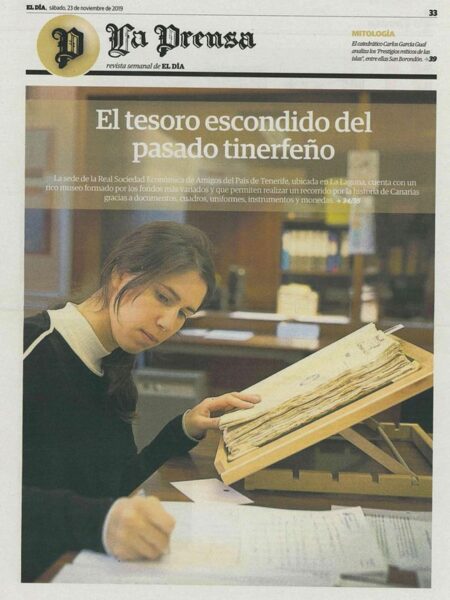
Laura Dierksmeier
Alma maters: BA, Stonehill College, 2006; MA, Simmons College, 2012; PhD, University of Tuebingen, 2016
Fields of interest: island studies, environmental history, history of colonial Latin America and the Canary Islands
Describe your career path. What led you to where you are today?
I have always been deeply committed to community service, having volunteered extensively with organizations such as the Red Cross, Kids in Need of Defense, Amnesty International, and the Refugee Immigration Ministry throughout my BA and MA studies. However, over time, I began to feel disheartened by the endless hardships I witnessed. This led me to focus on historical contexts to better understand and address present-day problems.
How have your historical interests evolved across your career?
My initial research focused on how poor communities could support themselves through social networks, which ultimately led to my PhD about colonial Indigenous confraternities established by the Franciscan order.
I embraced the requirement in Germany to change topics for a second monograph and now focus on the history of water scarcity on the Canary Islands. Specifically, I am exploring low-cost, low-tech solutions that could potentially be considered for current water scarcity challenges.
What projects are you currently working on?
A long-held dream of mine is finally coming true! I am writing a college textbook together with my colleague Dr. Fabian Fechner, entitled: History of Colonial Latin America: Visual Sources and Interpretations. This project is under contract with Bloomsbury Publishers and financially supported by the Academy of American Franciscan history, with publication expected for spring 2028.
I am also writing a history of water scarcity on the Canary Islands with a focus on cultural adaptations to drought.
What is your favorite historical site to visit?
Fundación Histórica Neogranadina. Juan Cobo’s initiative to digitalize archive sources otherwise unavailable to the public makes it possible to consider a broader range of historical perspectives. This also allows access to sources for historians with travel limitations (e.g., due to a disability/illness, child-care duties, or financial hardships that make travel difficult).
What’s the most fascinating thing you’ve ever found at the archives or while doing research?
While researching in the historical archive (Fondo Franciscano) of the Museo de Antropología e Historia de México, I was captivated the first time I came across confraternity records in which Indigenous individuals recorded their donations in Nahuatl, while Spanish individuals wrote in Castellano—all within the same document. It was striking to see how the two languages coexisted not just side by side but interwoven in a single text. I was also thrilled to discover early colonial records showing female leadership in confraternities—something I had previously read was absent during that period.
Who in your life served as a teacher or mentor and influenced your understanding of history?
During my BA degree, Prof. José Martinez. He cemented my interest for Latin American history through his joy of teaching the subject.
During my MA degree, Prof. Lola Peláez Benitez. She made endless time to answer my questions and support my studies.
During my PhD, Prof. Renate Dürr. She made my academic career possible by opening doors to positions and providing me with extensive content feedback.
During my PhD, Prof. Asunción Lavrin. She inspired me by her writing and even more so when we met in person.
What do you value most about the history discipline and community?
I feel most at home in smaller academic fields that foster a strong sense of collaboration—previously in confraternity studies and now in island studies.
Do you have a favorite experience with the AHA?
This is the first academic society I joined, and I immediately appreciated the sense of belonging to a community of fellow historians.
AHA members are involved in all fields of history, with wide-ranging specializations, interests, and areas of employment. To recognize our talented and eclectic membership, Perspectives Daily features a regular AHA Member Spotlight series.
This work is licensed under a Creative Commons Attribution-NonCommercial-NoDerivatives 4.0 International License. Attribution must provide author name, article title, Perspectives on History, date of publication, and a link to this page. This license applies only to the article, not to text or images used here by permission.