The Advisory Committee on Historical Documentation met in Washington on November 8, 1985. In attendance were Robert Dallek, Carol S. Gruber, and Warren F. Kuehl, representing the American Historical Association; Ole R. Holsti and Deborah W. Larson, representing the American Political Science Association; John L. Hargrove of the American Society of International Law; and Bradford Perkins representing the Organization of American Historians. (The committee re elected Kuehl to the chair).
The committee received helpful assistance from William Z. Slany, The Historian, and his staff, and welcomed the support of George B. High, Senior Deputy Assistant Secretary of the Bureau of Public Affairs, and Bernard Kalb, Assistant Secretary for Public Affairs for the Department of State.
The past year has been one of meritorious accomplishment in the Historical Office. Answers to some long-standing questions have been developed, and work on the FRUS series has progressed well. Five volumes appeared in 1985 and eleven are in press. The staff has compiled all twenty-seven volumes of the 1955-1957 series.
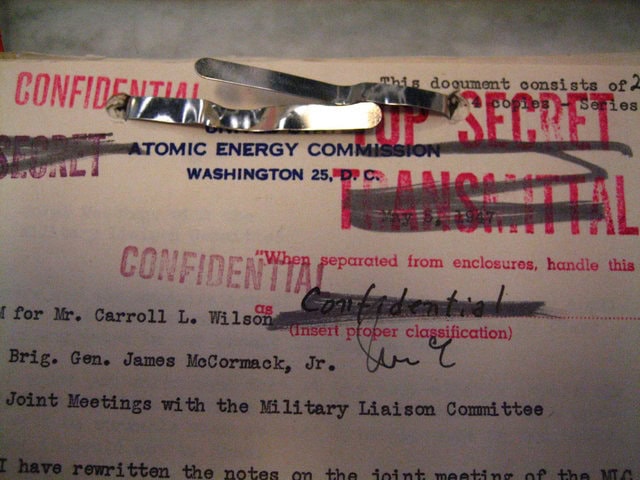
Positive accomplishments in the Historical Office are, however, accompanied by discouraging evidence that the declassification process continues to delay publication. Committee members, reflecting the position of the societies they represent, continue to insist on a twenty-five-year line, while State Department officers consider a thirty-year line the objective. While the Committee com mends the Historical Office, the Secretary of State, and the Department of State for the positive efforts to attain and adhere to a thirty-year line, a continuing effort is still necessary.
It is evident that the thirty-year line has been seriously breached. In 1985 the last volume in the 1951 series appeared. At least three volumes for the 1952-1954 set remain to be declassified, with projected publication ranging from 1986 to 1987, well beyond thirty years. Little progress has been made on clearance for the 1955-1957 series. The FRUS series seems destined to fall farther and farther behind unless action is taken to facilitate the declassification process.
In addition, the Committee is charged with responsible advisory oversight of the nation’s historical record in the realm of foreign affairs. Our society is a democratic system that prides itself on its openness, yet we are aware that there are sensitive issues in the realm of foreign policy. Censorship must be resisted; but security concerns cannot be neglected. To maintain a balance is difficult, but the Committee’s task is complicated by obscurities in declassification procedures that makes it difficult to fulfill our advisory charge.
This nation once prided itself on making its historical record almost immediately available. For decades political figures and scholars boasted that our foreign policy records were open while other nations kept theirs closed. When in the post-1945 era, it became necessary to extend the time between events and disclosure through publication in the FRUS series, a compromise was reached in the form of a twenty-year rule.
Yet, a review of those years reveals that the extension in time was due as much or more to limitations of staff than to security. Within the past decade, the gap has widened to thirty-plus years. Early in 1985, Secretary Schultz set a clear thirty-year line, which has already been breached.
The Advisory Committee understands the necessity for the initial classification of certain documents. It cannot understand why the process of declassification is so slow.
Because the declassification process itself is unclear, the Committee is frustrated in seeking explanations for the publication delay. Efforts to ascertain what the clearance procedures are have not succeeded. There are guidelines for the systematic declassification of department records, but these cannot be seen by the Committee because they are apparently protected. This Committee, charged under statutory mandate to make recommendations related to the historical documentation of the United States, thus, cannot respond properly because of limitations imposed by the bureaucratic structure.
A number of agencies are involved in the review procedure, in addition to the Classification Declassification Center (A/CDC). Even after a document is cleared by one or more agencies, another agency can frustrate publication by its refusal to approve. While efforts are made largely through the A/CDC to negotiate a settlement, the Historical Office feels compelled to withhold volumes from publication when documents vital to an understanding of events have not been cleared. This position, designed to protect the integrity of the FRUS series, has been endorsed repeatedly by past Advisory Committees.
The FRUS series seems destined to fall farther and farther behind unless action is taken to facilitate the declassification process.
The following illustrate the delays that have resulted:
- In October, 1985, the last volume of the 1951 series
- The 1952-1954 set still has six unpublished volumes. Three of these are yet involved in clearance processing, with possible publication set for 1986 and 1987.
- As noted earlier, all twenty-seven volumes for 1955-1957 have been compiled by the Office of the Four are in the printing process. All the others are still under review. Only six of these are targeted for publication in 1987.
Since the Committee met, President Reagan has issued a new directive calling on all agencies to move to and adhere to a thirty-year line. This is a positive and welcome step. It reaffirms in the strongest fashion the value of the FRUS series and asks the Secretary of State to “take necessary measures to ensure the publication by 1990 of the foreign affairs volumes through 1960.” It further directs “agencies and staffs to cooperate with the Department of State in the collection, declassification review, and publication of these volumes” pointing toward a thirty-year timeframe. The Department of State is charged with setting the process in motion and making annual status reports.
The Committee makes the following recommendations to enhance the prospects of achieving the directive’s intent.
- The Committee suggests that as representatives meet to implement the directive they pay special attention to the following issues, which were identified during the discussions:
- There is ambiguity whether the thirty-year line applies to the first date in a combined series or the last (in triennial volumes 1955-1957 whether to 1955 or 1957). Ideally, publication by thirty years from the first date should be the goal.
- Whereas it has been common to blame the Government Printing Office for delays, the problem now appears to lie in the failure to begin the clearance process sufficiently in advance to achieve a thirty-year publication date. The President’s directive clearly intends to remedy this problem where it notes the need to accord the declassification review “the necessary priority to achieve this thirty-year publication time frame.”
- It should be clearly established that any timeframe does not foreclose publication prior to any set terminal date, i.e. the thirty-year line should not be viewed as a reason to postpone or delay clearance that might be accomplished sooner.
- It should be clearly established that the word disclosure, which appears in Secretary Shultz’s letter in response to the 1984 Advisory Committee report and in the President’s directive, refers not only to publication of the partial record in the Foreign Relations series but also to the transfer of records to the Archives where they would become fully accessible.
- The Advisory Committee requests a detailed description of the processes of declassification, including the principles established and instructions issued to prepare the Declassification Guidelines for 1950-1954 and 1955-1959. The Committee expects that such information will enable it to make specific suggestions to accelerate declassification.
- The Committee recommends that additional resources be provided to enlarge the staff involved in the declassification process. Such action should increase the number of items reviewed and narrow the time gap. The need appears to be especially acute for materials held by the NSC, but the Historical Office also could use additional personnel.
- The systematic review staff of A/CDC should focus its time on releasing the FRUS volumes. It should be careful about being drawn away from its primary task by becoming involved in extensive projects from other government agencies seeking declassification for historical
- The Committee hopes that President Reagan’s directive will prompt a review of the subject of “foreign government information,” a phrase embodied in his previous Executive Order 12356. Reports continue to circulate that it has been used as a license to deny or delay declassification of documents containing information from foreign governments irrespective of the contents.
- The Committee recommends the creation of a special position within the Office of the Historian, to be held by a senior historian, nominated by the Advisory Committee, familiar with foreign relations records and the historical context. The person would be assigned to A/CDC and other agencies to act as spokesperson for the general public and the scholarly community when agencies become stalemated over differing views related to declassification. Acting as an ombudsman, such a person could be a significant facilitator. The Committee believes that leading scholars retiring from academic posts might be interested in such a challenging assignment. We suggest implementing this proposal by June of 1986 on an experimental basis.
Furthermore, the Advisory Committee devoted considerable discussion to the fiche supplements being developed by the Historical Office. Concern has been expressed by persons within the scholarly community that the inauguration of any fiche project might imperil the printed volumes. Committee members believe that such dangers do not exist at this time. First, the Historical Office is committed to the printed volumes, as its recent record testifies. The number of volumes and pages produced matches the projected figure of a few years ago. Second, it is evident that with the massive documentation available, no printed series could contain all the useful materials. Third, because clearance is tied to the FRUS series, the appearance of additional documents increases the availability of materials. Fourth, fiche provide a convenient way of circulating documents that may have been missed or were cleared after the print volumes had been issued. Finally, the Historical Office has responded to suggestions of several years ago that it find ways to tie the fiche directly to the printed volumes. It has developed a library shelf system that should do this adequately wherever libraries are willing to accept the suggested arrangement.
Thus, the Committee, after reviewing this matter for a number of years, supports the fiche operation. The Committee suggests careful consultation and coordination with the National Archives and Records Administration to be certain there is no duplication in reproducing documents.
The Committee urges the Historical Office to consider the widespread circulation of separately printed tables of contents and indexes for the fiche supplements and, if possible, to include such items from the print volumes as well. Such a reference tool would reveal in handy form the utility of the FRUS series and increase the number of users.
At its 1984 meeting, the Advisory Commit tee requested a report from The Historian on how an editorial board might be used to facilitate the preparation of the FRUS volumes. The submitted report raised additional questions. Furthermore, it is evident that the responsibilities of the Advisory Committee need to be reviewed, particularly in the light of its enlargement from seven to nine persons. A subcommittee consisting of Carol Gruber, Warren Kuehl, and Deborah Larson has agreed to review tl1ese matters and pre pare recommendations.
At its 1984 meeting, the Advisory Committee expressed considerable concern that the FRUS volumes were not being promoted sufficiently and urged greater effort to increase their circulation and availability. The Committee was pleased at the printed and verbal reports of steps taken in response to its stated concerns.
The Committee reviewed with pleasure information that the Government Printing Office and the Historical Office have been working to eliminate many of the obstacles that previously delayed publication.
In 1984, the Committee also had requested a report on the maintenance and preservation of current records. The extensive and impressive document it received, relating largely to electronic files since 1974, convinces the Committee that serious problems exist. It is also concerned about paper documents and rules regarding their disposal. The Committee strongly urges that the Historical Office be assigned leadership in reviewing all questions related to foreign relations document preservation and disposal. The Committee would also like an annual statement that describes what is being done, what dangers may exist to the records, and what responses have been given to concerns expressed by members of the Advisory Committee.
This report cannot end without expressing satisfaction with the work of the Historical Office. It is efficiently administered and the staff is dedicated and able. The Advisory Committee especially wishes to commend the two-part 1952-1954 National Security volume as illustrative of the excellence of the series as a whole. It is also gratifying to see the Current Documents annual publication moving so close to currency, The Committee is pleased, too, with the commitment of Department of State officers to the series and the strong support they have given. The Advisory Committee wishes to be as helpful as possible as everyone moves to implement the new Presidential directive.