Bridging Cultures: The Pacific and Pacific Worlds
January 14th – January 18th
The Huntington LibrarySponsored by the American Historical Association
In partnership with the National Endowment for the Humanities and the
Huntington-USC Institute on California and the West
Abstract:
This week-long investigation is the first of two oceanic seminars for community college instructors. Over the course of four days, seminar leaders will present a rich program of lectures, discussion, and primary-source exploration that addresses the history of the eastern Pacific Basin and Rim through various stages between ca. 1600 and 1850. Faculty presenters will build on preliminary, shared readings, assigned in advance. Program content emphasizes the contact among cultures and the resulting influence that forces at play in the Pacific societies had on the development of the United States. Participants will engage the new and fast-developing historiography of the largest region of the world, and will consider the implications of this scholarship for the grand narratives of the U.S. history survey in particular and humanities education in general. These discussions of large issues will maintain a simultaneous focus on the challenge of communicating the implications of this recent scholarship to their colleagues and students. How did intercultural contact shape the creation of the United States and the composition of its inhabitants? How did exchange of people, goods, germs, and ideas across the vast Pacific Ocean function as bridge between American, Oceanic, and Asian cultures? Does understanding this more distant history of the Pacific Rim help us to comprehend aspects of more recent globalization and its consequences for American culture and U.S.-Asia relations?
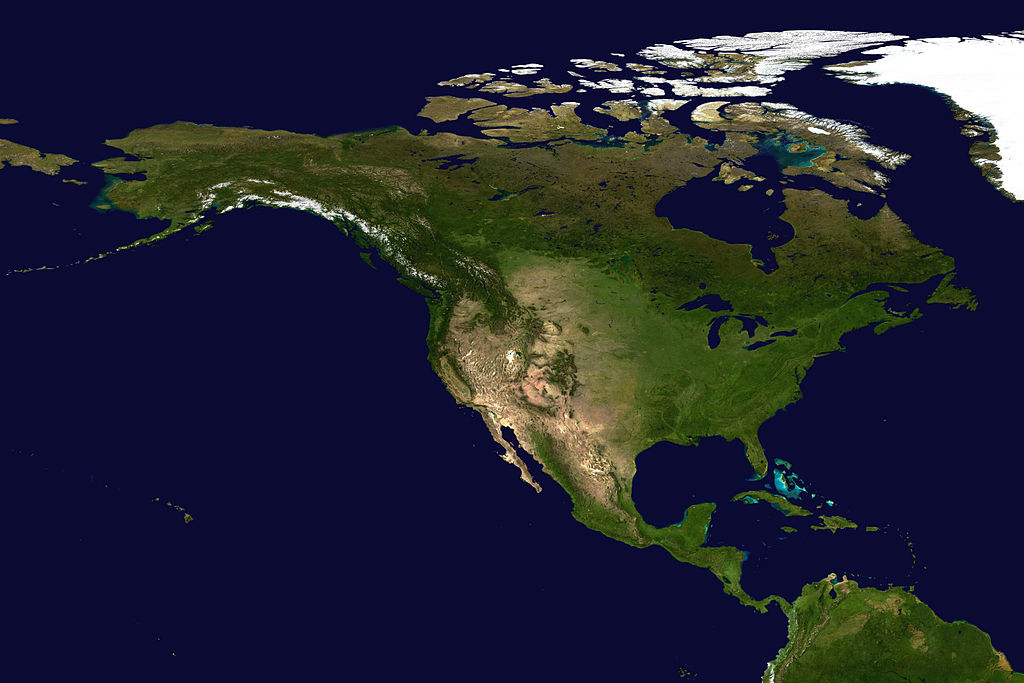
The aim of this institute is to introduce community college instructors to the geography, geomorphology, and history of the Pacific Rim. The Pacific Ocean covers 64 million square miles of the surface area of the earth, and it is larger than all land forms combined; tens of thousands of islands lie in the Pacific, which encompass astonishing human and geopolitical diversity in both historical and contemporary settings. Add to this the Pacific’s oceanic and geologic complexity, its unsurpassed biotic diversity, and its signal influence upon climatic phenomena, and it is clear that the Pacific World is a sense-making challenge of the first order.
In scholarly work, the “Pacific World” is just now at the point where field coherence appears possible and where a range of common inquiries might help drive common concerns. None of this is as yet sure or fixed, and we expect the excitement, momentum, and uncertainties of Pacific World studies to animate the institute. As a reflection of the new work we expect to draw upon most directly in the institute, this seminar will concentrate in part on the eastern Pacific Rim and basin: its people, complex migratory and exploratory history, and the tapestry of international, trans-oceanic, and indigenous state-making projects competing and overlapping across the broad expanses of the ocean itself.
Visiting seminar instructors, whose recent work has focused on Pacific studies in one form or another, will lead half-day seminars on discrete and general topics. Seminar participants will explore recent Pacific World historiography; learn about conceptual tools or themes by which to organize Pacific studies; and work with visiting scholars on specific topics of research and/or teaching interest. Seminar participants will be granted access to Huntington collections for their own research and curriculum/syllabi work each afternoon. In consultation with Huntington curators and seminar scholars, ICW will prepare bibliographic tools for each participant regarding Huntington “Pacific World” holdings in manuscripts, rare books, ephemera, prints, photography, as well as other formats. This bibliography has been distributed ahead of the seminar.
Format
![]() |
| David Igler, Associate Professor of History, University of California, Irvine |
The seminar will meet each morning of January 14, 15, 16, and 17. Following lunch, seminar participants will have time in which to pursue their own research and writing as they wish: revision or creation of new syllabi; independent reading and research; and the like. Seminar leaders will be available for consultation and by appointment office hour discussions with seminar participants.
We are delighted to welcome you to Southern California, The Huntington, and a week of exciting engagement with sources, ideas, and one another.
Key contact information:
Professor Bill Deverell, Director, Huntington-USC Institute on California and the West
deverell@usc.edu
Huntington office: 626 405 2108, ex. 3
Jessica Kim, ICW Postdoctoral Fellow
kimjm@usc.edu
Where We Meet
The Huntington Library, a private, nonprofit institution, was founded in 1919 by Henry E. Huntington. The Library’s extraordinary collection of rare books and manuscripts in the fields of British and American history and literature anchors a collection of approximately 6 million items that extends more broadly across early modern Europe and the Pacific. The Huntington is among the nation’s most important centers for the study of the American West, with an unsurpassed collection of materials that span the full range of American western settlement, including the overland pioneer experience, the Gold Rush, and the development of Southern California.
The Munger Research Center, the newest addition to the Library structure, adds 90,000 square feet of space for scholars and staff, preservation, conservation, and storage. The Center includes two classrooms devoted to instruction, enabling rare materials from the Library to be brought under curatorial supervision into classroom settings.
The chief institutional sponsor of the seminar is the Huntington-USC Institute on California and the West (ICW; see www.usc.edu/icw). Founded in 2004, ICW is a center for scholarly investigation of the history and culture of California and the American West. Through sponsorship of innovative scholarship and research, ICW draws on the resources of the University of Southern California and the Huntington Library to build an innovative collaboration between a research university and a research library.
Bridging Cultures: The Pacific and Pacific Worlds
Please note that the days are not organized exactly the same, so as to accommodate special presentations, housekeeping paperwork at The Huntington, and the like. Please also note that we are not always meeting in the same spot at The Huntington. Please also note that we occasionally end seminar periods at 11:30 a.m.; this is both so that we can move our way to lunch expeditiously as a large group and to allow some time for further conversation or Q and A with the seminar leader or among participants.![]() |
| Steven Hindle, Director of Research at the Huntington Library, welcomes faculty members in the first institute, on the Pacific and Pacific World |
January 14th
Seaver Center ClassroomsMunger Research Center
8:30: arrival
9:00: welcome from Dr. Steve Hindle, W.M. Keck Director of Research, The Huntington
9:15 – 10:30 orientation, registration, tour of facilities: Laura Stalker, Avery Associate Director of the Library and Readers Services staff
10:30 to 12:30
Seminar Leader: Professor David Igler, University of California, Irvine
Professor Igler’s expertise is on the eastern Pacific Basin in the period from the mid-18th to the mid-19th century. He is the author of a number of important essays on Pacific history, and Oxford University Press will bring out his “The Great Ocean” in the spring of 2013, an exploration of Pacific worlds from Captain Cook to the Gold Rush era. Professor Igler’s seminar work with the group will offer an introduction to themes of Pacific study as well as to the resources at The Huntington.
12:30: Lunch
1:30: Independent Research Time
January 15th
****note: please read the Vinkovetsky chapter which is in your folders as further prep for todaySeaver Center Classrooms
Munger Research Center
8:30: arrival
9:00 to 11:30
Seminar Leader: Professor Ryan Jones, Idaho State University
Professor Jones’ interest and expertise is focused on Russian designs on the Pacific and Pacific coast of North America. His work, which has been published widely (and you’ve read a forthcoming piece) explores imperial, environmental, and social historical dimensions to the Russian presence in the eastern Pacific in roughly the same period as that examined by David Igler in his work.
12:00: Lunch
1:00: Independent Research Time
January 16th
Botanical Division AuditoriumBotanical Wing
The Huntington
8:30: arrival
9:00 to 10:00: graduate student presentation by Seth Archer, Ph.D. candidate, UC-Riverside Department of History (see appendix)
10:00 to 11:45
Seminar Leader: Professor Kariann Yokota, University of Colorado, Denver
Professor Yokota, an intellectual and cultural historian of early America, is the author of a recent book on the ways in which colonial America and colonial Americans utilized trade and culture to establish independence in the postcolonial realm. As some of that distancing from Britain included American involvement in the China trade, her work began to explore Pacific worlds of the late 18th and early 19th century. She is now at work on a new monograph which examines the trans-Pacific export of goods and establishment of trade markets, and her time with the group will center on that new project.
12:00: Lunch
1:00: Independent Research Time
January 17th
Botanical Division AuditoriumBotanical Wing
8:30: arrival
9:00 to 11:30
Seminar Leader: Professor Tom Osborne, Emeritus Professor, Santa Ana College
Professor Osborne has been a leader in pushing scholars to contemplate the Pacific in their teaching of American, and perhaps especially, western American history. He is the author of a new book on the history of “greater California,” which extends the state’s usual territorial, terra firma, boundaries westward into the Pacific and Pacific worlds. The volume, Pacific Eldorado: A History of Greater California, will be published just as our seminar wraps up. Professor Osborne will take the group through the book’s arguments and sources and, in addition, he’ll discuss with the group ways to incorporate Pacific histories into survey and other courses.
1:00 pm Professor Edward Melillo, Amherst College (see appendix)
2:00 pm: Independent Research Time
Appendix: Special Guest Presentations
Seth Archer Presentation January 16th
Hawaiian history in early American and Pacific contexts
Seth’s research traces the cultural impact of introduced infectious diseases in Hawai‘i, from the arrival of Europeans in 1778 to the Act to Prevent the Spread of Leprosy in 1865. Hawaiians in this period met with a series of devastating “virgin soil” epidemics that challenged their health, subsistence, worldviews, and eventually their sovereignty. While scholars have recorded the role of epidemics in the depopulation of Oceania, few have considered the effects of Old World diseases (including decreased fertility and life expectancy, increased infant mortality, and the erosion of kin networks) on Islander society and culture. Equally neglected by scholars have been Islanders’ own ideas about, and responses to, the crisis of epidemic disease on the local level. Finally, there has been practically no attention to the effects of epidemics on Hawaiian culture—on Native Hawaiian religion, medicine, family structure, and gender and sexuality. Scholars’ grasp of the Hawaiian (and Pacific) past is therefore incomplete. Seth aims to fill this important gap, while at the same time providing a comparative case study for disease and culture change among indigenous populations in the Americas and across the Pacific.
As Seth notes, Hawai‘i doesn’t show up in most American History courses or textbooks until the 1890s when an American-led coup overthrew the reigning monarch and declared the Islands a U.S. possession. Occasionally, Hawai‘i makes an appearance in the 1840s, when Manifest Destiny was fast becoming a new American religion, with some believers setting their sights on the Pacific. And once in a great while, an instructor or textbook will take students all the way back to the early-nineteenth century to explain how Americans got out to these remote islands in the first place. The problem with all of these approaches to Hawai‘i and the U.S. is that they they’re simply too late. If we want to understand how Hawai‘i became the 50th State—or why it is that today the U.S. controls islands across the Pacific, complete with military bases and American schools—or why in 1941 imperial Japan decided to bomb Pearl Harbor instead of Anchorage, Seattle, or Los Angeles—we have to go all the way back to the beginning, or at least to 1778, when one day in midwinter, two enormous ships appeared on the horizon. Lacking a word for objects of this size and technological sophistication, the Hawaiians simply called them moku, or “islands.”
In his brief presentation before the group, Seth will draw connections between colonial America and colonial Hawai‘i, during a period of drastic and irreversible changes for the people and their islands.
Ted Melillo Presentation January 17th
Scholarly perspectives on the “Age of the Pacific”
Edward D. Melillo is Assistant Professor of History and Environmental Studies at Amherst College, where he teaches courses on global environmental history and the history of the Pacific World. His most recent article, "The First Green Revolution: Debt Peonage and the Making of the Nitrogen Fertilizer Trade, 1840-1930," appeared in the October 2012 issue of the American Historical Review. Professor Melillo is currently completing a book manuscript, Strangers on Familiar Soil: Rediscovering the Chile-California Connection, 1786–2008, which describes two centuries of ecological and cultural interactions between Chile and California. His second book project, Out of the Blue: Nantucket and the Pacific World, examines the myriad long-term links between Nantucket Island and the environments and peoples of the Pacific. Professor Melillo is co-editor of Networks of Nature in the British Empire: New Views on Imperial Environmental History, which Continuum Press will publish in 2014.
As Ted notes, the notion of a "Pacific Age" has animated figures as diverse as Teddy Roosevelt, Deng Xiaoping, and Hilary Clinton. This trio represents only a small fraction of the many politicians and pundits who have envisioned the Pacific Ocean region as the site of an emerging economic renaissance. In his time before the group, Ted will explore the similarities between the Pacific Age concept and the ancient Roman method of loci, a mnemonic system of spatial associations, which orators used when memorizing concepts and structuring rhetoric. Likewise, the capitalist world system has depended upon narrative cartographies that frame the Pacific as a placeholder for past triumphs and a zone of imminent destinies. In the midst of these ideological revolutions, the Pacific Ocean region and its inhabitants have faced unprecedented environmental challenges. As a warmer planet yields rapidly rising sea levels, Pacific island communities have appropriated the concept of a Pacific Age to critique the ideology of limitless growth that threatens their continued existence.
Last Updated: January 15, 2013