Dear AHA Member,
AHA news and updates for the history profession.
In this issue:
- AHA Today – Recent history news
- News from Washington – Updates from NCH, NHA, and COSSA
Please feel free to forward this e-mail to your friends and colleagues.
Survey: Future Annual Meetings
We are interested in your opinions about the AHA annual meeting, and how we could make it better.
Attendees
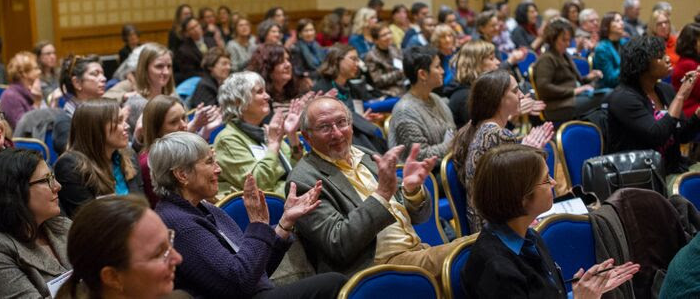
If you attended that 2011 meeting in Boston, please take a few minutes to fill out a brief survey about the meeting.
Didn't Attend
If you could not attend the meeting, please answer a brief five-question survey to tell us what we might do to attract you to a meeting in the future.
In recent years we have implemented numerous changes in response to members' suggestions. We plan to continue those improvements as we learn about your experiences. Please give us a few minutes of your time to help make future AHA meetings better.
Submit Nominations for:
Theodore Roosevelt-Woodrow Wilson Public Service Award
AHA members are invited to suggest names of individuals who can be nominated for the Theodore Roosevelt-Woodrow Wilson Public Service Award. Named for the two former AHA presidents who were also Presidents of the United States—Theodore Roosevelt (AHA president in 1912) and Woodrow Wilson (AHA president in 1924)—this honorific award recognizes individuals outside the historical profession who have made a significant contribution to the study, teaching, and public understanding of history.
The suggestions for possible nominees can include (but need not be restricted to), for example, persons who may have made a significant contribution to the support and encouragement of history through their actions. Such noteworthy actions may include philanthropy, supporting or working for organizations that promote history in public life, helping to protect and preserve a national historical monument or park, or other work that cultivates public awareness of history. Previous honorees have been Senator Robert C. Byrd (D-WVa), Brian Lamb (C-Span President and C.E.O.), Steven Spielberg (Founding Chairman, Shoah Visual History Foundation), Congressman John Lewis (D-Ga), Richard A. Moe (President, National Trust for Historic Preservation), Adam Hochschild (journalist and author), and Lee H. Hamilton (Director, The Center on Congress at Indiana University, and formerly Director of the Woodrow Wilson Center for International Scholars).
The executive director and the AHA president will consider members’ suggestions and other names to choose the nominees. The AHA Council will thereupon make the final selection, and the award will be presented at the AHA’s Annual Meeting.
Mail your suggestion (along with a one-page note justifying the suggestion) to:
Executive Director, AHA
Attention: The Roosevelt-Wilson Award,
400 A Street, SE
Washington, DC 20003-3889
Save Teaching American History Grants
The National Coalition for History is asking you to e-mail letters to your U.S. senators as soon as possible urging them to save the Teaching American History (TAH) Grants Program and Civic Education funding (through competitive grants).
Legislation is currently being drafted in the Senate that would fund federal programs for the rest of this fiscal year, FY 2011. It is absolutely vital that our members send e-mails as soon as possible to save TAH and Civics funding in FY’11. We will be sending a separate sample letter regarding FY’12 appropriations and the reauthorization of the Elementary and Secondary Education Act (ESEA) later this spring.
Learn more at the National Coalition for History site.

Perspectives on History – March 2011 Issue
The online version of the March 2011 issue of Perspectives on History is now available online to AHA members (sign in to member services to gain full access).
From the President & Executive Director
In his article, “Loneliness and Freedom,” AHA president Anthony Grafton looks to the “Culturomics” presentation at the 125th Annual Meeting, a session added at the last minute that discussed the Google Books Ngram Viewer, to promote collaborative projects between historians and scientists.
Lincoln’s birthday a few weeks ago (February 12, 2011)was the impetus for AHA Executive Director Jim Grossman’s article, “History, Public Culture, and the Commemoration of the Civil War.” In it he reflects on Lincoln’s perspective on slavery and how important it is to teach that the Civil War was fundamentally about slavery.
Education
The cover of the March issue highlights James Vernon’s article, “The State They Are In: History and Public Education in England,” about the precarious state of history education in England. Brad Massey writes about history education back in the States, specifically how to teach honors students American history at a community college. Finally, learn about an D.C. Everest Oral History Project, a collection of interviews, starting in 1998, with a Hmong community in Wisconsin.
News
Robert B. Townsend reports on the increase of history PhDs in “New History PhDs in 2009 Surged to Second- Highest Level in 32 Years.” Also check out Lee White’s “News Briefs,” learn who’s been selected for the Summer 2011 Seminar on Decolonization, and hear what a number of AHA members are up to. We also take a moment to remember David Burner and Robert McCune Kingdon.
AHA News
The AHA’s Professional Division has released new guidelines for academic hiring done through telephone and video interviews, the final Council, Divisions, and Committees list for 2011 is available, and this month we recognized those who donated to the AHA between November 1, 2010 and December 31, 2010.
Statement on Standards of Professional Conduct – 2011
The AHA’s Statement on Standards of Professional Conduct has been updated both online and in print form for 2011.
The amended statement continues to address “dilemmas and concerns about the practice of history that historians have regularly brought to the American Historical Association seeking guidance and counsel. Some of the most important sections of this Statement address questions about employment that vary according to the different institutional settings in which historians perform their work. Others address forms of professional misconduct that are especially troubling to historians. And some seek to identify a core set of shared values that professional historians strive to honor in the course of their work.”
The nine sections of this document include:

AHA Today
Keep up with the latest information on history and the profession on the AHA’s blog, AHA Today. Recent posts include:
Jobs and Careers in History: Interview with Priya Chhaya
Our interview with Priya Chhaya, program associate in the Center for Preservation Leadership at the National Trust for Historic Preservation, about how she became interested in history and her advice for those looking for jobs outside of academia.History, There’s an Android App for That
We’ve scoured the the Android Market and rounded up a number of history Android mobile phone apps.History Podcasts, Take 4
The fourth installment of our history podcast roundups. Let us know in the comments what podcasts you listen to.Remembering President’s Day
The history of the Washington’s Birthday/President’s Day holiday and a collection of links to resources and lesson plans online on George Washington and a number of other presidents.Also, see the most recent What We’re Reading (February 17 and February 24) and Grant of the Week (NEH Programs for School and College Educators and Graduate Research Grant for U.S. Naval History Research) posts.
News from Washington
In addition to AHA Today, the Association also draws on the efforts of a number of coalitions that support the Association's agenda to keep track of issues in the nation’s capital that will be of concern to historians. Here are news updates from some of them.
National Humanities Alliance
NEH Receives $145 million for FY 2011 in House-Passed HR1
On Saturday, February 19, the House passed HR1, the FY 2011 continuing resolution, to fund the government through the end of the current fiscal year. Under the bill, most spending is based on FY 2010 levels, less $61.5 billion in eliminations, reductions, and rescissions. The House-passed bill provides $99.6 billion less than President Obama’s FY 2011 budget proposal. The House and Senate are currently out of session. When they return, the Senate is expected to focus attention on FY 2011 appropriations as early as February 28. The House and Senate have until March 4, when the current continuing resolution (passed December 21) expires, to reach agreement on FY 2011 spending for the remaining months through September 30, or pass another temporary stopgap measure. If they cannot find a compromise by the March 4 deadline, the federal government will shut down. Read the rest here.
National Coalition for History
Consortium of Social Science Associations
February 21, 2011 Washington Update
Please feel free to forward this email on to a colleague or friend.
Contributions to this issue of Fortnightly News came from: David Darlington, Debbie Ann Doyle, Kelly Elmore, Elisabeth Grant, James Grossman, Vernon Horn, and Robert B. Townsend
![]()
Last Updated: February 25, 2011

